
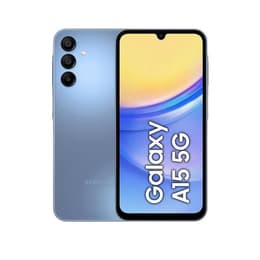


Galaxy A15 5G Vs Google Pixel 9 Pro XL

Galaxy A15 5G
Galaxy A15 5G
Starting at

Refurbished price:£99.00

Versus £212.30 new

See options
Google Pixel 9 Pro XL
Starting at

Refurbished price:£384.00

Versus £1,093.99 new

See options

Ratings

The Samsung Galaxy A15 5G, released in December 2023, and the Google Pixel 9 Pro XL, launched in August 2024, represent distinct offerings in the smartphone market. While the Galaxy A15 5G focuses on delivering essential features for everyday use, the Pixel 9 Pro XL is designed as a high-end device with advanced camera capabilities and a strong emphasis on artificial intelligence. Both devices operate on the Android platform, but they cater to different user expectations regarding performance and premium features.

Scores

Durability

When considering the long-term usability of these devices, their release timelines and software support policies are key differentiators.

  • Software Longevity: The Google Pixel 9 Pro XL offers an extended software support period, promising seven years of OS and security updates from its August 2024 release. This means it will receive updates until Android 22. The Samsung Galaxy A15 5G, released in December 2023, is slated to receive four years of OS updates and five years of security updates, extending its support until 2028 for OS and 2029 for security.
  • Build and Durability: The Pixel 9 Pro XL features a more robust construction with Corning Gorilla Glass Victus 2 protecting its display and an IP68 rating for water and dust resistance. Google also implemented a dual-entry design, which is claimed to make the device twice as durable as its predecessor, though teardowns indicate some repair challenges. The Galaxy A15 5G utilizes a plastic frame and back with Dragontrail Pro glass on the display and does not carry an official IP rating for water or dust protection.
  • Repairability: Teardowns suggest the Galaxy A15 5G has a relatively high repairability score, with components like the battery being accessible. The Pixel 9 Pro XL, despite its dual-entry design aimed at improving repair access, has been noted to have difficulties with display removal and battery replacement in professional teardowns, resulting in a mediocre repairability score.

Year of Release

2023

2024

Compatible with latest Update

Yes

Yes

OS

Android

Android

Foldable

No

No

Performance

The performance capabilities of these two smartphones are tailored to different user demands, impacting how smoothly they handle various tasks.

  • Processing Power: The Google Pixel 9 Pro XL is equipped with Google's Tensor G4 processor, designed for efficient handling of demanding applications, multitasking, and advanced artificial intelligence features. Users can expect a fluid experience even with intensive gaming and complex computational tasks. The Samsung Galaxy A15 5G features an octa-core MediaTek Dimensity 6100+ processor. This chipset capably manages everyday activities such as web browsing, social media, and media consumption, though users might observe slight delays when rapidly switching between multiple applications.
  • Memory and Storage: The Pixel 9 Pro XL comes with a substantial 16GB of RAM, facilitating seamless multitasking and efficient operation of numerous applications simultaneously. It offers storage options up to 1TB, utilizing UFS 3.1 technology. The Galaxy A15 5G is available with 4GB, 6GB, or 8GB of RAM and 128GB or 256GB of internal storage, which can be expanded up to 1TB via a microSD card. This configuration is suitable for typical smartphone usage, with the expandable storage being a notable advantage for users who require more space for media and files.
  • Battery Behavior: The Pixel 9 Pro XL houses a 5060 mAh battery, which, combined with its efficient processor, is designed to provide extended usage, with users reporting it can last through a full day of heavy use. The Galaxy A15 5G is equipped with a 5000 mAh battery, offering above-average battery life that comfortably supports a full day of moderate use.

Memory (GB)

4 GB

16 GB

Screen quality

The visual experience on both devices is shaped by their respective display technologies and specifications.

  • Display Technology and Clarity: The Google Pixel 9 Pro XL features a 6.8-inch LTPO OLED display, referred to as Super Actua, which delivers vibrant colors, deep blacks, and sharp details with a QHD+ resolution of 2992x1344 pixels. The Samsung Galaxy A15 5G sports a 6.5-inch Super AMOLED display with an FHD+ resolution of 1080x2340 pixels, providing clear and vivid visuals for everyday viewing.
  • Brightness and Refresh Rate: The Pixel 9 Pro XL's display offers an adaptive refresh rate ranging from 1Hz to 120Hz, ensuring smooth scrolling and responsiveness while optimizing power consumption. It boasts impressive peak brightness levels of up to 3000 nits, making it highly visible even in bright outdoor conditions. The Galaxy A15 5G has a 90Hz refresh rate, which provides a smoother experience than standard 60Hz displays. Its peak brightness reaches 800 nits in High Brightness Mode, offering adequate visibility in most indoor and outdoor settings.
  • Viewing Experience: The larger, higher-resolution, and brighter screen of the Pixel 9 Pro XL is well-suited for immersive media consumption, detailed content creation, and an enhanced gaming experience. The Galaxy A15 5G's display, while smaller and less bright, still offers a good viewing experience for general use, including watching videos and browsing.

Resolution

1080 x 2340

1344 x 2992

Screen type

Super AMOLED

LTPO OLED

Audiovisual

The camera systems on these smartphones offer different capabilities, catering to varying photography and videography needs.

  • Rear Camera System: The Google Pixel 9 Pro XL features a versatile triple-camera setup on the rear, including a 50MP main sensor with optical image stabilization (OIS), a 48MP ultrawide lens with autofocus and macro focus capabilities, and a 48MP telephoto lens with OIS and 5x optical zoom. This configuration excels in capturing detailed and crisp photos across various lighting conditions, including low light, and benefits from Google's advanced computational photography. The Samsung Galaxy A15 5G comes with a triple rear camera system comprising a 50MP main camera, a 5MP ultrawide camera, and a 2MP macro camera. It performs adequately for its segment, producing decent images in well-lit environments, though it lacks OIS.
  • Front Camera and Video: For selfies and video calls, the Pixel 9 Pro XL is equipped with a 42MP front camera with autofocus, capable of capturing high-resolution images and 4K UHD video at 60 frames per second. It also offers cloud-based upscaling for 8K video. The Galaxy A15 5G has a 13MP front camera and supports video recording up to Full HD (1080p) at 30 frames per second.
  • Audio Experience: The Pixel 9 Pro XL provides clear and loud stereo speakers, enhancing the media consumption experience. The Galaxy A15 5G features a single, mono loudspeaker, which is adequate for general audio playback.

Main camera

50 megapixels

50 megapixels

Front camera

13 megapixels

42 megapixels

Miscellaneous

Beyond core features, several practical elements contribute to the overall user experience and daily convenience of these devices.

  • Connectivity and Ports: The Google Pixel 9 Pro XL supports advanced connectivity standards, including Wi-Fi 7, Bluetooth 5.3, NFC, UWB, and 5G-Sub6, ensuring fast and reliable wireless connections. It features a USB-C port for charging and data transfer. The Samsung Galaxy A15 5G supports Wi-Fi 5, Bluetooth 5.3, NFC, and 5G connectivity. It includes a USB-C 2.0 port and notably retains a 3.5mm headphone jack, a feature less common in modern smartphones.
  • Biometric Security: The Pixel 9 Pro XL incorporates an ultrasonic in-screen fingerprint sensor for secure and convenient unlocking. The Galaxy A15 5G features a side-mounted fingerprint sensor integrated into the power button.
  • Design and Handling: The Pixel 9 Pro XL has a premium feel with a refined design, weighing 221g and measuring 162.8 x 76.6 x 8.5 mm. Its larger size may necessitate two-handed use for some users. The Galaxy A15 5G, at 200g and dimensions of 160.1 x 76.8 x 8.4 mm, features a plastic build with a streamlined design that is comfortable for one-handed use.

Weight

200 g

221 g

Screen size (in)

6.5

6.8

Mobile network

5G

5G

SIM card

Dual Physical SIM

Physical SIM + eSIM

Carrier compatibility

Unlocked

Unlocked

User feedback for the Google Pixel 9 Pro XL often highlights its exceptional camera performance, particularly its ability to capture detailed photos in various conditions and its advanced AI features like Magic Editor. Users also praise its long software support and the smooth, responsive experience provided by its display and processor. Some common criticisms include its large size, which can make one-handed use challenging, and observations that its raw processing power, while strong, might not always match some rivals in benchmark tests.

For the Samsung Galaxy A15 5G, users frequently commend its vibrant Super AMOLED display, reliable battery life, and Samsung's commitment to software updates for its price point. The inclusion of a 3.5mm headphone jack and expandable storage are also often cited as practical advantages. Criticisms sometimes point to its performance, which, while competent for daily tasks, can exhibit occasional lag with heavier use or app switching. Its plastic build and lack of an IP rating are also noted.

Users prioritizing a top-tier camera experience, cutting-edge AI features, and extended software longevity will find the Google Pixel 9 Pro XL well-suited to their needs. Its premium build and high-resolution display cater to those seeking a flagship experience. Conversely, users who prioritize a balanced feature set for everyday tasks, a long-lasting battery, and practical additions like a headphone jack and expandable storage will likely lean toward the Samsung Galaxy A15 5G. Both devices offer compelling options, and considering a quality-assured refurbished option can provide an eco-friendly alternative for either model, enabling informed and sustainable choices.


See all articles

Our recent comparisons







