
Galaxy S23 Ultra Vs Google Pixel 9 Pro XL

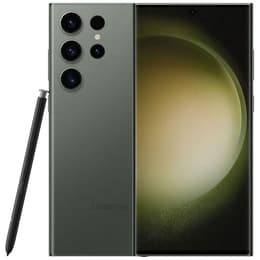
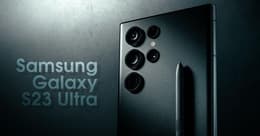
Galaxy S23 Ultra
Galaxy S23 Ultra
Starting at

Refurbished price:£299.00

Versus £1,599.00 new

See options
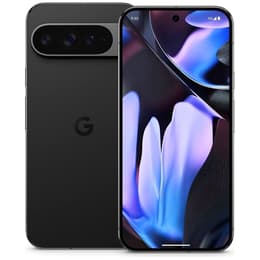
Google Pixel 9 Pro XL
Starting at

Refurbished price:£384.00

Versus £1,093.99 new

See options

Ratings

The Samsung Galaxy S23 Ultra, released in February 2023, and the Google Pixel 9 Pro XL, launched in August 2024, represent high-end offerings from their respective manufacturers. While both operate on the Android platform, they differentiate themselves through distinct approaches to camera technology, software longevity, and overall user experience. The Galaxy S23 Ultra emphasizes versatile hardware and an integrated stylus, whereas the Pixel 9 Pro XL focuses on advanced computational photography and extensive software support.

Scores

Durability

When considering the long-term usability of these devices, their release timelines and software support policies are key factors.

  • Software Longevity: The Google Pixel 9 Pro XL, released in August 2024, benefits from Google's commitment to providing seven years of OS and security updates, extending its official support until at least August 2031. In contrast, the Samsung Galaxy S23 Ultra, launched in February 2023, is slated to receive four generations of Android OS upgrades and five years of security updates, with support expected to continue until 2028.
  • Repairability: The Pixel 9 Pro XL features a dual-entry design, which has been noted to improve its repairability compared to previous Pixel models, allowing for independent removal of the front and rear panels. Information regarding the specific repairability score for the Galaxy S23 Ultra is less prominent, though Samsung generally designs its devices with a focus on durability.
  • Expected Practical Lifespan: Users prioritizing the longest possible software support and access to the latest Android versions will find the Pixel 9 Pro XL offers a more extended official lifespan. Both devices are built with robust materials and IP68 water resistance, contributing to their physical durability.

Year of Release

2023

2024

Compatible with latest Update

Yes

Yes

OS

Android

Android

Foldable

No

No

Performance

Both smartphones are equipped with powerful internal components designed to handle demanding tasks and ensure smooth operation.

  • Processing Capabilities: The Samsung Galaxy S23 Ultra is powered by a processor optimized for its ecosystem, enabling efficient handling of complex applications and multitasking. The Google Pixel 9 Pro XL incorporates Google's Tensor G4 chip, which is designed to enhance AI-driven features and overall system responsiveness.
  • Multitasking and Storage: The Pixel 9 Pro XL typically comes with 16GB of RAM, facilitating seamless transitions between numerous applications and intensive background processes. The Galaxy S23 Ultra offers configurations with 8GB or 12GB of RAM, providing ample capacity for most user needs. Both devices offer various storage options, with the Galaxy S23 Ultra utilizing faster UFS 4.0 storage in its higher capacities.
  • Battery Behavior: The Pixel 9 Pro XL houses a 5060 mAh battery, which has demonstrated exceptional endurance, often lasting nearly 19 hours in continuous video playback tests and frequently extending through a full day of heavy use. The Galaxy S23 Ultra, with its 5000 mAh battery, also delivers strong battery performance, with many users reporting close to two days of use with moderate activity.

Memory (GB)

8 GB

16 GB

Screen quality

The visual experience on both devices is delivered through high-quality displays, though with some differences in their characteristics.

  • Display Technology and Clarity: The Samsung Galaxy S23 Ultra features a 6.8-inch Dynamic AMOLED 2X display, offering vibrant colors and deep blacks with a resolution of 1440 x 3088 pixels. The Google Pixel 9 Pro XL also sports a 6.8-inch QHD+ LTPO OLED display, providing sharp visuals with a resolution of 2992 x 1344 pixels.
  • Brightness and Refresh Rate: The Pixel 9 Pro XL's display can reach a peak brightness of 3000 nits, which is beneficial for outdoor visibility and HDR content. The Galaxy S23 Ultra offers a peak brightness of 1750 nits. Both devices feature adaptive refresh rates ranging from 1Hz to 120Hz, ensuring smooth scrolling and animations while optimizing power consumption.
  • Viewing Experience: Both large displays provide an immersive viewing experience for media consumption and productivity. The Galaxy S23 Ultra's display has slightly curved edges, while the Pixel 9 Pro XL's display is flat.

Resolution

1440 x 3088

1344 x 2992

Screen type

Dynamic AMOLED 2X

LTPO OLED

Audiovisual

Both smartphones offer advanced camera systems, each with its own strengths in photography and videography.

  • Rear Camera Systems: The Samsung Galaxy S23 Ultra is equipped with a versatile quad-camera setup, highlighted by a 200MP main sensor, a 12MP ultrawide lens, and two 10MP telephoto lenses providing 3x and 10x optical zoom capabilities. The Google Pixel 9 Pro XL features a triple-camera system with a 50MP main sensor, a 48MP ultrawide lens, and a 48MP telephoto lens offering 5x optical zoom.
  • Photography Performance: The Galaxy S23 Ultra is recognized for its exceptional zoom capabilities, including up to 100x digital zoom, and strong low-light performance, often referred to as 'Nightography'. The Pixel 9 Pro XL leverages Google's computational photography, offering features like Magic Editor and Best Take, and delivers excellent low-light results with its Night Sight mode.
  • Video and Audio Quality: Both devices are capable of recording 8K video at 30 frames per second. The Pixel 9 Pro XL's microphones are noted for clear vocal pickup, making it suitable for video recording and calls. The Galaxy S23 Ultra also provides strong video stabilization and dynamic range.
  • Front Camera: The Pixel 9 Pro XL features a 42MP front camera, offering sharp and detailed selfies. The Galaxy S23 Ultra includes a 12MP front camera that produces clear and colorful self-portraits.

Main camera

200 megapixels

50 megapixels

Front camera

12 megapixels

42 megapixels

Miscellaneous

Beyond core performance, several practical features contribute to the overall user experience of these devices.

  • Connectivity and Ports: Both smartphones support 5G connectivity, ensuring fast mobile data speeds. The Pixel 9 Pro XL includes Wi-Fi 7, while the Galaxy S23 Ultra supports Wi-Fi 6 (ax). Both utilize a USB-C 3.2 port for charging and data transfer.
  • Biometric Security: Both devices offer secure biometric authentication. The Galaxy S23 Ultra features an ultrasonic in-display fingerprint sensor, while the Pixel 9 Pro XL also includes an in-display fingerprint scanner.
  • Design and Handling: The Galaxy S23 Ultra has dimensions of 163.4 x 78.1 x 8.9 mm and weighs 233g. The Pixel 9 Pro XL measures 162.8 x 76.6 x 8.5 mm and weighs approximately 221g. The Galaxy S23 Ultra integrates an S Pen for note-taking and drawing, a feature not present on the Pixel.
  • Additional Features: The Pixel 9 Pro XL includes an Ultra-wideband (UWB) chip and a temperature sensor. Both devices feature stereo speakers for an enhanced audio experience.

Weight

234 g

221 g

Screen size (in)

6.8

6.8

Mobile network

5G

5G

SIM card

Dual Physical SIM + eSIM

Physical SIM + eSIM

Carrier compatibility

Unlocked

Unlocked

Connector

USB-C

USB-C

The Samsung Galaxy S23 Ultra and Google Pixel 9 Pro XL cater to slightly different user priorities, each excelling in distinct areas. Users often praise the Galaxy S23 Ultra for its comprehensive camera system, particularly its versatile zoom capabilities and integrated S Pen, which enhances productivity and creative tasks. Its robust battery life is also a frequent point of positive feedback, with many finding it capable of lasting through extended usage. Some users, however, have noted that its overall design, while refined, has remained largely consistent with previous generations.

The Google Pixel 9 Pro XL receives acclaim for its exceptional software longevity, promising seven years of updates, and its advanced AI-driven camera features that simplify complex photography. Its impressive battery endurance is also a significant highlight, often exceeding expectations for heavy users. Criticisms sometimes revolve around Google's image processing style, which some find to be overly consistent or lacking in contrast, and the performance of its processor, which while capable, may not always match the raw power of some competitors.

Users prioritizing a highly versatile camera with extensive optical zoom and integrated stylus functionality may find the Samsung Galaxy S23 Ultra well-suited to their needs. Conversely, those who value the longest possible software support, cutting-edge AI features, and a strong computational photography experience might lean towards the Google Pixel 9 Pro XL. Both devices offer a premium Android experience, and considering a quality-assured refurbished option for either model can provide a sustainable choice for consumers.

See all articles

Our recent comparisons