
Galaxy A13 Vs iPhone 11

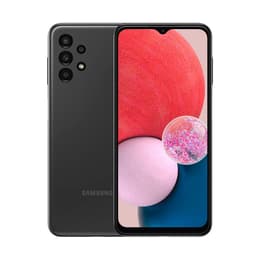
Galaxy A13
Galaxy A13
Starting at

Refurbished price:£78.25

Versus £248.00 new

See options
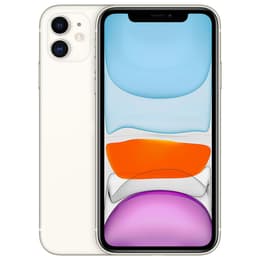
iPhone 11
iPhone 11
Starting at

Refurbished price:£115.00

Versus £489.00 new

See options

Ratings

The Samsung Galaxy A13, released in March 2022, and the Apple iPhone 11, launched in September 2019, represent different approaches to smartphone design and functionality. While the Galaxy A13 operates on Android with Samsung's One UI, the iPhone 11 runs on Apple's iOS platform. Key differentiators between these two devices include their display technology, camera systems, and overall ecosystem experiences.

Scores

Durability

When considering the long-term usability of a smartphone, factors like software support, physical durability, and ease of repair are important.

  • Release Timeline: The iPhone 11 was released in September 2019, making it an older device compared to the Samsung Galaxy A13, which launched in March 2022. This difference in release dates impacts their respective software support lifecycles.
  • Software Longevity: The iPhone 11, originally running iOS 13, has received consistent updates and is compatible with iOS 26 as of March 2026, indicating a long period of software support from Apple. The Galaxy A13, launched with Android 12, currently runs Android 14 with One UI 6.1, and Samsung typically provides several years of Android and security updates for its A-series devices.
  • Repairability: The Samsung Galaxy A13 boasts a high repairability index of 8 out of 10, suggesting that it is designed to be relatively easy to repair, with good availability of spare parts. The iPhone 11 has an iFixit repairability score of 6 out of 10, indicating that while some components like the display and battery are prioritized for repair, it is generally less straightforward to service than the Galaxy A13. Both devices feature glass fronts, with the Galaxy A13 using Corning Gorilla Glass 5 for added screen protection.

Year of Release

2022

2019

Compatible with latest Update

No

Yes

OS

Android

iOS

Foldable

No

No

Performance

Performance in a smartphone is not solely about raw processing power but how smoothly the device handles daily tasks, multitasking, and demanding applications.

  • Processor Capabilities: The iPhone 11 is equipped with a powerful processor that allows for smooth navigation, quick app launches, and efficient handling of graphics-intensive games and applications. Users generally report that it maintains strong performance for everyday use even years after its release. The Galaxy A13 features an octa-core processor, which provides adequate performance for general smartphone usage, including web browsing, social media, and light gaming. Some users, however, have noted that performance can slow down with prolonged heavy use or over time.
  • Storage and Multitasking: The iPhone 11 comes with 4GB of RAM and storage options up to 256GB, providing ample space for apps and media, and supporting efficient multitasking. The Galaxy A13 offers various configurations, including 3GB, 4GB, or 6GB of RAM and up to 128GB of internal storage, which is expandable via a microSD card, offering flexibility for users who need more space for files and photos.
  • Battery Behavior: The Galaxy A13 is known for its substantial 5000 mAh battery, which typically provides extended usage on a single charge, often lasting more than a full day for many users. The iPhone 11, with its 3110 mAh battery, also offers good battery life, with many users reporting it can comfortably last a full day of moderate use, especially if the battery health is optimal or if it has been replaced.

Memory (GB)

4 GB

4 GB

Screen quality

The display is a primary interface for any smartphone, influencing everything from media consumption to daily interactions.

  • Display Technology and Resolution: The iPhone 11 features a 6.1-inch Liquid Retina HD display, which is an IPS LCD panel with a resolution of 1792 x 828 pixels, resulting in a pixel density of 326 PPI. This display offers good color accuracy and viewing angles. The Samsung Galaxy A13 has a larger 6.6-inch PLS TFT LCD display with a higher resolution of 1080 x 2408 pixels, providing a pixel density of 400 PPI.
  • Brightness and Clarity: The iPhone 11's display offers a typical maximum brightness of 625 nits, which contributes to good visibility in various lighting conditions, including outdoors. It also includes True Tone technology, which automatically adjusts the display's color temperature to match ambient light, reducing eye strain. The Galaxy A13's display is generally considered bright and crisp for its category, though it lacks the advanced color temperature adjustments found on the iPhone.
  • Refresh Rate and Viewing Experience: Both devices feature a standard 60Hz refresh rate, which is suitable for most daily tasks. While the Galaxy A13's larger screen and higher resolution might offer a more expansive viewing area for content, the iPhone 11's display is praised for its consistent color reproduction and overall quality within the LCD segment.

Resolution

1080 x 2408

828 x 1792

Screen type

PLS LCD

Liquid Retina IPS LCD

Audiovisual

Camera capabilities are a significant consideration for many users, encompassing both still photography and video recording.

  • Rear Camera System: The iPhone 11 features a dual 12MP camera system, including a wide-angle lens with optical image stabilization (OIS) and an ultra-wide-angle lens. It is well-regarded for its Night mode, Deep Fusion for improved detail, and Smart HDR, which collectively produce sharp, colorful photos in various lighting conditions. The Samsung Galaxy A13 comes with a quad-camera setup, highlighted by a 50MP main sensor, alongside a 5MP ultrawide, 2MP macro, and 2MP depth sensor. The 50MP main camera can capture decent images in good lighting, though the performance of the auxiliary lenses and low-light photography may not match more advanced systems.
  • Video Recording Quality: The iPhone 11 offers robust video recording capabilities, supporting 4K resolution at up to 60 frames per second with good stabilization, making it suitable for high-quality video content creation. The Galaxy A13 records video at 1080p resolution at 30 frames per second, which is adequate for casual video capture and sharing.
  • Front Camera Performance: For selfies and video calls, the iPhone 11 includes a 12MP front camera that supports 4K video recording and offers features like slow-motion selfies. The Galaxy A13 has an 8MP front camera, which performs adequately for social media and video calls.

Main camera

50 megapixels

12 megapixels

Front camera

8 megapixels

12 megapixels

Miscellaneous

Beyond core features, several practical elements contribute to the overall user experience and device utility.

  • Connectivity and Ports: The iPhone 11 supports 4G LTE, Wi-Fi 6 (802.11ax), and Bluetooth 5.0. It uses Apple's proprietary Lightning port for charging and data transfer, and it does not include a 3.5mm headphone jack. The Samsung Galaxy A13 also supports 4G LTE, Wi-Fi 802.11 a/b/g/n/ac (dual-band), and Bluetooth 5.0. It features a more universal USB Type-C 2.0 port and retains a 3.5mm headphone jack, offering more traditional connectivity options.
  • Biometric Security: The iPhone 11 relies on Face ID for secure facial recognition, providing a convenient and secure method for unlocking the device and authenticating payments. The Galaxy A13 incorporates a side-mounted fingerprint sensor for biometric authentication.
  • Design and Handling: The iPhone 11 features a glass front and back with an aluminum frame, contributing to a premium feel and offering IP68 water and dust resistance. It weighs 194g and measures 150.9 x 75.7 x 8.3 mm. The Galaxy A13 has a glossy plastic body with a Corning Gorilla Glass 5 front. It weighs 195g and measures 165.1 x 76.4 x 8.8 mm, making it slightly larger and thicker.

Weight

280 g

194 g

Width

8,3 cm

7,57 cm

Height

3 cm

15,09 cm

Depth

1,7 cm

0,83 cm

Screen size (in)

6.6

6.1

Mobile network

4G

4G

SIM card

Dual Physical SIM

Physical SIM + eSIM

Carrier compatibility

Unlocked

Unlocked

Connector

USB-C

Lightning

Choosing between the Samsung Galaxy A13 and the iPhone 11 involves weighing different priorities in terms of operating system, features, and overall user experience. The iPhone 11, despite being an older model, continues to offer a robust performance for daily tasks, a highly capable camera system with excellent video recording, and a long software support lifespan within the Apple ecosystem. Users who prioritize a fluid user interface, strong camera performance in varied conditions, and a compact design with premium materials may find the iPhone 11 well-suited to their needs. Its Face ID security and consistent software updates are also significant advantages.

On the other hand, the Samsung Galaxy A13 provides a larger display, a significantly larger battery capacity for extended usage, and the flexibility of expandable storage via microSD. Its Android operating system with One UI offers a customizable experience, and the inclusion of a 3.5mm headphone jack and USB-C port might appeal to users who prefer these universal connectivity options. Users who prioritize battery life, a larger screen for media consumption, and the ability to expand storage will likely lean towards the Galaxy A13. It also stands out for its high repairability score, which can be a practical consideration for long-term ownership.

Both devices offer distinct advantages, catering to different user preferences. For those seeking an eco-friendly, quality-assured refurbished option, both the Galaxy A13 and iPhone 11 are available, providing a sustainable choice for consumers.

See all articles

Our recent comparisons