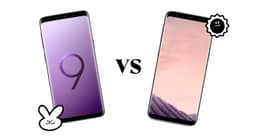

Galaxy S9 Vs iPhone 8 Plus

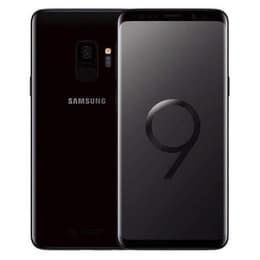
Galaxy S9
Galaxy S9
Starting at

Refurbished price:£77.00

Versus £449.00 new

See options
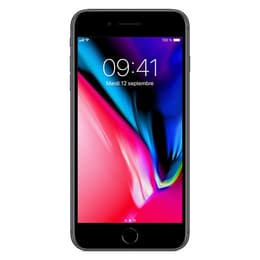
iPhone 8 Plus
iPhone 8 Plus
Starting at

Refurbished price:£84.00

Versus £249.00 new

See options

Ratings

The Samsung Galaxy S9, released in March 2018, and the iPhone 8 Plus, launched in September 2017, represent flagship smartphones from their respective manufacturers during a similar era. While both devices offer robust performance and advanced features for their time, they differ significantly in their operating systems and core design philosophies. The Galaxy S9 runs on Android, offering a customizable experience, while the iPhone 8 Plus operates on Apple's iOS, known for its integrated ecosystem.

Scores

Durability

When considering the practical lifespan of these devices, several factors related to their release timelines and software support come into play.

  • Release Timeline: The iPhone 8 Plus was released in September 2017, preceding the Galaxy S9, which launched in March 2018. This difference in release means the iPhone 8 Plus is slightly older, impacting its remaining software support window.
  • Software Longevity: The iPhone 8 Plus received major iOS updates up to iOS 16 and continued to receive security updates, with recent patches like iOS 16.7.15 released in March 2026, extending its usability for security-conscious users. The Galaxy S9, on the other hand, launched with Android 8.0 and received its last major Android update with Android 10, with security updates concluding around March 2022.
  • Repairability and Durability: Both devices feature glass backs and aluminum frames, making them susceptible to damage from drops. The iPhone 8 Plus has an IP67 rating for dust and water resistance, while the Galaxy S9 offers a slightly higher IP68 rating, indicating better protection against dust and immersion in water.

Year of Release

2018

2017

Compatible with latest Update

No

No

OS

Android

iOS

Foldable

No

No

Performance

The performance of these smartphones is influenced by their internal components, affecting how smoothly they handle daily tasks and demanding applications.

  • Processing Power: The iPhone 8 Plus is equipped with a powerful chip for its generation, enabling smooth navigation and efficient handling of applications. The Galaxy S9 features a current-generation processor for its time, providing responsive performance for multitasking and gaming.
  • Multitasking and Storage: The Galaxy S9 typically comes with 4GB of RAM, offering a capable experience for running multiple apps simultaneously. The iPhone 8 Plus has 3GB of RAM, which, combined with iOS optimization, allows for efficient app management. The Galaxy S9 also offers expandable storage via a microSD card, a feature not present in the iPhone 8 Plus.
  • Battery Behavior: The Galaxy S9 has a 3000 mAh battery, which for heavy users, may require a midday charge. The iPhone 8 Plus, with its 2691 mAh battery, generally provides a full day of use for many users, with some reporting extended usage.

Memory (GB)

4 GB

3 GB

Screen quality

The visual experience on these devices is shaped by their display technologies and specifications.

  • Display Technology and Clarity: The Galaxy S9 features a 5.8-inch Super AMOLED display, known for its vibrant colors, deep blacks, and high contrast. The iPhone 8 Plus uses a 5.5-inch IPS LCD Retina HD display, which provides accurate color reproduction and good viewing angles.
  • Resolution and Brightness: The Galaxy S9 offers a higher resolution of 1440 x 2960 pixels, resulting in a sharper image with approximately 570 pixels per inch. The iPhone 8 Plus has a resolution of 1080 x 1920 pixels, with about 401 pixels per inch, which is still clear for most content. The iPhone 8 Plus also includes True Tone technology, which adjusts the display's white balance to match the ambient light.
  • Viewing Experience: The Galaxy S9's Super AMOLED screen provides an immersive viewing experience, particularly for media consumption, due to its contrast and color depth. The iPhone 8 Plus's LCD screen offers consistent brightness and color across various lighting conditions.

Resolution

1440 x 2960

1080 x 1920

Screen type

Super AMOLED

Retina IPS LCD

Audiovisual

Both smartphones offer capable camera systems, each with distinct features for capturing photos and videos.

  • Rear Camera System: The Galaxy S9 features a single 12 MP rear camera with a unique variable aperture (f/1.5-f/2.4), allowing it to adapt to different lighting conditions by letting in more light in darker environments. The iPhone 8 Plus has a dual 12 MP camera system, consisting of a wide-angle lens (f/1.8) and a telephoto lens (f/2.8), enabling optical zoom and portrait mode effects.
  • Photography Performance: The Galaxy S9's variable aperture contributes to strong low-light performance and detailed shots in varying conditions. The iPhone 8 Plus excels in capturing natural-looking photos with consistent color and detail, and its dual cameras allow for depth effects.
  • Video Recording and Front Camera: Both devices are capable of recording 4K video at 60 frames per second. The Galaxy S9 also offers super slow-motion video at 960 fps. For selfies, the Galaxy S9 has an 8 MP front camera, while the iPhone 8 Plus features a 7 MP front camera.

Main camera

12 megapixels

12 megapixels

Front camera

8 megapixels

7 megapixels

Miscellaneous

Beyond the core features, several practical elements differentiate the user experience of these two devices.

  • Connectivity and Ports: Both phones support modern Wi-Fi standards (802.11 a/b/g/n/ac) and Bluetooth 5.0. The Galaxy S9 uses a USB-C port for charging and data transfer and retains a 3.5mm headphone jack. The iPhone 8 Plus uses Apple's proprietary Lightning port and does not include a headphone jack.
  • Biometrics and Sensors: The Galaxy S9 offers multiple biometric options, including a rear-mounted fingerprint sensor and an iris scanner. The iPhone 8 Plus relies on its front-mounted Touch ID fingerprint sensor for secure authentication. The Galaxy S9 also includes a heart rate and SpO2 sensor.
  • Design and Handling: The Galaxy S9 is slightly smaller and lighter, weighing 163g with dimensions of 147.7 x 68.7 x 8.5 mm. The iPhone 8 Plus is larger and heavier at 202g, with dimensions of 158.4 x 78.1 x 7.5 mm, which can impact one-handed use.

Weight

163 g

202 g

Screen size (in)

5.8

5.5

Mobile network

4G

4G

SIM card

Physical SIM

Physical SIM

Carrier compatibility

Unlocked

Unlocked

Connector

USB-C + Jack 3.5mm

Lightning

The Samsung Galaxy S9 and iPhone 8 Plus, while from a similar generation, cater to different user preferences through their distinct operating systems and feature sets. Users often praise the Galaxy S9 for its vibrant Super AMOLED display, versatile camera with variable aperture, and the flexibility of Android, including expandable storage and the presence of a headphone jack. Some criticisms have pointed to its battery life, which for heavy users, might not consistently last a full day.

The iPhone 8 Plus is frequently lauded for its consistent performance, the reliability and longevity of iOS updates, and its dual-camera system that delivers strong photographic results, particularly with its portrait mode. Its battery life is generally considered solid for a full day of use. However, some users found its design to be less modern compared to contemporary Android flagships at the time, and the absence of a headphone jack was a point of contention.

Users prioritizing a highly customizable operating system, a vivid display, and the convenience of expandable storage and a traditional headphone jack may find the Galaxy S9 to be a suitable choice. Conversely, individuals who value a streamlined user experience, long-term software support, and a robust dual-camera system for optical zoom and portrait photography might lean towards the iPhone 8 Plus. Both devices, available as quality-assured refurbished options, offer a sustainable choice for consumers seeking reliable technology.


See all articles

Our recent comparisons