
Compare models
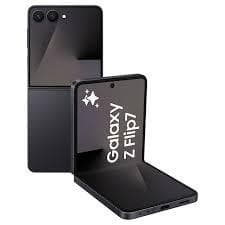
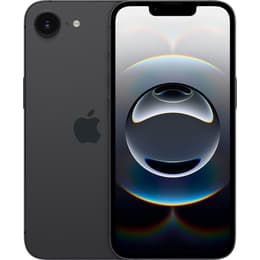
Galaxy Z Flip7 Vs iPhone 16e
- 1-year minimum warranty
- Free delivery on all items
- Free 30-day returns
Differences at a glance
The Samsung Galaxy Z Flip7 (2025) and the Apple iPhone 16e (2025) represent two distinct smartphone form factors and operating ecosystems released in the same year. While the Galaxy Z Flip7 features a foldable clamshell design running Android, the iPhone 16e follows a traditional slate build powered by iOS. The primary differentiators center on screen architecture and software environments, catering to entirely different user preferences.
Available Models
Colour
Storage
Scores
Durability
Both devices benefit from modern release timelines and robust engineering, though their physical construction shapes long-term durability differently.
- Software longevity: Both manufacturers provide extensive operating system updates spanning multiple years, ensuring long-term compatibility for security patches and modern applications.
- Build mechanics: The Galaxy Z Flip7 utilizes a folding mechanism protected by advanced hinge engineering, whereas the iPhone 16e relies on a rigid aluminum and glass slab structure with standard water resistance.
- Repairability framework: Traditional slate handsets like the iPhone 16e generally offer straightforward component replacement paths compared to foldable alternatives, which require specialized servicing for flexible display layers.
Year of Release
2025
2025
OS
Android
iOS
Foldable
Yes
No
Performance
Daily computing capability and power management vary across these models due to hardware differences and physical dimensions.
- Multitasking and processing: Both models handle demanding applications, web browsing, and general day-to-day multitasking smoothly without noticeable lag or stutter.
- Battery endurance: The iPhone 16e delivers strong daily battery longevity for a standard slate footprint, while the Galaxy Z Flip7 balances power between its internal screen and exterior notification display.
- Storage capacity: Both smartphones provide multiple internal storage configurations to accommodate media libraries, applications, and offline files.
Screen quality
Visual output represents one of the most significant physical contrasts between these two devices.
- Display technology: The Galaxy Z Flip7 features a foldable organic light-emitting diode panel that bends down the middle, while the iPhone 16e employs a flat, traditional panel with high contrast and deep black levels.
- Brightness and outdoor visibility: Both screens reach high peak luminance levels, ensuring clear legibility under bright sunlight and direct outdoor lighting conditions.
- Refresh rate behavior: The Z Flip7 supports a higher refresh rate for smoother scrolling animations, whereas the iPhone 16e utilizes a standard refresh rate for everyday navigation.
Resolution
1080x2520
2532x1170
Audiovisual
Media capture and audio output capabilities are tailored to different styles of content creation and consumption.
- Camera systems: The iPhone 16e relies on a high-resolution primary single-lens setup for sharp everyday photos, while the Galaxy Z Flip7 incorporates dual rear lenses that benefit from flexible folding angles for hands-free tripod shots.
- Video and audio output: Both units record stable high-definition video accompanied by clear stereo speakers suited for hands-free calls and casual media viewing.
- Low-light performance: Image processing software on both platforms brightens dark environments effectively while preserving natural color balance.
Front camera
10 megapixels
TrueDepth 12MP
Miscellaneous
Connectivity standards and physical handling characteristics define how each phone integrates into daily routines.
- Network and port standards: Both smartphones support modern fifth-generation cellular networks and utilize universal reversible ports for charging and wired data transfers.
- Biometric security: The iPhone 16e uses facial recognition technology, whereas the Galaxy Z Flip7 incorporates a side-mounted fingerprint sensor integrated into the power button alongside facial unlock.
- Portability and weight: The Z Flip7 folds into a compact square that slips easily into small pockets, while the iPhone 16e offers a slim, lightweight profile that feels familiar in one hand.
Weight
188 g
167 g
Screen size (in)
6.9
6.1
Mobile network
5G
5G
SIM card
Physical SIM + eSIM
Physical SIM + eSIM
Carrier compatibility
Unlocked
Unlocked
Connector
USB-C
USB-C
What the community thinks
Users prioritizing a compact pocket footprint, hands-free angles for photography, and a flexible folding screen will find the Galaxy Z Flip7 well-suited to their daily routines. Conversely, users who prefer a traditional rigid slate design, a simplified operating system, and straightforward hardware longevity often lean toward the iPhone 16e. Selecting between the two depends entirely on personal preference regarding form factor and software ecosystems. Exploring quality-assured refurbished options provides an eco-friendly alternative for acquiring either device while reducing electronic waste.