
Galaxy S9 Vs iPhone X

Galaxy S9
Galaxy S9
Starting at

Refurbished price:£102.00

Versus £449.00 new

See options
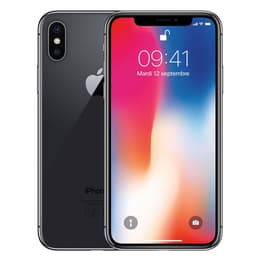
iPhone X
iPhone X
Starting at

Refurbished price:£91.00

Versus £449.00 new

See options

Ratings

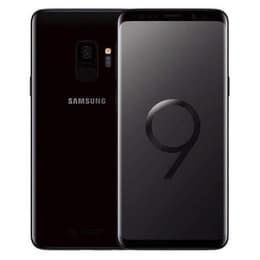
The Samsung Galaxy S9, released in March 2018, and the Apple iPhone X, launched in November 2017, represent flagship smartphones from their respective manufacturers during a similar era. While both devices introduced significant advancements for their brands, they offered distinct approaches to design, operating systems, and user interaction. The Galaxy S9 runs on Android, providing a customizable experience, whereas the iPhone X operates on iOS, known for its integrated ecosystem. Key differentiators include their biometric authentication methods and camera technologies.

Scores

Durability

When considering the long-term usability of these devices, their release timelines and subsequent software support are important factors.

  • Software Longevity: The Samsung Galaxy S9 officially concluded its major Android operating system updates with Android 10, which was released as part of One UI 2.5 in late 2020, and received its last security patch in March 2022. The iPhone X, on the other hand, received iOS updates up to iOS 16.x, providing a slightly longer period of official software support from its release.
  • Repairability: The iPhone X received a repairability score of 6 out of 10 from iFixit, indicating that its display and battery are relatively accessible for repair, though the glass back can be challenging to replace. The Galaxy S9 scored lower, at 4 out of 10, primarily due to its extensive use of adhesive and glass panels, making internal access more difficult for repairs.
  • Practical Lifespan: Both devices, having been released in 2017-2018, are now several years old. While official software updates have ceased for the Galaxy S9, and the iPhone X is no longer receiving the latest iOS versions, both can still function for everyday tasks. Users seeking the most up-to-date software experience might find the iPhone X to have a marginally longer practical lifespan due to its extended update cycle, though unofficial custom ROMs can extend the Galaxy S9's software experience.

Year of Release

2018

2017

Compatible with latest Update

No

No

OS

Android

iOS

Foldable

No

No

Performance

The performance of these smartphones is driven by their respective internal components, impacting how smoothly they handle applications and multitasking.

  • System Responsiveness: The iPhone X, powered by its A11 Bionic chip, delivers a fluid user experience, handling demanding applications and graphics-intensive tasks with ease. The Galaxy S9, equipped with its contemporary processor, also provides a responsive experience for daily usage, app loading, and general multitasking.
  • Multitasking Capabilities: The Galaxy S9 typically features 4GB of RAM, which allows for efficient switching between multiple applications. The iPhone X comes with 3GB of RAM, and its optimized operating system ensures smooth multitasking for most users.
  • Storage Options: Both devices were available with 64GB and 256GB internal storage options. The Galaxy S9 offers the added flexibility of expandable storage via a microSD card, which is not available on the iPhone X.

Memory (GB)

4 GB

3 GB

Screen quality

Both the Galaxy S9 and iPhone X feature advanced display technologies that deliver vibrant visuals, though with some differences in their characteristics.

  • Display Technology and Clarity: The iPhone X features a 5.8-inch Super Retina HD OLED display, offering deep blacks, high contrast, and vibrant colors. The Galaxy S9 also boasts a 5.8-inch Super AMOLED display, known for its rich colors and excellent contrast. Both displays provide sharp visuals suitable for media consumption and daily use.
  • Resolution and Brightness: The Galaxy S9 has a resolution of 1440x2960 pixels, resulting in a pixel density of 570 ppi. The iPhone X offers a resolution of 2436x1125 pixels at 458 ppi. Both screens are capable of high brightness levels, with the iPhone X reaching up to 625 nits typical brightness and higher peaks, ensuring good visibility in various lighting conditions.
  • Refresh Rate and Features: Both devices feature a standard 60Hz refresh rate, providing a smooth visual experience for most content. The iPhone X includes True Tone technology, which adjusts the display's white balance to match the ambient light, and supports HDR content. The Galaxy S9 also supports HDR, enhancing the viewing experience for compatible content.

Resolution

1440 x 2960

1125 x 2436

Screen type

Super AMOLED

Super Retina OLED

Audiovisual

The camera systems on the Galaxy S9 and iPhone X were highlights at their respective launches, each offering distinct capabilities for photography and videography.

  • Rear Camera System: The Galaxy S9 features a single 12-megapixel rear camera with a unique variable aperture (f/1.5 and f/2.4), designed to adapt to different lighting conditions, excelling in low-light scenarios. The iPhone X sports a dual 12-megapixel rear camera setup, combining a wide-angle lens (f/1.8) and a telephoto lens (f/2.4), both with optical image stabilization, allowing for optical zoom and improved portrait photography.
  • Photography Performance: User reviews often praise the Galaxy S9 for its vibrant colors and strong low-light performance, though some note that image processing can sometimes overexpose shots. The iPhone X is recognized for its consistent image quality, accurate color reproduction, and effective Portrait Mode, which benefits from the dual-lens system.
  • Video and Audio: Both phones are capable of recording 4K video at up to 60 frames per second. The Galaxy S9 introduced super slow-motion video recording at 960 frames per second (at 720p). For audio, the Galaxy S9 features stereo speakers, providing a more immersive sound experience. The iPhone X also includes stereo speakers that deliver clear audio output.

Main camera

12 megapixels

12 megapixels

Front camera

8 megapixels

7 megapixels

Miscellaneous

Beyond the core features, several practical elements contribute to the overall user experience and daily convenience of these devices.

  • Biometric Security: The iPhone X introduced Face ID, an advanced facial recognition system that replaced the traditional home button and fingerprint sensor for secure unlocking and authentication. The Galaxy S9 offers multiple biometric options, including a rear-mounted fingerprint sensor, an iris scanner, and facial recognition.
  • Connectivity and Ports: Both devices support modern connectivity standards, including Wi-Fi 802.11 a/b/g/n/ac and Bluetooth 5.0. The Galaxy S9 features a USB-C port for charging and data transfer, along with a 3.5mm headphone jack. The iPhone X uses Apple's proprietary Lightning port and omits the headphone jack, requiring adapters for wired audio.
  • Design and Durability: Both smartphones feature a glass front and back with a metal frame, contributing to a premium feel. The Galaxy S9 weighs 163 grams and measures 147.7 x 68.7 x 8.5 mm. The iPhone X weighs 174 grams and measures 143.6 x 70.9 x 7.7 mm. Both are rated for water and dust resistance, with the Galaxy S9 having an IP68 rating and the iPhone X an IP67 rating.

Weight

163 g

174 g

Width

6,87 cm

7,09 cm

Height

14,77 cm

14,36 cm

Depth

0,85 cm

0,77 cm

Screen size (in)

5.8

5.8

Mobile network

4G

4G

SIM card

Physical SIM

Physical SIM

Carrier compatibility

Unlocked

Unlocked

Connector

USB-C + Jack 3.5mm

Lightning

The Samsung Galaxy S9 and iPhone X, while from the same generation, cater to different user preferences through their distinct operating systems and feature sets. User feedback often praises the Galaxy S9 for its versatile camera, particularly its variable aperture for varied lighting conditions, and the flexibility offered by its Android operating system and expandable storage. Criticisms sometimes point to its battery life, which for heavy users might necessitate a midday charge.

The iPhone X is frequently lauded for its fluid iOS experience, the innovative Face ID security, and its consistent camera performance, especially for portrait photography. Some users have noted that its battery life, while acceptable, is not exceptional compared to some larger devices of its time.

Users prioritizing an open ecosystem, customization options, and the convenience of a headphone jack and expandable storage may find the Galaxy S9 well-suited to their needs. Conversely, individuals who value a highly integrated software experience, advanced facial recognition, and a dual-camera system with strong optical image stabilization might lean towards the iPhone X. Both devices offer robust performance for everyday tasks, and choosing between them often comes down to a preference for either the Android or iOS platform.

For those looking for a more sustainable choice, both the Galaxy S9 and iPhone X are available as quality-assured refurbished options, providing an eco-friendly alternative to purchasing new devices.

See all articles

Our recent comparisons