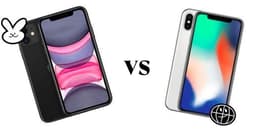
iPhone 11 Pro Vs iPhone X

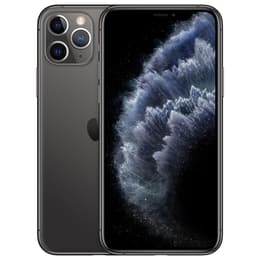
iPhone 11 Pro
iPhone 11 Pro
Starting at

Refurbished price:£153.00

Versus £639.00 new

See options
iPhone X
iPhone X
Starting at

Refurbished price:£94.00

Versus £599.00 new

See options

Ratings

The iPhone X, released in November 2017, marked a significant shift in Apple's smartphone design, introducing a full-screen display and Face ID. Its successor, the iPhone 11 Pro, launched in September 2019, built upon this foundation with a focus on enhanced camera capabilities, improved performance, and extended battery life. Both devices operate on Apple's iOS ecosystem, offering a consistent software experience, but they differ in their core hardware and photographic features.

Scores

Durability

When considering the longevity of these devices, their release timelines and subsequent software support are key factors. The iPhone X, introduced in 2017, has received fewer major iOS updates compared to the iPhone 11 Pro, which debuted in 2019. This difference means the iPhone 11 Pro will continue to receive software support and security updates for a longer period.

  • Software Support: The iPhone 11 Pro benefits from a later release date, ensuring it will receive major iOS updates for a longer duration than the iPhone X.
  • Physical Durability: The iPhone X features a glass and stainless steel construction with an IP67 rating for water and dust resistance. Early drop tests for the iPhone X showed mixed results, with some indicating fragility, particularly for the glass back. The iPhone 11 Pro also uses a glass and stainless steel design but boasts an improved IP68 rating, allowing for submersion in deeper water. Apple stated the iPhone 11 Pro incorporated the toughest glass in a smartphone at its release, and some tests indicated improved resilience, especially for the back glass, though major falls could still cause damage.
  • Expected Lifespan: Users can anticipate a longer practical lifespan from the iPhone 11 Pro due to its newer components and extended software update cycle, which contributes to sustained performance and access to the latest features and security enhancements.

Year of Release

2019

2017

Compatible with latest Update

Yes

No

OS

iOS

iOS

Foldable

No

No

Performance

The performance of a smartphone is largely determined by its internal processing capabilities and how efficiently it manages tasks. Both the iPhone X and iPhone 11 Pro offer smooth user experiences for everyday applications, but the newer model provides a noticeable upgrade in demanding scenarios.

  • Processing Power: The iPhone X is equipped with a capable processor that handles general navigation, app launching, and moderate gaming smoothly. The iPhone 11 Pro, featuring a later-generation processor, delivers enhanced speed and efficiency, resulting in faster app loading times, more fluid multitasking, and improved performance in graphically intensive games and professional applications.
  • Multitasking and Responsiveness: While both devices manage multiple applications effectively, the iPhone 11 Pro's more advanced architecture allows for a more seamless transition between demanding apps and maintains responsiveness under heavier workloads.
  • Battery Endurance: The iPhone 11 Pro offers significantly extended battery life compared to the iPhone X, with users often reporting it lasting through a full day of heavy use and sometimes longer. The iPhone X's battery performance was considered modest, often requiring more frequent charging for active users. This difference is partly due to the iPhone 11 Pro's more power-efficient display and processor.

Memory

4 GB

3 GB

Screen quality

Both the iPhone X and iPhone 11 Pro feature OLED display technology, offering vibrant visuals and deep blacks, but the iPhone 11 Pro introduces advancements that enhance the viewing experience.

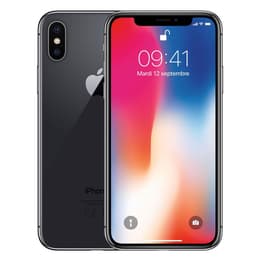
  • Display Technology and Clarity: Both models utilize a 5.8-inch OLED Super Retina display with a resolution of 2436 by 1125 pixels at 458 pixels per inch (ppi), providing sharp and detailed images. OLED technology allows for individual pixel illumination, resulting in true blacks and high contrast. The iPhone 11 Pro upgrades this to a Super Retina XDR display, which offers a higher contrast ratio of 2,000,000:1 compared to the iPhone X's 1,000,000:1.
  • Brightness and Color Accuracy: The iPhone X provides a typical maximum brightness of 625 nits. The iPhone 11 Pro significantly increases this to 800 nits for typical use and can reach up to 1200 nits for HDR content, making it more visible in bright outdoor conditions and enhancing HDR media consumption. Both displays support True Tone and wide color (P3) for accurate color reproduction.
  • Viewing Experience: While both offer an immersive edge-to-edge viewing experience, the iPhone 11 Pro's enhanced brightness and contrast contribute to a more dynamic and impactful visual presentation, particularly when viewing high dynamic range content.

Resolution

1125 x 2436

1125 x 2436

Screen type

Super Retina XDR OLED

Super Retina OLED

Audiovisual

The camera systems are a primary differentiator between these two iPhone models, with the iPhone 11 Pro introducing a more versatile setup and advanced computational photography features.

  • Rear Camera System: The iPhone X features a dual 12-megapixel camera system, comprising a wide-angle lens (f/1.8 aperture) and a telephoto lens (f/2.4 aperture), both with optical image stabilization. The iPhone 11 Pro elevates this with a triple 12-megapixel camera array, adding an Ultra Wide lens (f/2.4 aperture) to the wide-angle (f/1.8 aperture) and an improved telephoto lens (f/2.0 aperture). This provides greater flexibility for capturing expansive landscapes and improved zoom capabilities.
  • Photography Features: Both support Portrait mode and Portrait Lighting, though the iPhone 11 Pro offers more advanced effects and Depth Control. The iPhone 11 Pro introduces significant advancements like Night mode for improved low-light photography, Deep Fusion for enhanced texture and detail, and next-generation Smart HDR for better exposure in challenging lighting conditions. The iPhone X's low-light performance is less capable in comparison.
  • Video and Front Camera: Both phones can record 4K video at up to 60 frames per second, with the iPhone 11 Pro offering extended dynamic range for video. The iPhone 11 Pro also includes audio zoom during video recording. For the front-facing camera, the iPhone X has a 7-megapixel TrueDepth camera, while the iPhone 11 Pro features an upgraded 12-megapixel TrueDepth camera capable of 4K video recording and slow-motion selfies.

Main camera

12 megapixels

12 megapixels

Front camera

12 megapixels

7 megapixels

Miscellaneous

Beyond core performance and display, several practical elements contribute to the overall user experience and differentiate the iPhone X from the iPhone 11 Pro.

  • Connectivity and Ports: Both devices support wireless charging and feature Apple's Lightning port. They offer Bluetooth 5.0 and Wi-Fi connectivity, but the iPhone 11 Pro supports the newer Wi-Fi 6 (802.11ax) standard, which can provide faster and more efficient wireless connections with compatible routers. The iPhone 11 Pro also features faster Gigabit LTE for cellular data compared to the iPhone X's LTE Advanced.
  • Biometric Security and Navigation: Both models rely on Face ID for secure authentication and utilize gesture-based navigation due to the absence of a physical home button.
  • Design and Handling: The iPhone X has a polished stainless steel frame and a glass back, weighing approximately 174 grams. The iPhone 11 Pro also uses a stainless steel frame but features a matte glass finish on the back, which some users find offers a better grip and is less prone to visible fingerprints. It is slightly heavier at around 188 grams.

Weight

188 g

174 g

Screen size (in)

5.8

5.8

Network

4G

4G

SIM card

Physical SIM + eSIM

Physical SIM

Carrier compatibility

Unlocked

Unlocked

Connector

Lightning

Lightning

The iPhone X and iPhone 11 Pro represent different generations of Apple's premium smartphone line, each with distinct strengths. The iPhone X, as a pioneering device, was praised for its innovative full-screen design, the introduction of Face ID, and a capable dual-camera system that delivered good photos for its time. However, some users noted its battery life could be modest, and early durability tests raised concerns about its glass construction.

The iPhone 11 Pro, building on its predecessor, garnered significant acclaim for its substantially improved battery life, which many users found to last well over a day even with heavy use. Its triple-camera system, featuring an Ultra Wide lens, Night mode, and Deep Fusion, was a major highlight, offering enhanced versatility and superior image quality, especially in challenging lighting conditions. Performance was also a strong point, with its advanced processor ensuring smooth operation for demanding tasks.

Users prioritizing a device with an advanced and versatile camera system, particularly for low-light photography and wider shots, along with extended battery life and robust performance for current applications, will find the iPhone 11 Pro well-suited to their needs. Conversely, individuals who appreciate the original full-screen design and Face ID, and require a capable device for everyday tasks and general photography, may find the iPhone X still offers a satisfactory experience. Both models are available as quality-assured refurbished options, providing an eco-friendly alternative for consumers.

See all articles

Our recent comparisons