
iPhone 13 Vs Xiaomi Redmi Note 11 Pro 5G

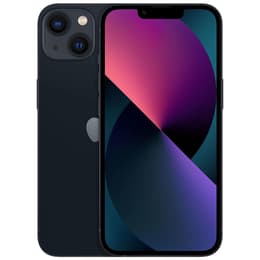
iPhone 13
iPhone 13
Starting at

Refurbished price:£204.00

Versus £599.00 new

See options
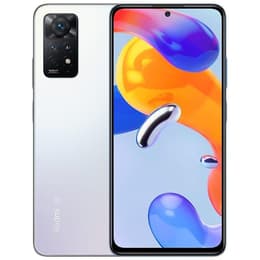
Xiaomi Redmi Note 11 Pro 5G
Starting at

Refurbished price:£102.00

Versus £599.00 new

See options

Ratings

The iPhone 13, released in September 2021, and the Xiaomi Redmi Note 11 Pro 5G, launched globally in January 2022, are smartphones designed for different user experiences. While the iPhone 13 operates on Apple's iOS ecosystem, the Redmi Note 11 Pro 5G runs on Android with Xiaomi's MIUI overlay. Key differentiators lie in their performance capabilities, display technologies, and camera systems, catering to distinct user priorities.

Scores

Durability

When considering the long-term usability of these devices, several factors contribute to their expected lifespan.

  • Release Timeline: The iPhone 13 was released in September 2021, while the Xiaomi Redmi Note 11 Pro 5G followed in January 2022. This means the Redmi Note 11 Pro 5G is slightly newer, potentially offering a marginally longer period of software support from its manufacturer.
  • Software Longevity: Apple is known for providing extended software support for its devices, typically offering iOS updates for five to six years from release. The iPhone 13, initially running iOS 15, is expected to continue receiving major updates for several more years. The Redmi Note 11 Pro 5G launched with Android 11 and MIUI 13, and while Xiaomi provides updates, the duration of major Android version support is generally shorter than Apple's, often spanning two to three major OS updates.
  • Durability Features: The iPhone 13 features a Ceramic Shield front cover and an IP68 rating for dust and water resistance, indicating a high level of protection against environmental elements. The Redmi Note 11 Pro 5G includes Corning Gorilla Glass 5 for screen protection and an IP53 rating, offering basic dust and splash resistance.

Year of Release

2021

2022

Compatible with latest Update

Yes

No

OS

iOS

Android

Foldable

No

No

Performance

The performance of a smartphone is crucial for daily tasks, app usage, and multitasking. These two devices offer different levels of responsiveness and power.

  • Processing Power: The iPhone 13 is equipped with a powerful processor that delivers strong performance across various applications. Users can expect smooth operation for demanding apps, efficient multitasking, and fluid gaming experiences, often outperforming many contemporary Android devices in raw processing benchmarks. The Redmi Note 11 Pro 5G features a mid-range processor designed to handle everyday tasks efficiently, such as web browsing, social media, and video streaming. It can manage lighter games and some moderately demanding titles, though it may not offer the same level of sustained performance for graphically intensive applications.
  • Multitasking and Responsiveness: The iPhone 13, with its optimized software and efficient processing, provides a highly responsive user interface and handles multiple applications running simultaneously without significant slowdowns. The Redmi Note 11 Pro 5G, available with 6GB or 8GB of RAM, offers adequate memory for typical multitasking, allowing users to switch between several apps smoothly.
  • Storage Options: The iPhone 13 comes with internal storage options of 128GB, 256GB, and 512GB, without expandable storage. The Redmi Note 11 Pro 5G offers 64GB or 128GB of internal storage, with the added flexibility of expanding storage up to 1TB using a microSD card.

Memory (GB)

4 GB

6 GB

Screen quality

The visual experience is a significant aspect of smartphone usage, and both devices offer distinct display characteristics.

  • Display Technology and Clarity: The iPhone 13 features a 6.1-inch Super Retina XDR OLED display, known for its deep blacks, vibrant colors, and high contrast ratio. It has a resolution of 2532x1170 pixels, resulting in a pixel density of 460 pixels per inch (ppi), providing sharp and detailed visuals. The Redmi Note 11 Pro 5G sports a larger 6.67-inch FHD+ AMOLED DotDisplay with a resolution of 2400x1080 pixels and a pixel density of 395 ppi. This display also offers excellent colors and contrast, providing an immersive viewing experience.
  • Brightness and Refresh Rate: Both devices offer high peak brightness levels, with the iPhone 13 reaching up to 1200 nits for HDR content and 800 nits typical brightness, ensuring good visibility even in bright outdoor conditions. The Redmi Note 11 Pro 5G also achieves a peak brightness of 1200 nits and a typical brightness of 700 nits. A notable difference is the refresh rate: the iPhone 13 has a standard 60Hz refresh rate, while the Redmi Note 11 Pro 5G boasts a 120Hz refresh rate, which contributes to smoother scrolling and more fluid animations.
  • Viewing Experience: The iPhone 13's display, while smaller, offers exceptional color accuracy and clarity, making it suitable for detailed content consumption. The Redmi Note 11 Pro 5G's larger screen and higher refresh rate provide a more expansive and fluid visual experience, which can be particularly appealing for media consumption and gaming.

Resolution

1170 x 2532

1080 x 2400

Screen type

Super Retina XDR OLED

Super AMOLED

Audiovisual

The camera systems on both smartphones are designed to capture moments, but they approach photography and videography with different strengths.

  • Rear Camera System: The iPhone 13 features a dual 12MP camera system, comprising a main wide-angle lens with a f/1.6 aperture and sensor-shift optical image stabilization, and a 12MP ultra-wide lens with a 120° field of view. It excels in capturing detailed photos with accurate colors and strong low-light performance, especially with its Night mode and Deep Fusion technologies. The Redmi Note 11 Pro 5G comes with a triple camera setup: a 108MP main sensor with an f/1.9 aperture, an 8MP ultra-wide camera, and a 2MP macro camera. The high-resolution main sensor can capture detailed images in good lighting conditions, and its night mode is considered decent for its category.
  • Video Recording Capabilities: The iPhone 13 offers advanced video recording, supporting up to 4K resolution at 60 frames per second (fps) and HDR video with Dolby Vision, providing excellent dynamic range and detail. It also includes Cinematic mode for shallow depth-of-field effects. In contrast, the Redmi Note 11 Pro 5G is limited to 1080p video recording at 30fps across all its cameras, including the front-facing one. It does not support 4K video capture, which is a notable difference for users prioritizing high-resolution video.
  • Front Camera and Audio: The iPhone 13 has a 12MP front camera capable of 4K video recording. The Redmi Note 11 Pro 5G features a 16MP front camera, which performs adequately for selfies and video calls, though its video recording is capped at 1080p 30fps. Both devices offer stereo speakers, with the Redmi Note 11 Pro 5G being praised for its loud and robust sound output.

Main camera

12 megapixels

108 megapixels

Front camera

12 megapixels

16 megapixels

Miscellaneous

Beyond core features, several practical elements differentiate these two smartphones in daily use.

  • Connectivity and Ports: Both devices support 5G connectivity for faster mobile data speeds. The iPhone 13 uses Apple's proprietary Lightning port for charging and data transfer and lacks a 3.5mm headphone jack. The Redmi Note 11 Pro 5G features a USB-C port, a widely adopted standard, and retains a 3.5mm headphone jack, offering more versatility for accessories and audio.
  • Biometric Security: The iPhone 13 relies exclusively on Face ID for secure facial recognition. The Redmi Note 11 Pro 5G offers a side-mounted fingerprint sensor integrated into the power button, alongside AI Face Unlock.
  • Design and Handling: The iPhone 13 has a compact design, measuring 146.7 x 71.5 x 7.65 mm and weighing 174g, making it comfortable for one-handed use. The Redmi Note 11 Pro 5G is larger and heavier at 164.19 x 76.1 x 8.12 mm and 202g, which might make it feel more substantial in hand. It features a glass back with a matte finish, which some users appreciate for its feel and ability to hide fingerprints.

Weight

173 g

202 g

Screen size (in)

6.1

6.67

Mobile network

5G

5G

SIM card

Physical SIM + eSIM

Dual Physical SIM

Carrier compatibility

Unlocked

Unlocked

User feedback for the iPhone 13 frequently highlights its robust performance, excellent camera capabilities, and significantly improved battery life compared to its predecessors. Common criticisms often point to the continued use of the Lightning port, the 60Hz display refresh rate (especially when compared to Pro models), and the absence of Touch ID. Despite being an older model, it is still considered a strong performer.

For the Xiaomi Redmi Note 11 Pro 5G, users often praise its vibrant 120Hz AMOLED display, impressive battery life, and rapid 67W charging. However, frequent concerns include the limitations of its processor, particularly the inability to record 4K video, and the less impressive performance of its secondary cameras. Some users also note its somewhat bulky design and the fact that it launched with an older Android version.

Users prioritizing a compact device with top-tier processing power, advanced video capabilities, and long-term software support may find the iPhone 13 well-suited to their needs. Its consistent performance and high-quality camera system make it a reliable choice for those deeply integrated into the Apple ecosystem or seeking a premium experience. Conversely, users who prioritize a larger, smoother display with a high refresh rate, exceptional battery endurance, and expandable storage might lean towards the Xiaomi Redmi Note 11 Pro 5G. Its fast charging and inclusion of a headphone jack also cater to specific practical preferences. Both devices offer compelling features for different user profiles, and considering a quality-assured refurbished option can provide an eco-friendly alternative for either model.
See all articles

Our recent comparisons