Galaxy A23 5G Vs Galaxy S21 Ultra 5G

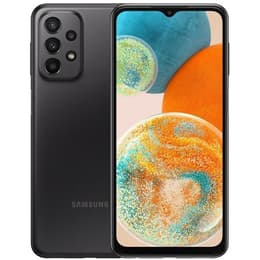
Galaxy A23 5G
Galaxy A23 5G
Starting at

Refurbished price:£100.00

Versus £300.00 new

See options
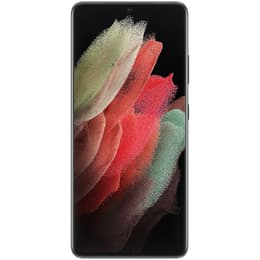
Galaxy S21 Ultra 5G
Galaxy S21 Ultra 5G
Starting at

Refurbished price:£187.00

Versus £1,800.00 new

See options

Ratings

The Samsung Galaxy A23 5G, released in late 2022, and the Samsung Galaxy S21 Ultra 5G, launched in early 2021, represent distinct segments within Samsung's smartphone lineup. While both devices operate on the Android platform, they cater to different user needs through their core specifications and features. The Galaxy A23 5G is positioned as a mid-range option, offering a balance of modern connectivity and essential functionalities, whereas the Galaxy S21 Ultra 5G was a premium flagship designed for advanced performance and comprehensive capabilities.

Scores

Durability

The practical lifespan of these devices varies due to their original market positioning and release timelines.

  • Software Support: The Galaxy A23 5G, being a newer mid-range device, launched with Android 12 and has received updates up to Android 15 as of July 2025 [16]. It was expected to receive two major Android OS updates and four years of security updates, with support potentially extending into 2027 or 2028 [1, 8, 13]. In contrast, the Galaxy S21 Ultra 5G, released with Android 11, received its final major OS update to Android 15 (One UI 7) in May 2025, and its software support officially ended in February 2026, after fulfilling its five-year security patch commitment [25, 33].
  • Build Quality: The Galaxy S21 Ultra 5G features a more robust construction, incorporating Gorilla Glass Victus on both the front and back, along with an aluminum frame, which offers enhanced resistance to drops and scratches [1, 24]. The Galaxy A23 5G typically uses a plastic back and less advanced glass protection, making it more susceptible to physical damage [1, 37].
  • Repairability: Both devices present moderate challenges for repair. The Galaxy S21 Ultra 5G received a low repairability score of 3/10 from iFixit, primarily due to extensive use of glue for the battery, display, and rear panel, and a non-modular display cable [15, 22, 32, 36]. The Galaxy A23 5G is considered moderately difficult to repair, with the battery being strongly glued [42].

Year of Release

2022

2021

Compatible with latest Update

Yes

Yes

OS

Android

Android

Foldable

No

No

Performance

Performance is a significant differentiator between these two smartphones, reflecting their respective market segments.

  • Processing Power: The Galaxy S21 Ultra 5G, equipped with a flagship-grade processor from 2021, handles demanding applications, intensive multitasking, and graphics-heavy games with notable responsiveness and ease [1]. The Galaxy A23 5G, featuring a mid-range processor, provides smooth performance for everyday tasks, web browsing, and lighter gaming, though it may exhibit slowdowns with very demanding applications or extensive multitasking [1].
  • Storage and RAM: The Galaxy S21 Ultra 5G typically offers higher internal storage configurations, ranging from 128GB up to 512GB, and comes with 12GB or 16GB of RAM, facilitating seamless multitasking and app management [6, 24, 35]. It does not support expandable storage [1, 6]. The Galaxy A23 5G usually comes with 64GB or 128GB of internal storage but includes a microSD card slot for expansion up to 1TB, and offers 4GB, 6GB, or 8GB of RAM [2, 3, 5, 6].
  • Battery Behavior: Both devices house a 5000mAh battery. The Galaxy A23 5G is frequently praised for its excellent battery life, often lasting through a day and a half of regular use due to its efficient processor and display technology [7, 29, 37]. The Galaxy S21 Ultra 5G's battery supports its powerful components and high-resolution display, often lasting a full day for moderate users, though heavy usage might require more frequent charging [1, 20, 30, 38].

Memory (GB)

4 GB

12 GB

Screen quality

The visual experience offered by these two devices differs considerably, primarily due to their display technologies and resolutions.

  • Display Technology and Resolution: The Galaxy S21 Ultra 5G features a 6.8-inch Dynamic AMOLED 2X display with a high resolution of 3200x1440 pixels (WQHD+), delivering vibrant colors, deep blacks, and exceptional clarity [6, 20, 24, 35, 38]. The Galaxy A23 5G comes with a 6.6-inch FHD+ PLS LCD display with a resolution of 2408x1080 pixels, offering decent quality for daily use but lacking the contrast and color depth of an AMOLED panel [2, 3, 4, 6, 37].
  • Refresh Rate and Brightness: Both phones offer a 120Hz refresh rate for smoother scrolling and more fluid animations [2, 3, 6]. The Galaxy S21 Ultra 5G's adaptive refresh rate can adjust dynamically to conserve battery, and its display achieves significantly higher brightness levels, improving outdoor visibility [20, 38]. The Galaxy A23 5G's display is generally bright enough for indoor use, but may struggle in direct sunlight [29].
  • Screen Protection: The Galaxy S21 Ultra 5G is protected by Gorilla Glass Victus, offering enhanced durability against scratches and drops [1, 24]. The Galaxy A23 5G uses Corning Gorilla Glass 5 [3].

Resolution

1080 x 2408

1440 x 3200

Screen type

PLS LCD

Dynamic AMOLED 2X

Audiovisual

The camera systems on the Galaxy A23 5G and Galaxy S21 Ultra 5G are designed for different levels of photographic capability and versatility.

  • Rear Camera System: The Galaxy S21 Ultra 5G boasts a comprehensive quad-camera setup, including a 108MP main sensor, a 12MP ultrawide lens, a 10MP telephoto lens with 3x optical zoom, and another 10MP telephoto lens with 10x optical zoom [6, 24, 35, 38]. This configuration provides exceptional versatility, allowing for impressive zoom capabilities and detailed shots across various scenarios, including good low-light performance [1, 17, 20, 35, 40]. The Galaxy A23 5G features a quad-camera system with a 50MP main sensor (with OIS), a 5MP ultrawide, a 2MP macro, and a 2MP depth sensor [2, 3, 11]. Its main camera performs well in good lighting conditions, but its ultrawide and other auxiliary lenses offer more basic functionality and show limitations in challenging low-light environments [1, 26, 28, 29, 37].
  • Front Camera and Video: For selfies, the Galaxy S21 Ultra 5G has a 40MP front camera that captures detailed images [6, 24, 35, 38]. It also supports 8K video recording at 24fps and 4K video at 30/60fps [17, 24]. The Galaxy A23 5G is equipped with an 8MP front camera, which performs decently in good lighting [3, 6, 37]. Video recording on the A23 5G is limited to 1080p resolution, as its processor does not support 4K video capture [26].
  • Additional Features: The Galaxy S21 Ultra 5G includes advanced camera features like Director's View and enhanced Pro modes, offering more creative control [17, 40]. Its optical zoom capabilities are a significant advantage for capturing distant subjects with clarity [1, 24].

Main camera

50 megapixels

108 megapixels

Front camera

8 megapixels

40 megapixels

Miscellaneous

Beyond core performance and display, several practical elements distinguish these two Samsung smartphones.

  • Connectivity and Ports: Both devices support 5G connectivity [6, 10, 24]. The Galaxy S21 Ultra 5G features Wi-Fi 6e and Bluetooth 5.2, offering faster and more stable wireless connections [24]. It uses a USB-C 3.2 port for charging and data transfer and supports eSIM in addition to physical SIMs [10, 24]. The Galaxy A23 5G supports Wi-Fi 802.11 a/b/g/n/ac and Bluetooth v5.10, and includes a USB Type-C port, notably retaining a 3.5mm headphone jack, which is absent on the S21 Ultra 5G [2, 3, 6, 10, 24].
  • Biometrics and Sensors: The Galaxy S21 Ultra 5G features an in-display ultrasonic fingerprint sensor that is quick and responsive, along with face recognition [20, 22, 24, 30]. The Galaxy A23 5G incorporates a side-mounted fingerprint sensor integrated into the power button [3, 26].
  • Design and Handling: The Galaxy S21 Ultra 5G has a more premium feel with its aluminum frame and Gorilla Glass Victus back, weighing approximately 227g [6, 10, 24]. Its dimensions are 165.1 x 75.6 x 8.9mm [6]. The Galaxy A23 5G, with its plastic construction, weighs around 197g and measures 167.2 x 76.4 x 9.0mm, offering a lighter feel but less premium materials [2, 5, 6, 10, 37]. The S21 Ultra 5G also supports the S Pen, sold separately, expanding its functionality for note-taking and drawing [17, 24, 35].

Weight

197 g

227 g

Screen size (in)

6.6

6.8

Mobile network

5G

5G

SIM card

Dual Physical SIM

Dual Physical SIM + eSIM

Carrier compatibility

Unlocked

Unlocked

Connector

USB-C + Jack 3.5mm

USB-C

The Samsung Galaxy A23 5G and Galaxy S21 Ultra 5G cater to distinct user preferences, with each device offering a compelling set of features for its intended audience. User feedback for the Galaxy A23 5G often highlights its strong battery life and capable main camera as significant advantages, especially for its segment [7, 29, 37]. However, some users note its display quality, particularly the LCD panel and dated notch design, as areas where compromises were made [37]. The Galaxy S21 Ultra 5G, on the other hand, is frequently praised for its exceptional camera system, vibrant display, and robust performance, making it a strong contender for photography enthusiasts and power users [20, 30, 35, 38, 40]. Criticisms sometimes point to its battery life for very heavy users and its considerable size and weight [20, 38].

Users prioritizing extended software support and a modern, efficient experience for everyday tasks, along with excellent battery endurance and expandable storage, may find the Galaxy A23 5G well-suited to their needs. Its 3.5mm headphone jack is also a practical benefit for many. Conversely, users who demand top-tier camera versatility, including advanced zoom and 8K video, a high-resolution AMOLED display, and flagship-level processing power for demanding applications, will likely lean towards the Galaxy S21 Ultra 5G. Its premium build materials and S Pen compatibility also appeal to those seeking a more refined and feature-rich device.

For those considering either of these devices, exploring quality-assured refurbished options can provide an eco-friendly alternative, offering access to these technologies while supporting sustainable consumption.

See all articles

Our recent comparisons