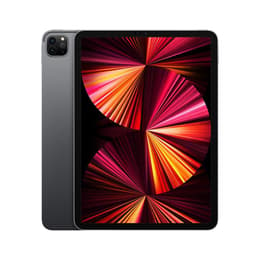

iPad Air 6 (2024, M2 series) Vs iPad Pro (2021, M1 series)

iPad Air 6 (2024, M2 series)
Starting at

Refurbished price:£405.00

Versus £599.00 new

See options
iPad Pro (2021, M1 series)
Starting at

Refurbished price:£359.00

Versus £749.00 new

See options

Ratings

The iPad Air 2024 M2 Series and the iPad Pro 2021 M1 Series are both powerful tablets from Apple, designed for a range of tasks from creative work to everyday productivity. While the iPad Air M2 represents a more recent iteration in the Air lineup, featuring an updated processor, the iPad Pro M1, released a few years prior, introduced Apple's desktop-class silicon to tablets and offers several premium features. Both devices run on iPadOS, providing a consistent software experience, but they cater to slightly different user priorities through their hardware distinctions.

Scores

Durability

When considering the longevity of these tablets, several factors come into play, including their release timelines, operating system support, and potential for repairs.

  • Release Timeline: The iPad Air M2 was released in May 2024, making it a newer device compared to the iPad Pro M1, which launched in May 2021. This difference in release year means the iPad Air M2 will likely receive major iPadOS updates for a longer period.
  • Software Longevity: Apple typically provides 5-6 years of major iPadOS updates for its devices, with security updates often extending beyond that. Given its later release, the iPad Air M2 is expected to maintain full software compatibility and receive new features for a longer duration than the iPad Pro M1.
  • Practical Lifespan: Both models are built with durable materials and are designed for extended use. The M-series chips in both devices contribute to their long-term performance capabilities, ensuring they can handle demanding applications for years. Users often find their iPads remain functional and responsive for many years, even after they stop receiving the very latest OS updates.

Year of Release

2024

2021

Compatible with latest Update

Yes

Yes

OS

iPadOS

iPadOS

Maximum Operating System supported

iPadOS 18

iPadOS 18

Performance

Both the iPad Air M2 and the iPad Pro M1 are equipped with powerful processors, delivering robust performance for a wide array of tasks, though there are distinctions in their capabilities and configurations.

  • Processing Power: The iPad Air M2 features a newer generation processor, which provides a noticeable boost in overall speed and graphical performance compared to the M1 chip in the iPad Pro 2021. This translates to faster app loading, smoother multitasking, and enhanced performance in graphically intensive applications and games.
  • Multitasking and Storage: The iPad Air M2 comes with 8GB of unified memory across all configurations, with storage options up to 1TB. The iPad Pro M1 offers 8GB of unified memory for lower storage tiers (128GB, 256GB, 512GB) and 16GB of unified memory for higher storage configurations (1TB, 2TB). For users who frequently work with very large files or run numerous demanding applications simultaneously, the 16GB RAM option on the higher-end iPad Pro M1 models could offer a slight advantage in memory-intensive workflows.
  • Real-world Responsiveness: Both tablets handle everyday tasks, web browsing, and media consumption with exceptional fluidity. Users will find both devices highly responsive, capable of managing complex creative projects like video editing or graphic design without significant slowdowns. The M2's advancements are most apparent in benchmarks and the most demanding professional applications.

Memory (GB)

8 GB

8 GB

Processor

Apple M2

Apple M1

Screen quality

The visual experience on both tablets is impressive, though the iPad Pro M1 offers advanced display technology, particularly in its larger model, that sets it apart from the iPad Air M2.

  • Display Technology and Clarity: The iPad Air M2 features a Liquid Retina IPS LCD display, available in 11-inch and a new 13-inch size, offering vibrant colors and sharp text with a resolution of 2360x1640 for the 11-inch and 2732x2048 for the 13-inch model. The 11-inch iPad Pro M1 also uses a Liquid Retina IPS LCD display (2388x1668), while the 12.9-inch iPad Pro M1 boasts a Liquid Retina XDR display with mini-LED technology, providing superior contrast, deeper blacks, and more precise local dimming.
  • Brightness and Refresh Rate: The iPad Air M2 offers a typical brightness of 500 nits for the 11-inch and 600 nits for the 13-inch model, with a standard 60Hz refresh rate. The iPad Pro M1 models feature a typical brightness of 600 nits, and the 12.9-inch Liquid Retina XDR display can reach 1000 nits of full-screen brightness and 1600 nits peak brightness for HDR content. Crucially, both iPad Pro M1 models include ProMotion technology, enabling an adaptive refresh rate up to 120Hz for smoother scrolling and more fluid motion, a feature not present on the iPad Air M2.
  • Viewing Experience: For general use and media consumption, both displays offer excellent quality. However, users who prioritize the smoothest visual experience for fast-moving content or professional color-accurate work, especially with HDR, will find the iPad Pro M1's ProMotion and, for the 12.9-inch model, its mini-LED display, to be a significant advantage.

Resolution

2360 x 1640

2388 x 1668

True Tone

Yes

Yes

Pro-Motion

No

Yes

Screen type

Liquid Retina display

Liquid Retina display

Pixel density

264ppp

264ppp

Brightness

500 nits brightness

600 nits brightness max

Sound quality

Speakers

Stereo speakers (landscape)

Four speaker audio

Audiovisual

Both tablets offer capable camera systems for a tablet, suitable for video calls, document scanning, and casual photography, but the iPad Pro M1 includes more advanced features.

  • Rear Camera System: The iPad Air M2 features a single 12MP Wide rear camera, capable of capturing detailed photos and 4K video. The iPad Pro M1 includes a more versatile dual-camera system on the rear, consisting of a 12MP Wide camera and a 10MP Ultra Wide camera, along with a LiDAR Scanner for enhanced augmented reality experiences and improved depth sensing.
  • Front Camera and Video Calls: Both devices feature a 12MP Ultra Wide front camera with Center Stage, which automatically keeps the user framed during video calls. A notable difference is the placement: the iPad Air M2's front camera is now located on the landscape edge, which is often more convenient for video conferencing when the tablet is used horizontally. The iPad Pro M1's front camera remains on the shorter edge, which is ideal for portrait orientation.
  • Audio Quality: The iPad Air M2 provides stereo speakers, which deliver clear audio for media consumption. The iPad Pro M1, however, features a four-speaker audio system, offering a richer and more immersive sound experience, along with five studio-quality microphones for clearer audio input during calls and recordings.

Miscellaneous

Beyond core performance and display, several practical elements differentiate these two tablets, impacting their usability and connectivity options.

  • Connectivity and Ports: The iPad Air M2 supports Wi-Fi 6E and Bluetooth 5.3, offering faster and more stable wireless connections. The iPad Pro M1 supports Wi-Fi 6 and Bluetooth 5.0. Both devices feature a USB-C port, but the iPad Pro M1's port is a Thunderbolt/USB4 port, providing significantly faster data transfer speeds and broader compatibility with high-bandwidth accessories like external displays and storage.
  • Biometric Authentication: The iPad Air M2 utilizes Touch ID, integrated into the power button, for secure authentication. The iPad Pro M1 features Face ID, using facial recognition for unlocking and authentication. The preference between Touch ID and Face ID often comes down to individual user habits and preferences.
  • Design and Accessories: The iPad Air M2 is available in 11-inch and a new 13-inch size, with a slightly thinner profile than the iPad Pro M1. Both support Apple Pencil and Magic Keyboard accessories, though the iPad Air M2 is compatible with the newer Apple Pencil Pro, while the iPad Pro M1 supports the Apple Pencil 2. The iPad Air M2 also offers a wider range of color options.

Weight

462 g

466 g

Width

17.8 cm

17.85 cm

Height

24 cm

24.76 cm

Depth

0.61 cm

0.59 cm

Screen size (in)

11

11

Network

Wi-Fi

Wi-Fi

Carrier compatibility

Without SIM Port

Without SIM Port

Wi-Fi technology

Wi-Fi 6E 802.11ax

Wi-Fi 6 802.11ax

Bluetooth Version

Bluetooth 5.3

Bluetooth 5.0

Face ID

No

Yes

Touch ID

Yes

No

Connector

USB Type-C

USB Type-C

The iPad Air 2024 M2 Series and the iPad Pro 2021 M1 Series both stand as highly capable tablets, each with distinct advantages tailored to different user needs. User feedback often highlights the iPad Air M2's appeal for its updated processor, the convenience of its landscape-oriented front camera, and the introduction of a larger 13-inch display option, making it a strong contender for general productivity and media consumption. Some users, however, note the absence of a high refresh rate display as a point of consideration.

Conversely, the iPad Pro 2021 M1 Series is frequently praised for its advanced display technology, particularly the Liquid Retina XDR with mini-LED on the 12.9-inch model, offering exceptional visual fidelity and a smoother experience thanks to ProMotion. Its Thunderbolt port and more comprehensive camera system are also often cited as significant benefits for professionals. A common sentiment among users is that the M1 chip, even a few years after its release, remains exceptionally powerful, sometimes exceeding the demands of iPadOS.

Users prioritizing the latest processing power, a landscape front camera for video calls, and a slightly more modern design, potentially in a larger Air form factor, may find the iPad Air M2 well-suited to their requirements. Those who value a superior display with ProMotion, advanced camera capabilities including LiDAR, faster data transfer with Thunderbolt, and the option for more unified memory for intensive tasks, will likely lean towards the iPad Pro M1. Both devices offer excellent performance and a robust app ecosystem. For those seeking an eco-friendly alternative, quality-assured refurbished options for both models are available, providing a sustainable choice without compromising on performance.


See all articles

Our recent comparisons