
Compare models
Google Pixel 7 Pro Vs iPhone Air
- 1-year minimum warranty
- Free delivery on all items
- Free 30-day returns
Differences at a glance
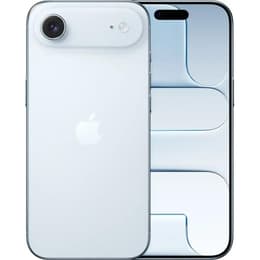
The Google Pixel 7 Pro (2022) and the Apple iPhone Air (2025) represent two distinct philosophies in smartphone design, bridging different release years and operating ecosystems. While the Google Pixel 7 Pro runs on Android and focuses on a versatile multi-lens camera approach, the iPhone Air operates on iOS and prioritizes an ultra-slim, lightweight profile. Both devices cater to users seeking high-end performance, though they achieve their goals through vastly different form factors and software environments.
Available Models
Colour
Storage (GB)
Scores
Durability
Evaluating the lifespan and durability of these devices involves looking at their release timelines, software update commitments, and physical construction robustness.
- Software support windows: The Google Pixel 7 Pro receives multi-year operating system upgrades extending into later Android cycles, while the iPhone Air benefits from Apple's long-standing software update timeline and extended patch support.
- Build and materials: The Google Pixel 7 Pro utilizes durable glass panels with an aluminum frame, whereas the iPhone Air employs a rigid titanium frame paired with reinforced front and rear glass protection.
- Practical longevity: Both devices offer robust water and dust resistance ratings, ensuring they withstand everyday environmental exposure over several years of daily use.
Year of Release
2022
2025
Compatible with latest Update
Yes
Yes
OS
Android
iOS
Foldable
No
No
Performance
System responsiveness and daily multitasking capabilities vary based on internal hardware optimization, memory capacity, and battery management design.
- Multitasking and app switching: Both models handle heavy applications, rapid switching, and demanding gaming sessions smoothly, supported by generous memory allocations.
- Storage capacity tiers: The Google Pixel 7 Pro starts with expansive storage configurations, while the iPhone Air begins at higher baseline storage tiers to accommodate media-heavy workflows.
- Battery behavior: The Google Pixel 7 Pro features a larger physical battery capacity for extended daily usage, whereas the iPhone Air balances its ultra-thin profile with power-efficient internal processing.
Screen quality
Display characteristics shape media consumption, outdoor legibility, and everyday visual comfort across both smartphones.
- Panel technology and sharpness: Both devices feature high-resolution OLED displays that deliver deep black levels, vivid contrast, and crisp text clarity.
- Outdoor visibility: High peak brightness capabilities ensure that screens remain easily readable under direct sunlight or bright ambient lighting conditions.
- Motion smoothness: Adaptive refresh rates scaling up to high frequencies provide fluid scrolling through web pages, menus, and compatible applications.
Resolution
1440 x 3120
2736x1260
Screen type
LTPO AMOLED
Super Retina XDR
Audiovisual
Imaging hardware and audio-visual output dictate how each smartphone handles photography, video recording, and multimedia playback.
- Rear camera systems: The Google Pixel 7 Pro features a triple-lens array including a dedicated telephoto zoom lens, whereas the iPhone Air opts for a streamlined single-lens high-resolution setup.
- Computational photography: Both platforms excel at automatic image optimization, handling challenging low-light environments and high-contrast scenes effectively through software processing.
- Media and audio output: Stereo speaker configurations provide clear sound delivery for hands-free calls, casual video viewing, and audio playback.
Main camera
50 megapixels
48 megapixels
Front camera
10.8 megapixels
18 megapixels
Miscellaneous
Practical everyday features, connectivity standards, and physical handling traits define the user experience beyond core processing.
- Connectivity standards: Both models support fast 5G cellular networks, modern Wi-Fi protocols, and precise location tracking for navigation.
- Physical dimensions and weight: The Google Pixel 7 Pro offers a heavier, substantial feel in the hand, while the iPhone Air emphasizes a remarkably thin and lightweight construction.
- Security and authentication: Biometric security is handled via secure facial recognition and responsive under-display fingerprint sensors.
Weight
212 g
165 g
Screen size (in)
6.7
6.5
Mobile network
5G
5G
SIM card
Physical SIM + eSIM
eSIM
Carrier compatibility
Unlocked
Unlocked
Connector
USB-C
USB-C
What the community thinks
Community feedback highlights distinct preferences for each device across user forums. Users frequently praise the Google Pixel 7 Pro for its comprehensive multi-lens camera versatility, comfortable ergonomics, and deep integration with the Android ecosystem. Conversely, users often commend the iPhone Air for its groundbreaking thinness, lightweight portability, and smooth iOS interface. Some criticisms note that the Pixel 7 Pro can feel heavy during extended one-handed use, while users occasionally point out that the iPhone Air's slim profile limits physical battery scaling compared to bulkier alternatives.
Users prioritizing a dedicated optical zoom lens and an open operating system may prefer the Google Pixel 7 Pro, while users prioritizing an exceptionally lightweight build, a streamlined single-lens camera, and the iOS ecosystem will lean toward the iPhone Air. Choosing a quality-assured refurbished option serves as an eco-friendly alternative for acquiring either device while reducing electronic waste. Ultimately, the decision rests on whether an expansive multi-camera tool or an ultra-portable minimalist design better fits daily requirements.