Compare models
iPhone 15 Vs iPhone Air
- 1-year minimum warranty
- Free delivery on all items
- Free 30-day returns
Differences at a glance
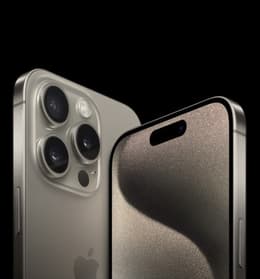
The iPhone 15 (2023) and the iPhone Air (2025) represent different approaches to smartphone design within Apple's ecosystem, bridging a two-year generation gap. While the iPhone 15 serves as a standard, accessible option with a compact form factor, the iPhone Air introduces a radically thin profile focused on lightweight handling and modern hardware updates. Both models utilize the iOS operating system, though they launch with different software generations and feature distinct internal capabilities that cater to divergent user preferences.
Available Models
Colour
Storage (GB)
Scores
Durability
When evaluating hardware longevity and software support, both devices offer robust durability backed by modern construction standards, though their release timelines create different windows for future updates.
- Release timeline and software support: The iPhone 15 launched in late 2023 and benefits from an established update cycle, whereas the newer iPhone Air extends support further into the future with a more recent release date.
- Build resilience and repairability: Both models incorporate water and dust resistance alongside reinforced glass construction, though the iPhone Air utilizes a titanium frame compared to the aluminum housing of the iPhone 15.
- Expected lifespan: Users can expect extended software usability from both devices, with the newer model providing additional headroom for future operating system iterations.
Year of Release
2023
2025
Performance
Underneath the exterior, these devices handle everyday multitasking, demanding applications, and system navigation through distinct hardware configurations tailored to different operational demands.
- System responsiveness and multitasking: The iPhone 15 handles routine daily tasks and moderate gaming efficiently, while the iPhone Air provides faster app loading and smoother transitions for heavy multitasking workflows thanks to its higher RAM capacity and advanced processing architecture.
- Storage configurations: The iPhone 15 starts with lower base storage tiers suitable for average cloud users, whereas the iPhone Air offers larger baseline storage capacities for media-heavy workflows.
- Battery behavior: The standard battery design of the iPhone 15 delivers reliable day-long endurance for typical usage, while the ultra-slim profile of the iPhone Air requires careful power management during heavy use due to its compact internal battery capacity.
Screen quality
Visual output and display engineering differ notably between the two models, impacting media consumption, outdoor legibility, and scrolling smoothness.
- Display technology and refresh rate: The iPhone 15 features a traditional refresh rate on its standard screen size, whereas the iPhone Air adopts a larger display paired with a high refresh rate for smoother scrolling and motion rendering.
- Outdoor visibility: Both screens incorporate high peak brightness capabilities, ensuring content remains legible under direct sunlight or bright ambient lighting conditions.
- Viewing experience: The iPhone 15 provides a compact viewing area favored by single-handed users, while the iPhone Air offers an expansive screen real estate suited for reading and video playback.
Audiovisual
Photography and audio capabilities vary significantly, reflecting each device's distinct structural design and target feature set.
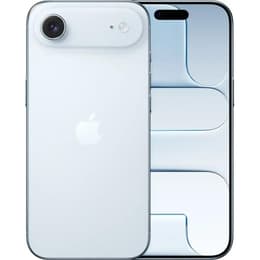
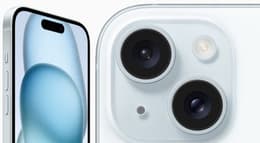
- Camera system versatility: The iPhone 15 features a dual-lens rear camera setup offering standard and ultra-wide perspectives, while the iPhone Air streamlines the rear hardware into a single high-resolution lens integrated within a specialized camera plateau.
- Low-light and video performance: Both smartphones capture detailed images and stable video recordings in standard lighting, though their computational photography features differ slightly based on generation.
- Audio output: The iPhone 15 provides balanced stereo sound for media playback, whereas the ultra-thin profile of the iPhone Air relies on a mono speaker setup for audio output.
Miscellaneous
Practical daily usability elements such as physical dimensions, connectivity standards, and port configurations highlight the structural evolution between these generations.
- Dimensions and handling: The iPhone 15 offers a comfortable, traditional grip with standard thickness, while the iPhone Air prioritizes an exceptionally slim profile and reduced weight for effortless pocketability.
- Connectivity standards: Both models utilize universal USB-C connectivity for charging and data transfer, though the iPhone Air incorporates advanced wireless networking protocols for faster local data exchange.
- Security and sensors: Both devices rely on facial recognition sensors for secure authentication and system navigation alongside standard motion tracking hardware.
Screen size (in)
6.1
6.5
Mobile network
5G
5G
SIM card
Physical SIM + eSIM
eSIM
Carrier compatibility
Unlocked
Unlocked
Connector
USB-C
USB-C
What the community thinks
User discussions across community forums frequently highlight the iPhone 15 for its reliable everyday ergonomics, balanced battery endurance, and practical dual-camera versatility. Common criticisms for the model often center on its standard refresh rate and lack of advanced processing headroom for future-intensive tasks. Conversely, the iPhone Air receives significant praise for its breakthrough thin design and lightweight titanium build, though users frequently note trade-offs regarding its single rear camera system, mono speaker audio, and battery capacity limitations imposed by the ultra-slim chassis.
Users prioritizing a lightweight, highly portable device with a fluid high-refresh display will find the iPhone Air well-suited to their daily routine, while users seeking a traditional balanced configuration with standard dual-lens photography may prefer the iPhone 15. For those exploring sustainable purchasing decisions, a quality-assured refurbished option provides an eco-friendly alternative that extends device life cycles without compromising on performance standards. Ultimately, the choice depends on whether physical slimness or balanced multimedia features take priority in daily use.