
Compare models

iPhone 17 Pro Vs iPhone Air

  • 1-year minimum warranty
  • Free delivery on all items
  • Free 30-day returns
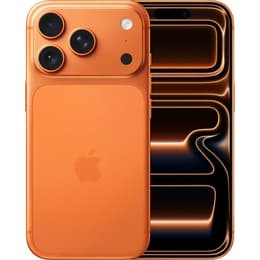
iPhone 17 Pro
Starting at

Refurbished price:£935.00

Versus £1,099.00 new

See options
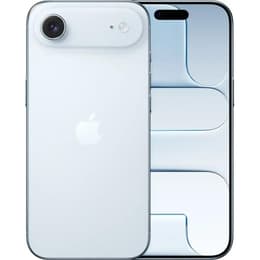
iPhone Air
Starting at

Refurbished price:£640.00

Versus £1,099.00 new

See options

Differences at a glance

The iPhone 17 Pro (2025) and iPhone Air (2025) represent two distinct design philosophies within Apple's nineteenth generation of smartphones. While both devices operate on iOS and share current-generation processing architecture, they cater to very different user preferences. The iPhone 17 Pro focuses on robust multi-camera flexibility and sustained workloads, whereas the iPhone Air prioritizes an ultra-slim profile and lightweight portability.

Available Models

Colour

Storage (GB)

Scores

Durability

Both smartphones share the same 2025 release window, ensuring parallel entry points for long-term software support cycles and security updates.

  • Software longevity: Both models run on iOS and receive identical multi-year operating system update schedules, keeping them current for an extended duration.
  • Build durability: The iPhone 17 Pro utilizes a structured frame designed for heavy daily handling, while the iPhone Air features a remarkably thin titanium chassis protected by reinforced scratch-resistant glass.
  • Expected lifespan: Internal hardware configurations on both units offer sufficient performance headroom for years of reliable everyday use under normal conditions.

Year of Release

2025

2025

Performance

System responsiveness and storage configurations remain robust across both models, though internal physical constraints lead to differences in sustained operational behavior.

  • Multitasking capacity: Generous memory allocations on both devices allow demanding applications, browser tabs, and background processes to run simultaneously without noticeable stutter.
  • Thermal efficiency: The thicker body of the iPhone 17 Pro accommodates advanced thermal management for prolonged tasks, while the ultra-thin profile of the iPhone Air is better suited to moderate daily usage patterns.
  • Power management: Battery endurance varies between the compact cell of the slim model and the larger capacity housed inside the professional variant, influencing how frequently each device requires recharging.

Screen quality

Visual output is sharp and responsive on both displays, offering high refresh rates and deep contrast levels for media consumption.

  • Display technology: Both devices employ advanced OLED panels featuring adaptive refresh rates up to 120Hz for fluid scrolling and smooth animations.
  • Brightness performance: High peak outdoor brightness levels ensure screen content remains legible under direct sunlight, supplemented by very low minimum luminance for dim environments.
  • Panel dimensions: The iPhone Air provides a larger 6.5-inch viewing area, whereas the iPhone 17 Pro opts for a more compact 6.3-inch form factor that improves one-handed reachability.

Audiovisual

Optics and media recording capabilities highlight the most prominent functional divergence between these two smartphones.

  • Lens configuration: The iPhone 17 Pro features a versatile triple-lens array including dedicated telephoto zoom capabilities, while the iPhone Air streamlines photography with a single high-resolution main lens.
  • Low-light and video: Both models capture detailed images and high-definition video in challenging lighting conditions, though the multi-lens system provides greater compositional flexibility for distant subjects.
  • Audio output: Stereo speaker configurations on the professional model deliver robust sound staging for media playback, compared to the streamlined speaker setup found on the ultra-thin alternative.

Miscellaneous

Connectivity standards, physical input ports, and security sensors share standard implementations across both contemporary releases.

  • Port architecture: Both smartphones utilize standard USB-C connection ports for charging and data synchronization, accompanied by wireless charging compatibility.
  • Authentication and security: Face recognition sensors embedded within the display cutout handle device unlocking and secure payment verification.
  • Physical handling: The iPhone Air emphasizes a featherlight 165g weight and minimal thickness, whereas the heavier iPhone 17 Pro reflects its dense internal components and heavier build materials.

Screen size (in)

6.3

6.5

Mobile network

5G

5G

SIM card

Physical SIM + eSIM

eSIM

Carrier compatibility

Unlocked

Unlocked

Connector

USB-C

USB-C

What the community thinks

Choosing between these two devices depends entirely on individual daily priorities and physical preferences. Users who value photography versatility, sustained application performance, and a slightly smaller screen size will find the iPhone 17 Pro well-suited to their needs. Conversely, users prioritizing maximum portability, a featherlight feel, and a larger viewing canvas may lean toward the iPhone Air. Choosing a quality-assured refurbished option through Back Market offers a sustainable way to acquire either model while supporting eco-friendly technology circulation.