
Compare models
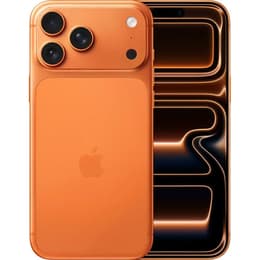
Google Pixel 7 Pro Vs iPhone 17 Pro Max
- 1-year minimum warranty
- Free delivery on all items
- Free 30-day returns
Differences at a glance
The Google Pixel 7 Pro (2022) and the iPhone 17 Pro Max (2025) represent different generations and ecosystems within the smartphone market, catering to users looking for large-screen flagship mobile experiences. While both devices offer premium build quality, advanced photography suites, and expansive displays, they operate on different software platforms with distinct interface philosophies. Choosing between these two models involves weighing software ecosystem preferences, release timelines, and specific hardware capabilities to match individual daily requirements.
Available Models
Colour
Storage
Scores
Durability
When examining longevity and support, these two devices reflect different points in their respective product life cycles, influencing how long they will receive official software updates and security patches.
- Release timeline and support: The iPhone 17 Pro Max benefits from a much more recent release year, ensuring several additional years of software support compared to the Google Pixel 7 Pro, which launched earlier in the decade.
- Software updates: Both manufacturers provide regular operating system upgrades, though the newer Apple model extends active feature support further into the future. Choosing a quality-assured refurbished option for the Pixel model extends its lifecycle and provides a sustainable choice for environmentally conscious buyers.
- Repairability and durability: Both smartphones feature robust glass and metal construction with high water-resistance ratings, though professional repair services and parts availability vary depending on regional infrastructure.
Year of Release
2022
2025
Compatible with latest Update
Yes
Yes
OS
Android
iOS
Foldable
No
No
Performance
Underneath the exterior, both devices manage demanding workloads, multitasking routines, and everyday applications efficiently, though their underlying processing hardware and memory management differ.
- Multitasking and app switching: Both smartphones handle multiple open applications simultaneously without noticeable slowdowns, offering smooth switching between demanding productivity apps and media streaming.
- Gaming and thermal behavior: The iPhone 17 Pro Max features a newer-generation processor that manages graphically intense gaming sessions with sustained frame stability, whereas the Pixel 7 Pro handles everyday casual gaming and standard tasks reliably with occasional warmth during extended gaming periods.
- Storage and battery endurance: Both models are available in multiple storage capacities to accommodate large media libraries, while their battery capacities comfortably support a full day of standard mixed usage involving web browsing, messaging, and navigation.
Screen quality
Display technology is a primary focal point for both devices, delivering bright, sharp, and immersive viewing experiences suited for media consumption and daily navigation.
- Display panel technology: Both devices utilize advanced OLED panel technology, providing deep contrast levels, rich color reproduction, and wide viewing angles for outdoor readability.
- Refresh rate and smoothness: Both screens support adaptive high refresh rates up to 120 hertz, ensuring fluid scrolling through web pages, documents, and user interface menus.
- Brightness and outdoor visibility: The iPhone 17 Pro Max reaches higher peak outdoor brightness levels for improved legibility under direct sunlight, while the Pixel 7 Pro maintains adequate clarity in bright daylight conditions.
Resolution
1440 x 3120
2868x1320
Screen type
LTPO AMOLED
Super Retina XDR
Audiovisual
Photography and video recording suites on both smartphones offer versatile lens configurations designed to capture detailed imagery across various lighting environments.
- Lens versatility: Both models feature a triple-camera array comprising a main wide lens, an ultra-wide lens, and a dedicated telephoto lens with optical zoom capabilities for distant subjects.
- Low-light and everyday photography: The Pixel 7 Pro relies on advanced computational photography algorithms to balance high-contrast scenes, while the iPhone 17 Pro Max delivers consistent color accuracy and rapid shutter response.
- Video recording and audio: The iPhone 17 Pro Max excels in steady video capture, cinematic depth effects, and microphone clarity, whereas the Pixel 7 Pro offers robust software-based video stabilization and clear audio isolation features.
Main camera
50 megapixels
48 megapixels
Front camera
10.8 megapixels
18 megapixels
Miscellaneous
Physical handling characteristics, connectivity standards, and daily utility features define how each smartphone integrates into a user's everyday carry and routine.
- Connectivity and ports: Both devices support 5G cellular networks, high-speed Wi-Fi standards, and Bluetooth for accessory pairing, while utilizing distinct proprietary or universal port standards for charging and wired data transfer.
- Biometrics and security: The Pixel 7 Pro offers both facial recognition and an under-display fingerprint sensor, whereas the iPhone 17 Pro Max relies exclusively on advanced facial recognition technology for secure authentication.
- Physical dimensions and weight: Both models feature large form factors with substantial screen real estate, requiring two-handed use for comfortable navigation during extended tasks.
Weight
212 g
233 g
Screen size (in)
6.7
6.9
Mobile network
5G
5G
SIM card
Physical SIM + eSIM
Physical SIM + eSIM
Carrier compatibility
Unlocked
Unlocked
What the community thinks
User discussions and community feedback highlight distinct preferences for each device depending on daily workflow requirements and operating system loyalty. Users praising the Google Pixel 7 Pro frequently cite its intuitive software interface, responsive voice-to-text capabilities, and natural photo rendering style. Conversely, common praise for the iPhone 17 Pro Max centers on its long-lasting battery efficiency, robust video recording tools, and seamless integration with other computing accessories. Common criticisms for the older Pixel model involve occasional warmth during intensive tasks and shorter remaining software support, while discussions regarding the iPhone often focus on its heavier physical footprint and closed ecosystem constraints.
Users prioritizing a customizable software experience and automated photo adjustments may prefer the Google Pixel 7 Pro, while users focusing on extended software longevity, video production capabilities, and ecosystem synergy will likely lean toward the iPhone 17 Pro Max. Evaluating these core priorities helps determine which device aligns best with individual daily habits. Buyers looking for an eco-friendly alternative can find both models available as quality-assured refurbished options that reduce electronic waste without compromising on core hardware functionality.