
Compare models
Galaxy A55 Vs Google Pixel Fold
- 1-year minimum warranty
- Free delivery on all items
- Free 30-day returns
Differences at a glance
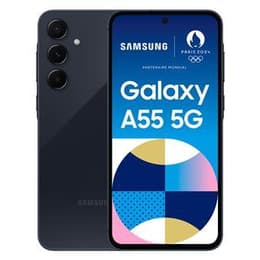
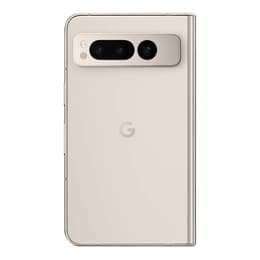
The Samsung Galaxy A55 (2024) and the Google Pixel Fold (2023) represent distinct approaches to smartphone design and functionality. While the Galaxy A55 offers a traditional, flat-screen experience with a focus on balanced performance and display quality, the Pixel Fold introduces a unique foldable form factor, transforming from a compact smartphone into a larger tablet-like device. Both run on the Android operating system, with Samsung's One UI overlay on the A55 and a more stock Android experience on the Pixel Fold.
Available Models
Colour
Storage (GB)
Scores
Durability
When considering the long-term usability of these devices, their release timelines and software support are key factors.
- Software Longevity: The Samsung Galaxy A55, released in March 2024, is slated to receive four major Android operating system upgrades and five years of security updates, extending its support until approximately 2029. The Google Pixel Fold, launched in June 2023, is guaranteed a minimum of five years of security updates from its release date.
- Physical Durability: The Galaxy A55 features Corning Gorilla Glass Victus+ on both its front and back, complemented by an aluminium frame, and boasts an IP67 rating for dust and water resistance. The Pixel Fold incorporates Gorilla Glass Victus for its cover display and a more delicate Ultra Thin Glass for its internal folding screen, alongside an IPX8 water resistance rating, indicating better protection against water immersion.
- Repairability: The Galaxy A55 has a repairability score of 8.5 out of 10, suggesting it is designed to be relatively easier to repair, with Samsung indicating improvements in disassembly and part availability. Information regarding the Pixel Fold's repairability score is less readily available, though the complex nature of foldable devices can sometimes present challenges for repairs.
Year of Release
2024
2023
Compatible with latest Update
Yes
Yes
OS
Android
Android
Foldable
No
Yes
Performance
The performance of a smartphone dictates its responsiveness and capability to handle various applications and tasks.
- Processing Power: The Galaxy A55 is equipped with an octa-core processor, designed to manage everyday tasks and moderate gaming smoothly. The Pixel Fold features a processor from a previous flagship generation, which, while powerful, has been noted by some users to run warm during extended use or demanding applications.
- Multitasking and Responsiveness: The Galaxy A55 generally offers good speed for daily use, with quick app opening and closing times, though some users have reported occasional stutters within the user interface. The Pixel Fold comes with a generous amount of RAM, which typically aids in smooth multitasking, but some users have experienced occasional stutters and app crashes, particularly when transitioning between folded and unfolded states.
- Storage and Expandability: The Galaxy A55 offers various storage configurations and supports expandable storage via a microSD card up to 1TB, providing flexibility for users with large media libraries. The Pixel Fold is available with substantial internal storage options but does not include a microSD card slot for expansion.
Screen quality
The display is a primary interface for user interaction, and both devices offer distinct visual experiences.
- Display Technology and Size: The Galaxy A55 features a single 6.6-inch Super AMOLED display, known for its vibrant colors and deep blacks. The Pixel Fold, in contrast, offers two OLED displays: a 5.8-inch cover display for phone-like usage and a larger 7.6-inch internal folding display that provides an expansive canvas.
- Clarity and Brightness: The A55's display has a Full HD+ resolution and can reach a high brightness mode of 1000 nits, ensuring good visibility in various lighting conditions. The Pixel Fold's cover display offers a resolution of 1080 x 2092 pixels with a peak brightness of 1550 nits, while its internal display has a resolution of 1840 x 2208 pixels and a peak brightness of 1450 nits.
- Smoothness and Experience: Both devices feature a 120Hz adaptive refresh rate, contributing to smooth scrolling and a responsive user experience. The Pixel Fold's internal display, while offering a larger viewing area, has a plastic protective layer and a visible crease, which some users find noticeable.
Resolution
1080 x 2340
1840 x 2208
Screen type
Super AMOLED
Foldable OLED
Audiovisual
The camera systems on both smartphones are designed to capture moments, but they differ in their capabilities and features.
- Rear Camera System: The Galaxy A55 includes a triple-camera setup with a 50MP main sensor with optical image stabilization (OIS), a 12MP ultrawide lens, and a 5MP macro lens. The Pixel Fold also features a triple rear camera system, comprising a 48MP main sensor with OIS, a 10.8MP ultrawide lens, and a 10.8MP telephoto lens capable of 5x optical zoom.
- Photography Performance: The Galaxy A55 delivers good clarity in well-lit conditions, with improved AI processing for low-light photography. The Pixel Fold leverages Google's computational photography for strong image processing, producing excellent photos, particularly in various lighting scenarios, including low light.
- Video Recording and Front Cameras: The A55 supports video recording up to 4K at 30 frames per second and has a 32MP front-facing camera. The Pixel Fold's main rear camera can record 4K video at 60 frames per second and offers 10-bit HDR video. It features a 9.5MP camera on the cover display and an 8MP camera on the internal folding display.
Main camera
50 megapixels
48 megapixels
Front camera
32 megapixels
8 megapixels
Miscellaneous
Beyond the core features, several practical elements contribute to the overall user experience.
- Connectivity and Ports: The Galaxy A55 supports 5G, Wi-Fi 6, and Bluetooth 5.3, and includes a USB-C 2.0 port. The Pixel Fold also offers 5G connectivity, Wi-Fi 6E (in some regions), Bluetooth 5.2, and a faster USB-C 3.2 Gen 2 port.
- Biometrics and Audio: Both devices feature stereo speakers for an enhanced audio experience. The Galaxy A55 uses an in-display optical fingerprint sensor for secure unlocking. The Pixel Fold incorporates a side-mounted fingerprint sensor.
- Design and Handling: The Galaxy A55 weighs 213 grams and has dimensions of 161.1 x 77.4 x 8.2 mm, offering a solid feel with an aluminium frame. The Pixel Fold is heavier at 283 grams. When folded, it measures 139.7 x 79.5 x 12.1 mm, and when unfolded, it is 139.7 x 158.7 x 5.8 mm, making it thicker when closed but notably thinner when open.
Weight
213 g
283 g
Screen size (in)
6.6
7.6
Mobile network
5G
5G
SIM card
Dual Physical SIM
Physical SIM + eSIM
Carrier compatibility
Unlocked
Unlocked
Connector
USB-C
USB-C
What the community thinks
The Samsung Galaxy A55 and Google Pixel Fold cater to different user preferences, each with its own set of strengths and considerations. Users often praise the Galaxy A55 for its premium design, vibrant display, and reliable battery life, making it a solid choice for everyday use. However, some users have noted its chunky bezels and occasional minor stutters in the user interface.
The Google Pixel Fold is frequently lauded for its innovative foldable form factor, offering a versatile large screen experience for media consumption and productivity. Its computational photography capabilities are also a common point of praise. Conversely, common criticisms include its significant weight and bulk when folded, the visible crease on the internal display, and reports of the device running warm during intensive tasks.
Users prioritizing a traditional smartphone experience with a strong balance of features, good software support, and expandable storage may find the Galaxy A55 well-suited to their needs. Those who value a larger, adaptable screen for multitasking and media, coupled with advanced camera processing, might lean towards the Pixel Fold, understanding the trade-offs in portability and potential performance consistency. Both devices offer quality-assured refurbished options, providing an eco-friendly alternative for consumers seeking to make informed and sustainable choices.