
Galaxy A16 Vs iPhone 16e

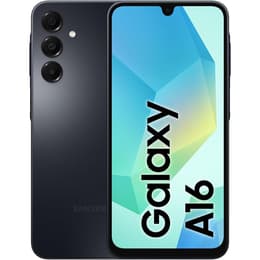
Galaxy A16
Galaxy A16
Starting at

Refurbished price:£100.62

Versus £206.96 new

See options
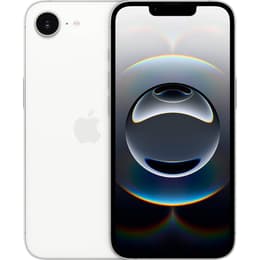
iPhone 16e
iPhone 16e
Starting at

Refurbished price:£359.00

Versus £599.00 new

See options

Ratings

The Samsung Galaxy A16 (2024) and the Apple iPhone 16E (2025) represent distinct approaches to smartphone design and functionality, catering to different user ecosystems. While the Galaxy A16 operates on the Android platform, offering a customizable experience, the iPhone 16E runs on Apple's iOS, known for its integrated ecosystem and user-friendly interface. Key differentiators include their operating systems, display technologies, and overall performance profiles.

Scores

Durability

When considering the longevity of these devices, both the Galaxy A16 and the iPhone 16E offer substantial software support, though their timelines and update philosophies differ.

  • Software Support: The Samsung Galaxy A16 was released in late 2024 and is notable for its commitment to extended software support, promising six years of major Android OS updates and six years of security updates, with support expected to last until October 2030. The iPhone 16E, released in early 2025, typically benefits from Apple's long-term support, with major iOS updates and security patches generally provided for five to seven years, potentially extending its support well into the 2030s.
  • Build and Durability: The iPhone 16E features an IP68 rating for dust and water resistance, indicating a high level of protection against environmental elements. The Galaxy A16, while designed with a slim profile, does not explicitly list an IP rating in the available specifications, suggesting a more standard level of protection.
  • Practical Lifespan: While the iPhone 16E was succeeded by the iPhone 17e shortly after its release, its robust software support ensures functional longevity. The Galaxy A16's extended update policy makes it a compelling option for users prioritizing a device that remains current with software for many years.

Year of Release

2024

2025

OS

Android

iOS

Foldable

No

No

Performance

The performance of the Galaxy A16 and iPhone 16E is shaped by their respective hardware and software optimizations, leading to different user experiences in daily tasks.

  • System Responsiveness: The iPhone 16E is powered by an advanced Apple A18 chip, designed to handle demanding applications and multitasking with fluidity, and is built to support Apple Intelligence features. The Galaxy A16, depending on the region, utilizes a MediaTek Dimensity 6300, MediaTek Helio G99, or Exynos 1330 processor, which provides smooth performance for everyday activities, light multitasking, and social media use.
  • Multitasking and Storage: The iPhone 16E comes with 8GB of RAM and offers storage options up to 512GB, allowing for efficient app switching and ample space for media and applications. The Galaxy A16 is available with 4GB, 6GB, or 8GB of RAM and up to 256GB of internal storage, which is suitable for typical smartphone usage.
  • Battery Behavior: The Galaxy A16 is equipped with a 5000 mAh battery, supporting 25W fast charging, which typically translates to extended usage times for most users. The iPhone 16E features a battery with approximately 3961 mAh capacity, offering up to 26 hours of video playback and supporting 20W charging, along with Qi wireless charging.

Memory (GB)

4 GB

8 GB

Screen quality

The visual experience on both devices is a significant factor, with each offering distinct display technologies and characteristics.

  • Display Technology and Clarity: The iPhone 16E features a 6.1-inch Super Retina XDR OLED display, providing deep blacks, vibrant colors, and a high resolution of 2532 x 1170 pixels for sharp image quality. The Galaxy A16 sports a larger 6.7-inch Super AMOLED display with a 1080 x 2340 (FHD+) resolution, also known for its rich colors and contrast.
  • Brightness and Refresh Rate: The iPhone 16E's display offers a peak brightness of 1200 nits, enhancing visibility in bright outdoor conditions, and operates at a standard 60Hz refresh rate. The Galaxy A16 provides a smoother visual experience with a 90Hz refresh rate, which can make scrolling and animations appear more fluid, though its peak brightness is not specified to be as high as the iPhone 16E.
  • Viewing Experience: Users prioritizing a more compact device with a high-resolution, bright display will find the iPhone 16E appealing. Those who prefer a larger screen for media consumption and a smoother scrolling experience may lean towards the Galaxy A16.

Resolution

1080 x 2340

2532x1170

Audiovisual

Photography and multimedia capabilities are key considerations for many users, and both the Galaxy A16 and iPhone 16E offer capable camera systems.

  • Rear Camera System: The iPhone 16E features a dual-camera setup on the rear, including a 48MP Fusion main camera and a 12MP Telephoto lens, allowing for detailed photos and optical zoom capabilities. The Galaxy A16 comes with a triple rear camera system, comprising a 50MP main sensor, a 5MP ultra-wide lens, and a 2MP macro lens, offering versatility for different types of shots.
  • Front Camera and Video: For selfies and video calls, the iPhone 16E includes a 12MP TrueDepth front camera. The Galaxy A16 is equipped with a 13MP front camera. Both devices are capable of recording high-quality video, with the iPhone 16E offering advanced video features typical of Apple devices.
  • Audio Experience: The iPhone 16E supports Dolby Atmos-tuned Spatial Audio, providing an immersive audio experience for media consumption. While specific audio enhancements for the Galaxy A16 are not detailed, it offers a standard smartphone audio output.

Front camera

13 megapixels

TrueDepth 12MP

Miscellaneous

Beyond core features, several practical elements contribute to the overall user experience of these smartphones.

  • Connectivity and Ports: Both devices support 5G connectivity, ensuring access to faster mobile networks. The iPhone 16E features Wi-Fi 6 and Bluetooth 5.3, along with a USB-C port for charging and data transfer. The Galaxy A16 supports Wi-Fi 5 (802.11a/b/g/n/ac) and Bluetooth v5.3, also utilizing a USB Type-C port.
  • Biometrics and Navigation: The iPhone 16E relies on Face ID for secure authentication and includes an Action Button for quick access to customizable features. The Galaxy A16 typically features a side-mounted fingerprint sensor for unlocking. Both devices offer GPS and other location technologies for navigation.
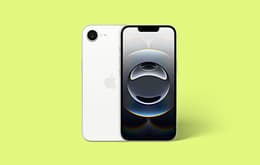
  • Physical Design: The iPhone 16E is more compact and lighter, measuring 146.7 × 71.5 × 7.8 mm and weighing 167g. The Galaxy A16 is larger and slightly heavier at 164.4 x 77.9 x 7.9 mm and 200g, offering a larger screen in a bigger form factor.

Weight

200 g

167 g

Screen size (in)

6.7

6.1

Mobile network

4G

5G

SIM card

Dual Physical SIM

eSIM

Carrier compatibility

Unlocked

Unlocked

Connector

USB-C

USB-C

User sentiment for the Galaxy A16 often highlights its impressive battery life and the vibrant Super AMOLED display as strong advantages, particularly for its segment. Users appreciate the extended software support, which is a significant draw for those looking for a device that remains current for a longer period. Some common criticisms might revolve around its processor performance not matching higher-end devices, especially for intensive gaming or demanding applications. The camera system is generally considered competent for everyday use, but not necessarily groundbreaking.

For the iPhone 16E, common praise points include its powerful Apple A18 chip, delivering smooth performance across iOS applications, and its advanced camera capabilities, including the telephoto lens. Users also value the integrated Apple ecosystem and the device's compact, durable design with IP68 water resistance. A frequent point of discussion, however, might be its 60Hz display refresh rate, which some users might find less fluid compared to higher refresh rate screens on other devices. Its relatively short market availability before being succeeded by the iPhone 17e could also be a consideration for some.

Users prioritizing a large, smooth display and exceptional battery life, coupled with long-term Android software support, may find the Samsung Galaxy A16 well-suited to their needs. This device is a strong contender for those who engage in moderate multitasking and media consumption. Conversely, users who value a compact form factor, a highly responsive operating system, advanced camera features, and the robust Apple ecosystem will likely lean towards the iPhone 16E. Its powerful processor makes it ideal for demanding applications and a consistently fluid user experience.

Both devices offer compelling features for different user profiles, and considering a quality-assured refurbished option for either model can provide an eco-friendly alternative to purchasing new, extending the lifecycle of these capable smartphones.
See all articles

Our recent comparisons