
Galaxy A13 Vs Galaxy A36

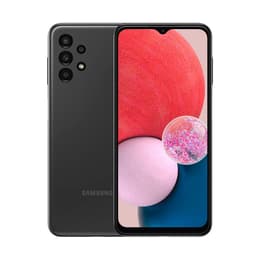
Galaxy A13
Galaxy A13
Starting at

Refurbished price:£73.00

Versus £249.00 new

See options
Galaxy A36
Galaxy A36
Starting at

Refurbished price:£206.00

Versus £369.00 new

See options

Ratings

The Samsung Galaxy A13, released in 2022, and the Samsung Galaxy A36, launched in 2025, are both Android smartphones from Samsung's popular A-series. While both aim to provide a comprehensive smartphone experience, the A36 represents a newer generation with notable advancements in display technology, processing power, and long-term software support. Both devices operate on the Android platform, featuring Samsung's One UI for a consistent user experience.

Scores

Durability

The practical lifespan of a smartphone is significantly influenced by its release timeline and the manufacturer's commitment to software updates.

  • Release Timeline: The Galaxy A13 was released in March 2022, making it an older device compared to the Galaxy A36, which launched in March 2025. This three-year difference impacts their respective support cycles.
  • Software Longevity: The Galaxy A13 received two major Android operating system updates, concluding its OS upgrade cycle with Android 14 and One UI 6.1. It is expected to receive security updates until the end of 2025. In contrast, the Galaxy A36 launched with Android 15 and One UI 7, and Samsung has committed to providing six major Android OS upgrades and six to seven years of security updates, extending its support well into 2031 or 2032.
  • Repairability: Both devices demonstrate a reasonable level of repairability. The Galaxy A13 (LTE model) has been noted with a repairability index of 8.0 out of 10, indicating a design that facilitates easier repairs. The Galaxy A36 also boasts a strong repairability score, often cited around 8.4 out of 10, suggesting that common component replacements are manageable.

Year of Release

2022

2025

OS

Android

Android

Foldable

No

No

Performance

Performance is a key differentiator, with the newer Galaxy A36 offering a more responsive and capable experience for a wider range of tasks.

  • Processing Power: The Galaxy A13 is equipped with an octa-core processor that handles everyday tasks like browsing, social media, and light applications. However, some users have reported noticeable slowdowns and stuttering with more demanding apps or after extended use. The Galaxy A36 features a more advanced current-generation processor, providing a smoother experience for multitasking, running modern applications, and handling more intensive workloads.
  • System Responsiveness: For the Galaxy A13, initial responsiveness is adequate, but it can degrade over time, leading to occasional delays in app loading and navigation. The Galaxy A36 offers consistently fluid system responsiveness, with applications launching quickly and transitions feeling seamless, even with multiple apps open.
  • Storage and Multitasking: The Galaxy A13 offers various RAM configurations, typically up to 6GB, which is sufficient for basic multitasking. It supports expandable storage via microSD. The Galaxy A36 comes with higher RAM options, starting from 8GB, which significantly enhances its ability to manage numerous applications simultaneously without performance degradation. However, it notably omits the microSD card slot for storage expansion.

Memory (GB)

4 GB

6 GB

Screen quality

The visual experience varies significantly between these two models, primarily due to advancements in display technology.

  • Display Technology and Clarity: The Galaxy A13 features a 6.6-inch PLS TFT LCD panel with a Full HD+ resolution, offering clear visuals for general content consumption. The Galaxy A36 steps up to a 6.7-inch Super AMOLED display, also with Full HD+ resolution, which delivers deeper blacks, higher contrast, and more vibrant colors, enhancing the overall viewing experience.
  • Brightness and Refresh Rate: The A13's LCD screen provides standard brightness levels suitable for indoor use, but visibility can be challenging in bright outdoor conditions. It operates at a standard 60Hz refresh rate. The A36's Super AMOLED display offers significantly higher peak brightness, improving outdoor readability. It also boasts a 120Hz refresh rate, resulting in noticeably smoother scrolling and more fluid animations compared to the A13.
  • Screen Protection: The Galaxy A13 includes Corning Gorilla Glass 5 for basic screen protection against scratches and minor drops. The Galaxy A36 features Gorilla Glass Victus+ on both the front and back, providing enhanced durability and resistance to damage.

Resolution

1080 x 2408

1080 x 2340

Audiovisual

Both devices offer multi-camera setups, but the Galaxy A36 provides a more refined and versatile photography and videography experience.

  • Rear Camera System: The Galaxy A13 includes a quad-camera setup with a 50-megapixel main sensor, a 5-megapixel ultrawide, and two 2-megapixel sensors for macro and depth. User feedback often points to adequate performance in good lighting but limitations in challenging conditions. The Galaxy A36 features a triple-camera system with a 50-megapixel main sensor, an 8-megapixel ultrawide, and a 5-megapixel macro lens. This configuration generally yields improved image quality, particularly in detail and color reproduction.
  • Photography and Video Quality: The A13 is suitable for casual photography, but its low-light performance and video capabilities are basic. The A36 offers enhanced low-light photography and improved image stabilization. It supports 4K video recording at 30 frames per second with stabilization on the main camera, a significant upgrade over the A13's video capabilities.
  • Front Camera and Audio: For selfies, the A13 has an 8-megapixel front camera. The A36 features a 12-megapixel front camera, which also supports 4K video recording with stabilization, providing clearer video calls and self-portraits. The A36 also includes loud stereo speakers, enhancing the media consumption experience, whereas the A13 typically has a single speaker.

Front camera

8 megapixels

12

Miscellaneous

Beyond core features, several practical elements contribute to the overall user experience and daily usability of these smartphones.

  • Connectivity and Ports: The Galaxy A13 supports 4G LTE connectivity, standard Wi-Fi, and Bluetooth 5.0, along with a USB Type-C 2.0 port and a 3.5mm headphone jack. The Galaxy A36 offers 5G connectivity, newer Wi-Fi standards, and a USB Type-C port. It omits the traditional headphone jack, a common trend in newer devices.
  • Biometric Security: Both phones include fingerprint sensors for secure unlocking. The A13 typically features a side-mounted fingerprint sensor. The A36 integrates an optical fingerprint scanner within its display, offering a more modern and often more convenient unlocking method.
  • Build and Durability Features: The Galaxy A13 has a plastic build with a Gorilla Glass 5 front, lacking an official IP rating for water and dust resistance. The Galaxy A36 boasts a more robust construction with Gorilla Glass Victus+ on both the front and back, coupled with an IP67 rating, providing significant protection against dust and water immersion.

Weight

195 g

195 g

Screen size (in)

6.6

6,74

Mobile network

4G

5G

SIM card

Dual Physical SIM

Dual Physical SIM + eSIM

Carrier compatibility

Unlocked

Unlocked

The Samsung Galaxy A13 and Galaxy A36 cater to different user expectations and priorities, largely reflecting their respective release years and technological advancements.

Users often praise the Galaxy A13 for its initial performance for basic tasks and its long-lasting battery. However, common criticisms include a noticeable slowdown over time, particularly with multitasking or more demanding applications, and a camera system that performs adequately in ideal conditions but struggles in others. Some users also report issues with build quality and charging ports after extended use.

The Galaxy A36, being a newer model, generally receives positive feedback for its vibrant Super AMOLED display with a high refresh rate, robust build quality with IP67 water and dust resistance, and significantly longer software support. Its improved processor handles daily tasks and moderate usage smoothly. Some initial user concerns about overheating and lag were noted, but updates have reportedly improved stability. The absence of a microSD card slot is a point of contention for some users.

For individuals prioritizing long-term software support, enhanced display quality, improved performance for a smoother daily experience, and greater durability with water and dust resistance, the Galaxy A36 is likely the more suitable choice. Its newer hardware and extended update policy make it a more future-proof option. Conversely, users with very light usage patterns who primarily need a device for essential communication and basic apps, and who value expandable storage, might find the Galaxy A13 sufficient, especially if considering it as a quality-assured refurbished option. Ultimately, the decision hinges on balancing budget considerations with the desire for modern features and extended device longevity.
See all articles

Our recent comparisons