Galaxy Tab S8+ (12.4", 2022) Vs iPad Pro (2024, M4 series)

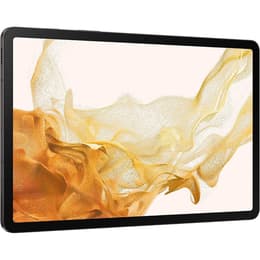
Galaxy Tab S8+ (12.4", 2022)
Starting at

Refurbished price:£323.36

Versus £999.00 new

See options
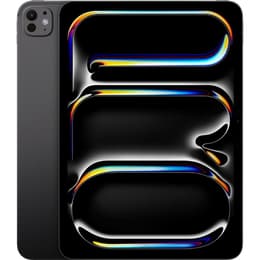
iPad Pro (2024, M4 series)
Starting at

Refurbished price:£642.00

Versus £999.00 new

See options

Ratings

The Samsung Galaxy Tab S8 Plus, released in 2022, and the Apple iPad Pro M4 Series, launched in 2024, represent two distinct approaches to premium tablet computing. While both offer large, high-quality displays and powerful performance for demanding tasks, they differ significantly in their operating systems, core hardware, and design philosophies. The Galaxy Tab S8 Plus runs on Android, offering a versatile ecosystem with expandable storage, whereas the iPad Pro M4 Series operates on iPadOS, known for its optimized software and advanced processing capabilities.

Scores

Durability

When considering the long-term usability of a tablet, factors like software support and physical durability are key. These two devices, released two years apart, offer different expectations in this regard.

  • Software Longevity: The Samsung Galaxy Tab S8 Plus, launched with Android 12, is expected to receive four major Android OS updates and five years of security updates, extending its support through 2027. The iPad Pro M4 Series, being a newer device with iPadOS 17.4 at launch, typically benefits from Apple's longer software support cycle, often receiving major iPadOS updates for five to seven years from its release.
  • Physical Durability: Both tablets feature robust aluminum frames and glass fronts. The Galaxy Tab S8 Plus incorporates Corning Gorilla Glass Victus+ for screen protection. The iPad Pro M4 Series, while exceptionally thin, maintains a sturdy aluminum alloy build.
  • Practical Lifespan: Users can expect several years of reliable performance from both devices. The Galaxy Tab S8 Plus offers expandable storage via microSD, which can extend its practical utility for users with large media libraries or extensive document needs. The iPad Pro M4 Series, with its more recent release and advanced processor, is likely to handle future software and application demands for a longer period.

Year of Release

2022

2024

Compatible with latest Update

Yes

Yes

OS

Android

iPadOS

Performance

Both tablets are designed for high performance, capable of handling demanding applications and multitasking, though they achieve this through different hardware architectures.

  • Processing Power: The Galaxy Tab S8 Plus is equipped with a powerful octa-core processor, enabling smooth operation across various applications and efficient multitasking. The iPad Pro M4 Series features a more recent and advanced processor, which delivers enhanced speed and responsiveness, particularly noticeable in intensive tasks like video editing, 3D rendering, and advanced gaming.
  • Multitasking and RAM: The Galaxy Tab S8 Plus typically comes with 8GB of RAM, with some configurations offering 12GB, providing ample memory for running multiple apps simultaneously without significant slowdowns. The iPad Pro M4 Series offers 8GB of RAM in its base storage models and 16GB in higher storage configurations, allowing for exceptionally fluid transitions between numerous applications and handling very large files with ease.
  • Storage Options: The Galaxy Tab S8 Plus offers 128GB or 256GB of internal storage, with the notable advantage of expandable storage via a microSD card up to 1TB. The iPad Pro M4 Series provides a wider range of internal storage options, from 256GB up to 2TB, but does not support external memory expansion.

Memory (GB)

8 GB

8 GB

Screen quality

The visual experience on both tablets is a highlight, with each offering a large, vibrant display, though they utilize different panel technologies and characteristics.

  • Display Technology: The Galaxy Tab S8 Plus features a 12.4-inch Super AMOLED display, known for its deep blacks, high contrast, and vivid colors. The iPad Pro M4 Series introduces a new Ultra Retina XDR display, which uses Tandem OLED technology across both its 11-inch and 13-inch models, providing exceptional brightness, precise color accuracy, and superior contrast.
  • Resolution and Clarity: The Galaxy Tab S8 Plus offers a resolution of 2800x1752 pixels, resulting in a pixel density of 266 pixels per inch (ppi) on its 12.4-inch screen. The 11-inch iPad Pro M4 has a resolution of 2420x1668 pixels (264 ppi), while the 13-inch model features 2752x2064 pixels, both delivering sharp and clear visuals.
  • Brightness and Refresh Rate: Both tablets support a 120Hz refresh rate for smooth scrolling and responsive interactions. The Galaxy Tab S8 Plus's AMOLED display offers good brightness, while the iPad Pro M4 Series stands out with up to 1000 nits of full-screen SDR/HDR brightness and a peak of 1600 nits for HDR content, making it highly visible even in bright outdoor conditions.

Resolution

1752 x 2800

2420 x 1668

Screen type

Super AMOLED

Ultra Retina XDR display

Pixel density

270ppp

264ppp

Audiovisual

While tablets are not typically primary photography devices, both models offer capable camera systems suitable for video calls, document scanning, and casual photography.

  • Rear Camera System: The Galaxy Tab S8 Plus includes a dual-camera setup on the rear, featuring a 13-megapixel wide lens and a 6-megapixel ultrawide lens, allowing for more versatile shots. The iPad Pro M4 Series has a single 12-megapixel wide camera on the rear, accompanied by an Adaptive True Tone flash and a LiDAR Scanner for enhanced depth sensing and augmented reality applications.
  • Front Camera and Video Calls: Both tablets feature a 12-megapixel ultrawide front-facing camera. A notable difference is the iPad Pro M4 Series' front camera is now positioned on the longer side of the device, optimizing it for landscape video calls. Both support high-quality video recording, with the Galaxy Tab S8 Plus capable of 4K at 30/60fps, and the iPad Pro M4 Series offering 4K 60FPS and ProRes video support.
  • Audio Experience: Both devices provide a rich audio experience. The Galaxy Tab S8 Plus features quad stereo speakers tuned by AKG with Dolby Atmos support. The iPad Pro M4 Series also includes a multi-speaker system, delivering clear and immersive sound for media consumption and video conferencing.

Miscellaneous

Beyond core performance and display, several practical features contribute to the overall user experience and utility of these tablets.

  • Connectivity: Both tablets support modern wireless standards, including Wi-Fi 6E for fast internet speeds and Bluetooth 5.2 (Tab S8 Plus) or 5.3 (iPad Pro M4 Series) for accessory connections. Optional 5G cellular connectivity is available for both, providing internet access on the go.
  • Ports and Biometrics: The Galaxy Tab S8 Plus uses a USB Type-C 3.2 port and features an on-screen fingerprint scanner for secure unlocking. The iPad Pro M4 Series is equipped with a versatile USB-C port with Thunderbolt 4 support, offering high-speed data transfer and external display capabilities, and relies on Face ID for biometric authentication.
  • Design and Handling: The Galaxy Tab S8 Plus measures 285 x 185 x 5.7 mm and weighs around 567g (Wi-Fi model). The iPad Pro M4 Series is notably thinner and lighter, with the 11-inch model at 249.7 x 177.5 x 5.3 mm and 444g, and the 13-inch model at 281.6 x 215.5 x 5.1 mm and 579g (Wi-Fi models), making it one of Apple's thinnest devices.

Weight

567 g

444 g

Screen size (in)

12.4

11

Network

Wi-Fi + 5G

Wi-Fi

Carrier compatibility

Unlocked

Without SIM Port

The Samsung Galaxy Tab S8 Plus and the iPad Pro M4 Series cater to users with varying priorities and ecosystem preferences. Users often praise the Galaxy Tab S8 Plus for its vibrant AMOLED display, the inclusion of the S Pen, and the flexibility of Android with expandable storage. Some criticisms have pointed to its battery life under heavy use and the software experience for tablets not always being fully optimized for larger screens.

The iPad Pro M4 Series is frequently lauded for its groundbreaking OLED display, exceptional performance driven by its advanced processor, and its remarkably thin and light design. Common observations include its strong battery life and the robust app ecosystem of iPadOS. However, some users note the limitations of iPadOS compared to a full desktop operating system for certain professional workflows.

Users prioritizing an open ecosystem, expandable storage, and a bundled stylus may find the Galaxy Tab S8 Plus well-suited to their needs. Its Super AMOLED display offers a rich visual experience, and its Android operating system provides a familiar interface for many. Conversely, users who require the absolute peak in tablet performance, a cutting-edge display, and a highly optimized software experience for creative and demanding tasks will likely lean towards the iPad Pro M4 Series. Its integration with Apple's ecosystem and advanced accessories like the Apple Pencil Pro further enhance its appeal for specific professional and creative users.

For those seeking a quality-assured refurbished option, both models are available, offering a sustainable choice for acquiring powerful tablets.

See all articles

Our recent comparisons