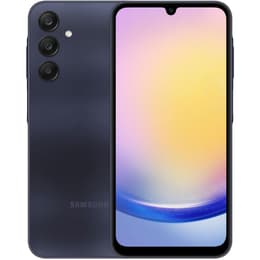
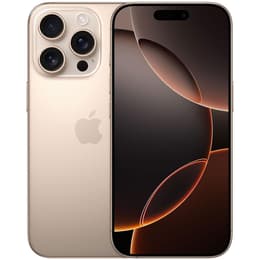

Galaxy A25 Vs iPhone 16 Pro

Galaxy A25
Galaxy A25
Starting at

Refurbished price:£122.00

Versus £272.58 new

See options
iPhone 16 Pro
iPhone 16 Pro
Starting at

Refurbished price:£560.00

Versus £999.00 new

See options

Ratings

The Samsung Galaxy A25, released in late 2023, and the Apple iPhone 16 Pro, launched in late 2024, represent distinct offerings in the smartphone market. While the Galaxy A25 focuses on delivering a comprehensive Android experience, the iPhone 16 Pro emphasizes advanced performance, camera capabilities, and a premium build within the iOS ecosystem. These differences cater to varying user priorities, from everyday functionality to high-end professional use.

Scores

Durability

The longevity of a smartphone is influenced by its physical resilience and the duration of software support it receives. Both devices offer different approaches to long-term usability.

  • Software Updates: The Galaxy A25 is expected to receive four years of major Android operating system updates and five years of security patches, providing a solid period of software relevance. The iPhone 16 Pro, typical of Apple devices, is anticipated to receive major iOS updates for approximately six to eight years from its release, extending its software lifespan significantly.
  • Build Materials: The Galaxy A25 features a comfortable plastic construction, which contributes to its overall feel. The iPhone 16 Pro utilizes a titanium frame, a Ceramic Shield front, and a textured matte glass back, contributing to its robust feel and enhanced durability.
  • Environmental Resistance: The iPhone 16 Pro carries an IP68 rating for water and dust resistance, indicating it can withstand submersion in up to 6 meters of water for 30 minutes. The Galaxy A25 does not have an official IP rating, suggesting less protection against water and dust ingress.

Year of Release

2023

2024

Compatible with latest Update

Yes

Yes

Foldable

No

No

Performance

Performance varies significantly between these two devices, impacting how smoothly they handle daily tasks and demanding applications.

  • Everyday Responsiveness: The Galaxy A25 handles common tasks like web browsing, email, and media playback without noticeable delays. The iPhone 16 Pro, equipped with a current-generation processor, offers a highly responsive experience, smoothly managing demanding applications and multitasking.
  • Demanding Applications and Gaming: For more intensive use, such as graphically rich games or complex productivity apps, the iPhone 16 Pro provides substantial performance headroom, ensuring smooth operation even with future software. The Galaxy A25 can run some demanding games at medium settings, but users might experience warmth during extended sessions and occasional stuttering with heavy multitasking.
  • Multitasking Capabilities: The iPhone 16 Pro's processing power and optimized operating system allow for seamless switching between numerous applications and efficient background processes. The Galaxy A25, while capable of multitasking between a few light apps, may show limitations when handling a larger number of active applications simultaneously.

Memory (GB)

6 GB

8 GB

Screen quality

The visual experience on both smartphones is shaped by their display technologies and specifications.

  • Display Technology and Clarity: The Galaxy A25 features a 6.5-inch Super AMOLED display, offering vibrant colors and deep blacks with a resolution of 2340 x 1080 pixels. The iPhone 16 Pro comes with a 6.3-inch Super Retina XDR OLED display, providing exceptional color accuracy, contrast, and clarity with a resolution of 2622 x 1206 pixels.
  • Brightness and Outdoor Visibility: Both devices offer good brightness levels. The Galaxy A25's display reaches a peak brightness of 1000 nits, making it generally visible outdoors, though direct sunlight can still pose challenges. The iPhone 16 Pro also achieves 1000 nits typical brightness and can reach up to 2000 nits peak brightness in outdoor conditions, enhancing readability in bright environments.
  • Smoothness and Responsiveness: The Galaxy A25 features a 120Hz refresh rate, contributing to smoother scrolling and a more fluid user interface. The iPhone 16 Pro incorporates ProMotion technology, offering an adaptive refresh rate up to 120Hz, which dynamically adjusts to content for optimal smoothness and power efficiency.

Resolution

1080 x 2340

1206 x 2622

Screen type

Super AMOLED

LTPO Super Retina XDR OLED

Audiovisual

Camera systems are a key differentiator, with both phones offering distinct capabilities for photography and videography.

  • Rear Camera System: The Galaxy A25 includes a 50MP main camera with optical image stabilization (OIS), an 8MP ultrawide lens, and a 2MP macro lens. The iPhone 16 Pro features a more advanced system with a 48MP main camera (Fusion camera), a 48MP ultrawide lens, and a 12MP telephoto lens with 5x optical zoom.
  • Photography Performance: The Galaxy A25's main camera performs well in good lighting conditions, but its ultrawide is better suited for daylight, and the macro lens offers limited detail. The iPhone 16 Pro's upgraded sensors, particularly the 48MP ultrawide, enhance low-light performance and overall detail across various shooting conditions.
  • Video Recording and Audio: The Galaxy A25 supports 4K video recording at 30 frames per second (fps) with its main camera, but stabilization can be an issue, and the ultrawide camera is not available in 4K. The iPhone 16 Pro offers advanced video capabilities, including 4K recording at up to 120fps and ProRes Log support, providing greater flexibility for professional video editing. It also features improved audio recording with wind reduction.

Main camera

50 megapixels

48 megapixels

Front camera

13 megapixels

12 megapixels

Miscellaneous

Beyond core features, several practical elements contribute to the overall user experience and daily convenience.

  • Connectivity and Ports: The Galaxy A25 supports 5G, Wi-Fi 5, and Bluetooth 5.3, and notably includes a 3.5mm headphone jack alongside its USB-C port. The iPhone 16 Pro supports Wi-Fi 7, enhanced 5G, and a newer Bluetooth standard, featuring a USB-C port that offers faster data transfer speeds but omits a headphone jack.
  • Biometric Security: The Galaxy A25 uses a side-mounted fingerprint sensor for secure unlocking. The iPhone 16 Pro relies on Face ID for facial recognition, offering a different biometric authentication method.
  • User Interface and Controls: The iPhone 16 Pro introduces a new Camera Control button for quick access to camera functions and an Action button for customizable shortcuts. The Galaxy A25 runs on Android 14 with Samsung's One UI, offering a familiar and customizable interface.
  • Storage Expansion: The Galaxy A25 offers expandable storage via a microSD card slot, allowing users to increase storage up to 1TB. The iPhone 16 Pro does not support expandable storage, with users relying on its internal storage options ranging up to 1TB.

Weight

197 g

199 g

Screen size (in)

6.5

6.3

Mobile network

5G

5G

SIM card

Dual Physical SIM

Physical SIM + eSIM

Carrier compatibility

Unlocked

Unlocked

Connector

USB-C

USB-C (USB 3)

The Samsung Galaxy A25 and iPhone 16 Pro cater to different segments of the smartphone market, each excelling in distinct areas. The Galaxy A25 is often praised for its vibrant AMOLED display, reliable battery life, and Samsung's commitment to software updates for a mid-range device. Users appreciate its inclusion of a 3.5mm headphone jack and expandable storage, features less common in many modern smartphones. However, some users have noted that its performance, while adequate for daily tasks, can feel less responsive with more demanding applications or extensive multitasking. Its camera system, particularly for video and ultrawide shots, may not meet the expectations of those seeking high-end photographic capabilities.

Conversely, the iPhone 16 Pro receives acclaim for its powerful performance, advanced camera system with features like 5x optical zoom and 4K 120fps video, and its premium, durable design. Its extended software support and optimized iOS ecosystem are frequently highlighted as significant advantages. Potential criticisms often revolve around the absence of a headphone jack and expandable storage, which are standard on the Galaxy A25.

Users prioritizing a long-lasting software experience, top-tier performance for demanding applications, and advanced camera features, especially for photography and videography, may find the iPhone 16 Pro well-suited to their needs. Those who value a vibrant display, solid battery life, and practical features like expandable storage and a headphone jack, alongside a generous software update policy within the Android ecosystem, might lean towards the Galaxy A25. Both devices offer compelling options, and considering a quality-assured refurbished option for either model can be a sustainable choice for consumers.

See all articles

Our recent comparisons