Dell Latitude 5300 13" Vs Microsoft Surface Laptop 4 13"

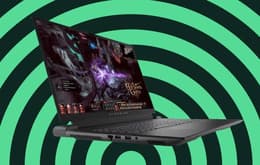
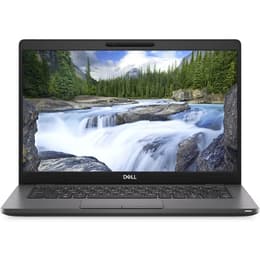
Dell Latitude 5300 13"
Starting at

Refurbished price:£149.00

Versus £1,489.00 new

See options
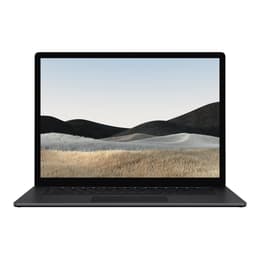
Microsoft Surface Laptop 4 13"
Starting at

Refurbished price:£283.00

Versus £705.59 new

See options

Ratings

The Dell Latitude 5300 13, released around 2019, and the Microsoft Surface Laptop 4 13, launched in 2021, are both compact laptops designed for productivity and portability. While the Latitude 5300 emphasizes business-oriented features and upgradeability, the Surface Laptop 4 offers a more refined design and a higher-resolution display. Both devices run on the Windows operating system, providing a familiar software experience for most users.

Scores

Durability

When considering the long-term usability of these laptops, their release timelines and design philosophies play a significant role.

  • Release Timeline and OS Support: The Dell Latitude 5300 13, released in 2019, typically receives driver and firmware support for 5-7 years from its launch, primarily designed for Windows 10 Pro. The Microsoft Surface Laptop 4 13, launched in April 2021, benefits from a more recent release, shipping with Windows 10 and being upgradeable to Windows 11, likely extending its official software support period further into the future.
  • Repairability and Upgradability: The Latitude 5300 offers user-accessible RAM slots, allowing for memory upgrades up to 32GB, and its M.2 NVMe SSD and Wi-Fi card are also user-upgradable, contributing to a longer practical lifespan through component replacement. In contrast, the Surface Laptop 4's RAM is soldered, limiting user upgrades, though its SSD is designed to be removable and replaceable by skilled technicians, and its display and keyboard covers can be replaced by authorized service centers.
  • Expected Practical Lifespan: Users prioritizing the ability to upgrade internal components for extended use may find the Dell Latitude 5300 more appealing. The Surface Laptop 4, with its newer hardware and potentially longer official software support, might offer a slightly longer period of optimal performance without internal hardware modifications.

Year of Release

2019

2020

Last Os Compatibility

Yes

Yes

OS

Windows 11

Windows 11

Performance

Both laptops are equipped to handle everyday computing tasks, but they approach performance with different underlying architectures and user experiences.

  • Processor Capabilities: The Dell Latitude 5300 13 features 8th Generation Intel Core processors, which provide solid performance for office applications, web browsing, and light multitasking. The Microsoft Surface Laptop 4 13, being a newer device, offers 11th Gen Intel Core processors or AMD Ryzen Microsoft Surface Edition processors, which generally provide improved efficiency and responsiveness for demanding applications and more intensive multitasking.
  • Storage and Multitasking: Both devices offer NVMe SSD storage options up to 1TB, ensuring quick boot times and fast application loading. The Latitude 5300 supports up to 32GB of DDR4 RAM across two user-accessible slots, allowing for significant memory expansion. The Surface Laptop 4 also offers up to 32GB of faster 4266 MHz memory, though it is soldered, meaning users cannot upgrade it after purchase.
  • Battery Behavior: The Latitude 5300, with its 60Wh battery option, can deliver up to 14-15 hours of web surfing on a single charge, making it suitable for extended periods away from a power outlet. The Surface Laptop 4 claims up to 19 hours of battery life, with real-world usage typically around 11 hours for web browsing, which is still ample for a full workday.

Memory (GB)

8 GB

16 GB

Processor

Core i5 - Gen 8 (U)

Core i7-1185G7

Graphic card

Integrated Graphics

Integrated Graphics

Screen quality

The visual experience on these two laptops presents a notable difference, primarily in resolution and aspect ratio.

  • Display Technology and Resolution: The Dell Latitude 5300 13 typically features a 13.3-inch Full HD (1920x1080) IPS display, often with an anti-glare finish, providing clear visuals suitable for business and general use. Some configurations also offer touch functionality with a matte screen. The Microsoft Surface Laptop 4 13 boasts a 13.5-inch PixelSense touchscreen with a higher resolution of 2256 x 1504 pixels, resulting in a sharper image and more screen real estate.
  • Brightness and Viewing Experience: The Latitude 5300's display generally offers around 300-310 nits of brightness, which is adequate for indoor use but might be less visible in very bright outdoor conditions. The Surface Laptop 4 provides a brighter display at 427 nits, enhancing visibility in various lighting environments. The Surface Laptop 4 also features a 3:2 aspect ratio, which offers more vertical space, beneficial for document work and web browsing compared to the Latitude 5300's more traditional 16:9 aspect ratio.
  • Refresh Rate and Touch: Both laptops typically feature a standard 60Hz refresh rate. The Surface Laptop 4's PixelSense display includes 10-point multi-touch and digitizer support for inking, making it well-suited for creative tasks or note-taking with a compatible stylus.

Resolution

1920 x 1080

2256 x 1504

Screen type

IPS

IPS

Camera

Audiovisual

For communication and media consumption, both laptops include essential audio and visual components, though with varying levels of refinement.

  • Camera System: The Dell Latitude 5300 13 is equipped with a 0.9 MP (720p) webcam, which is standard for video conferencing and online meetings. The Microsoft Surface Laptop 4 13 also features an HD (720p) camera, but it includes an infrared (IR) sensor for Windows Hello facial recognition, offering a convenient and secure login method.
  • Microphone Quality: The Latitude 5300 incorporates dual array microphones, designed to capture clear audio for calls and recordings. The Surface Laptop 4 also includes integrated microphones, optimized for clear voice capture during video calls and virtual meetings.
  • Speaker Output: The Dell Latitude 5300 features stereo speakers, which are generally considered average for a business laptop, suitable for general media consumption and conference calls. The Surface Laptop 4 elevates the audio experience with Omnisonic speakers and Dolby Atmos support, providing a richer and more immersive sound for media playback.

Miscellaneous

Beyond core components, several practical elements differentiate these two portable computing devices.

  • Connectivity Options: The Dell Latitude 5300 13 supports Wi-Fi 5 (802.11ac) and Bluetooth 5.0, with optional upgrades to Wi-Fi 6 (802.11ax) and 4G LTE for enhanced wireless capabilities. The Microsoft Surface Laptop 4 13 comes standard with Wi-Fi 6 (802.11ax) and Bluetooth 5.0, offering faster and more reliable wireless connections.
  • Port Selection: The Latitude 5300 provides a comprehensive array of ports, including two USB 3.1 Gen 1 Type-A, one USB 3.1 Gen 2 Type-C (with Power Delivery and DisplayPort, and optional Thunderbolt 3), HDMI 1.4b, Gigabit Ethernet (RJ45), a microSD card reader, and a 3.5mm audio jack. The Surface Laptop 4 offers a more streamlined selection with one USB-A, one USB-C 3.2 Gen 2 (supporting display output and charging but not Thunderbolt 4), a 3.5mm audio jack, and a dedicated Surface Connect port for charging and docking.
  • Physical Attributes and Security: The Latitude 5300, weighing around 1.24 kg, features a sturdy build, often utilizing carbon fiber, and includes security features like a fingerprint reader and optional SmartCard reader. The Surface Laptop 4, at approximately 1.27 kg, offers a premium design with aluminum or Alcantara finishes and integrates Windows Hello facial recognition for secure login.

Weight

1370 g

1280 g

Screen size

13

13

The Dell Latitude 5300 13 and Microsoft Surface Laptop 4 13 cater to slightly different user priorities within the compact laptop segment. Users often praise the Latitude 5300 for its robust build, extensive port selection, and the ability to upgrade components like RAM and storage, which can extend its useful life. Some common criticisms might include its slightly older processor generation and a display that, while functional, may not be as vibrant or high-resolution as more modern alternatives.

Conversely, the Surface Laptop 4 is frequently lauded for its premium design, higher-resolution PixelSense display with a productivity-friendly 3:2 aspect ratio, and enhanced audio experience. Its newer processors also offer a performance edge for more demanding tasks. However, users sometimes note the more limited port selection and the inability to upgrade RAM as potential drawbacks.

Users prioritizing a highly customizable and repairable device with a wide range of legacy ports for diverse peripherals may find the Dell Latitude 5300 13 well-suited to their needs. This could include IT professionals or those who frequently connect to various external devices. On the other hand, individuals who value a sleek design, a superior visual and audio experience, and a more modern processor for general productivity and media consumption might lean towards the Microsoft Surface Laptop 4 13. This device is often favored by students or professionals seeking a refined, portable computing experience.

For those considering either of these models, exploring quality-assured refurbished options can provide an eco-friendly alternative, offering access to these capable laptops while supporting sustainable consumption.
See all articles

Our recent comparisons