
Dell Latitude 7410 14" Vs Microsoft Surface Pro 7 12"

Dell Latitude 7410 14"
Starting at

Refurbished price:£191.00

Versus £671.28 new

See options
Microsoft Surface Pro 7 12"
Starting at

Refurbished price:£184.00

Versus £1,509.25 new

See options

Ratings

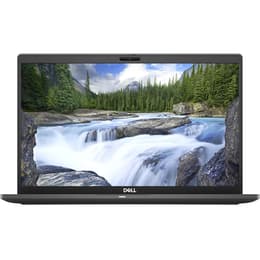
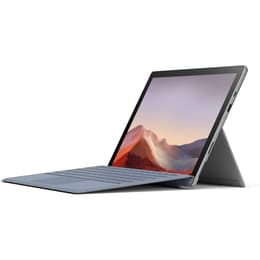
The Dell Latitude 7410, a 14-inch business laptop released in 2020, and the Microsoft Surface Pro 7, a 12.3-inch 2-in-1 detachable tablet launched in late 2019, offer distinct approaches to mobile computing. While both devices operate on the Windows platform, their fundamental form factors and design philosophies cater to different user needs. The Latitude 7410 is a traditional clamshell laptop designed for robust business use, whereas the Surface Pro 7 provides the versatility of a tablet that can transform into a laptop with an optional keyboard.

Scores

Durability

When considering the long-term usability of these devices, their release timelines and design philosophies play a significant role.

  • Release Timeline: The Dell Latitude 7410 was introduced in 2020, making it slightly newer than the Microsoft Surface Pro 7, which debuted in October 2019. This difference can influence the duration of official software support and the availability of newer features.
  • Software Longevity: Both devices run on the Windows operating system and are eligible for updates to Windows 11, ensuring continued access to the latest software features and security patches for several years. Dell provides ongoing driver and software support for its Latitude series.
  • Physical Durability and Repairability: The Dell Latitude 7410 features a rugged aluminum chassis and has passed MIL-STD 810G tests for various environmental hazards, suggesting a build designed for demanding use. The Surface Pro 7, with its magnesium alloy construction, offers a premium feel. While earlier Surface models were noted for lower repairability, more recent Surface Pro devices have shown improvements in this area, though the Surface Pro 7 itself is generally considered less straightforward to repair due to its tablet nature.

Year of Release

2020

2019

Last Os Compatibility

Yes

Yes

OS

Windows 11

Windows 11

Performance

The performance capabilities of both devices are tailored to handle everyday computing tasks, with some distinctions in their underlying architecture.

  • Processing Power: Both the Dell Latitude 7410 and the Microsoft Surface Pro 7 are equipped with 10th Generation Intel Core processors. The Latitude 7410 typically features U-series processors, while the Surface Pro 7 uses Ice Lake processors. These processors enable smooth operation for common applications, web browsing, and multitasking.
  • Multitasking and Responsiveness: The Latitude 7410 offers various RAM configurations, including 8GB, 16GB, or 32GB of DDR4 RAM, which supports efficient multitasking and handling of multiple applications simultaneously. The Surface Pro 7 comes with 4GB, 8GB, or 16GB of LPDDR4x RAM, providing responsive performance for typical daily use.
  • Graphics Capabilities: The Dell Latitude 7410 integrates Intel UHD Graphics, suitable for business tasks and light content creation. The Surface Pro 7, particularly in its i5 and i7 configurations, includes Intel Iris Plus Graphics, which offers enhanced graphical performance compared to standard UHD Graphics, making it more capable for tasks involving visual content or light gaming.

Memory (GB)

8 GB

8 GB

Processor

Core i5 - Gen 10 (U)

Core i5 - Gen 10 (G4)

Graphic card

Integrated Graphics

Integrated Graphics

Screen quality

The visual experience on these devices differs significantly due to their screen sizes, resolutions, and display technologies.

  • Display Technology and Resolution: The Dell Latitude 7410 features a 14-inch display, with options for Full HD (1920x1080) or a 4K UHD (3840x2160) IPS panel. The 4K option is noted for its clarity and low-power consumption. The Microsoft Surface Pro 7 has a 12.3-inch PixelSense Display with a resolution of 2736 x 1824 pixels, resulting in a pixel density of 267 PPI.
  • Brightness and Clarity: Both displays offer good brightness levels for indoor and outdoor use. The Latitude 7410's 4K panel is described as spectacular, while the Surface Pro 7's PixelSense display is known for its sharpness and vividness.
  • Aspect Ratio and Viewing Experience: The Latitude 7410 typically features a 16:9 aspect ratio, common for laptops. The Surface Pro 7 utilizes a 3:2 aspect ratio, which provides more vertical screen real estate, often preferred for productivity tasks like document editing and web browsing. Both devices have a 60Hz refresh rate.

Resolution

1920 x 1080

2736 x 1824

Screen type

LCD

IPS

Audiovisual

For communication and media consumption, both devices include integrated cameras, microphones, and speakers, with the Surface Pro 7 placing a notable emphasis on its audio-visual components.

  • Camera System: The Dell Latitude 7410 is equipped with a 720p HD webcam, often including IR facial recognition for Windows Hello. The Microsoft Surface Pro 7 features a 5.0MP front-facing camera capable of 1080p full HD video and an 8.0MP rear-facing autofocus camera, also with 1080p full HD video. It also includes a Windows Hello face authentication camera.
  • Microphone Quality: The Surface Pro 7 stands out with dual far-field Studio Mics, designed to capture clear audio even with background noise, making it well-suited for virtual meetings and voice commands. Information on the Latitude 7410's microphone quality is less prominent in general reviews.
  • Speaker Output: The Latitude 7410 generally offers good speaker quality for a business laptop. The Surface Pro 7 features 1.6W stereo speakers with Dolby Audio, providing clear and detailed sound for media consumption and calls.

Miscellaneous

Beyond core performance and display, several practical elements differentiate these two devices, impacting their usability in various scenarios.

  • Connectivity Options: The Dell Latitude 7410 supports Wi-Fi 6 and Bluetooth 5.1, with an optional LTE module offering 5G capabilities. The Microsoft Surface Pro 7 also includes Wi-Fi 6 and Bluetooth 5.0.
  • Port Selection: The Latitude 7410 offers a comprehensive selection of ports, including two Thunderbolt 3 (USB-C) ports with Power Delivery and DisplayPort, one HDMI 2.0 port, two USB 3.2 Type-A ports, a microSD card slot, and a universal audio jack. The Surface Pro 7 provides one USB-C port, one USB-A port, a microSDXC card reader, a Surface Connect port, and a 3.5mm headphone jack.
  • Form Factor and Portability: The Latitude 7410 is a traditional clamshell laptop, weighing between 1.3 kg (2.9 lbs) and 1.4 kg (3.1 lbs) and measuring approximately 0.7 by 12.7 by 8.2 inches. The Surface Pro 7 is a lighter, more compact 2-in-1 detachable tablet, weighing around 775g (1.7 lbs) to 790g (1.74 lbs) without its optional Type Cover, and measuring 0.33 by 11.5 by 7.9 inches. The Surface Pro 7's keyboard and pen are typically sold separately.

Weight

1330 g

775 g

Screen size

14

12

User feedback for the Dell Latitude 7410 often highlights its robust build quality and the option for a high-resolution 4K display that maintains good battery life, which is a notable achievement for a business laptop. Some users have found it to be a solid performer for professional tasks, though it can be heavier than some competitors. Criticisms sometimes point to its weight for a 14-inch device and the soldered RAM, which limits future upgrades.

The Microsoft Surface Pro 7 is frequently praised for its versatile 2-in-1 design, sharp PixelSense display, and strong audio-visual capabilities for video conferencing. Its portability and tablet functionality are often cited as key advantages. However, a common concern among users has been its battery life, which some reviews indicate is shorter than its predecessor and other comparable devices. The fact that essential accessories like the keyboard and pen are sold separately is also a frequent point of discussion.

Users prioritizing a traditional laptop experience with a durable build, a larger screen, and a comprehensive port selection for a fixed workstation setup may find the Dell Latitude 7410 well-suited to their needs. Its MIL-STD 810G rating suggests it can withstand more rigorous environments. Conversely, individuals who value extreme portability, tablet functionality, and pen input for creative or note-taking tasks will likely lean towards the Microsoft Surface Pro 7. Its detachable design makes it highly adaptable for on-the-go use and presentations. For those seeking a more sustainable choice, considering refurbished options for either device can provide a quality-assured alternative.


See all articles

Our recent comparisons