
Compare models

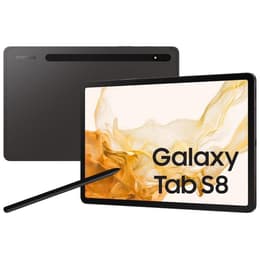
Galaxy Tab A11+ (11.0", 2025) Vs Galaxy Tab S8 (11.0", 2022)

  • 1-year minimum warranty
  • Free delivery on all items
  • Free 30-day returns
Galaxy Tab A11+ (11.0", 2025)
Starting at

Refurbished price:£194.99

Versus £260.09 new

See options
Galaxy Tab S8 (11.0", 2022)
Starting at

Refurbished price:£269.00

Versus £745.19 new

See options

Differences at a glance

The Samsung Galaxy Tab A11+ (2025) and Samsung Galaxy Tab S8 (2022) are both 11-inch Android tablets designed for daily entertainment, browsing, and productivity. While the Galaxy Tab S8 belongs to a higher-tier product family with a focus on premium performance and included accessories, the newer Galaxy Tab A11+ serves as a modern alternative emphasizing long-term software support and everyday usability. Both models run on the Android operating system with Samsung's custom interface, though they originate from different hardware generations.

Available Models

Colour

Storage

Scores

Durability

When evaluating hardware age and software longevity, these two tablets follow very different timelines that influence how long they remain current. Choosing a quality-assured refurbished option provides access to either model while supporting sustainable consumption habits.

  • Release timeline and support: The Galaxy Tab S8 debuted in early 2022, whereas the Galaxy Tab A11+ launched late in 2025, giving the newer model a substantial advantage in total software lifecycle span.
  • Software updates: The newer Galaxy Tab A11+ benefits from an extended update policy stretching across many years of operating system upgrades, while the Galaxy Tab S8 approaches the latter stages of its scheduled support window.
  • Repairability and durability: Both tablets feature sturdy construction with aluminum backs, though normal battery degradation applies to both over years of heavy daily use.

Year of Release

2025

2022

Compatible with latest Update

Yes

Yes

OS

Android

Android

Performance

Daily responsiveness and multitasking capabilities vary significantly due to the generation gap and different hardware architectures inside each device.

  • Processor capabilities: The Galaxy Tab S8 handles demanding apps, heavy multitasking, and intensive mobile gaming smoothly, while the Galaxy Tab A11+ manages everyday tasks like web browsing, video streaming, and casual app switching comfortably.
  • Storage configurations: Both tablets are widely available with standard internal storage capacities and include microSD card slots for expanding space for media and documents.
  • Battery behavior: The Galaxy Tab S8 features a slightly larger battery capacity, but real-world endurance depends heavily on screen brightness and background task management on both devices.

Screen quality

Both tablets share the same physical screen diagonal measurement of 11 inches, but they utilize distinct panel technologies that affect motion clarity and visual fluidity.

  • Display refresh rate: The Galaxy Tab S8 features a high 120Hz refresh rate for extra smooth scrolling and pen tracking, whereas the Galaxy Tab A11+ utilizes a standard 90Hz refresh rate for fluid navigation.
  • Panel technology: The Galaxy Tab S8 uses a high-resolution display panel geared toward sharp media playback, while the Galaxy Tab A11+ employs a standard TFT LCD screen suited for everyday reading and streaming.
  • Outdoor visibility: Both screens offer sufficient brightness for indoor use, though direct sunlight may require manual brightness adjustments on both models.

Resolution

1920 x 1200

1600 x 2560

Pixel density

180ppp

280ppp

Audiovisual

Optics and audio setups reflect the distinct market positions of these two tablet families, catering differently to casual snapshots and media consumption.

  • Camera systems: The Galaxy Tab S8 is equipped with higher-resolution rear and ultra-wide front cameras suited for casual photography and scanning documents, while the Galaxy Tab A11+ features simpler sensor configurations adequate for basic video calls.
  • Speaker output: Both devices incorporate multi-speaker setups tuned with Dolby Atmos technology to deliver clear audio for watching movies and listening to music.
  • Microphone performance: Built-in multi-microphone arrays on both tablets handle video conferencing and voice notes with reliable clarity in quiet environments.

Miscellaneous

Physical dimensions and connectivity standards define how easily these tablets integrate into travel bags and daily routines.

  • Build and handling: Both models maintain slim profiles close to 11 inches in width, with weights hovering around the 500-gram mark for easy handheld reading.
  • Connectivity standards: Both devices support reliable Wi-Fi and Bluetooth connections, with select configurations offering cellular network compatibility.
  • Port types and biometrics: Both tablets rely on USB Type-C ports for charging and data transfer, and utilize facial recognition or fingerprint sensors for device security.

Weight

335 g

507 g

Screen size (in)

11.0

11.0

Network

Wi-Fi

Wi-Fi

Carrier compatibility

Without SIM Port

Without SIM Port

Connector

USB Type-C

USB Type-C

What the community thinks

Users report that the Galaxy Tab S8 stands out for its fluid high-refresh-rate display and robust processing power, though some note that finding accessories or original replacement parts gets harder over time. Conversely, users praise the Galaxy Tab A11+ for its extended software update horizon and modern interface, while mentioning that its processor is best suited for standard media consumption rather than heavy creative workflows.

Users prioritizing maximum display fluidity and raw processing muscle may prefer the Galaxy Tab S8, while users prioritizing long-term software updates and a modern release year will lean toward the Galaxy Tab A11+. Exploring sustainable, quality-assured refurbished options provides a reliable path to owning either device while minimizing electronic waste. Ultimately, the right choice depends on whether daily routines center around demanding performance tasks or straightforward digital reading and streaming.

Our recent comparisons