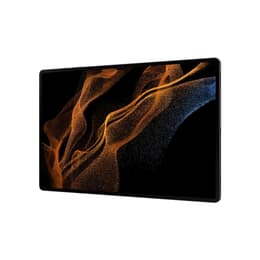
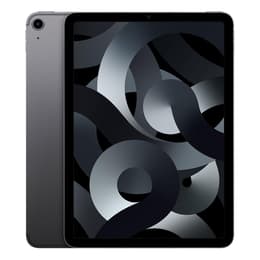

Galaxy Tab S8 (11.0", 2022) Vs iPad Air 5 (2022, M1 series)

Galaxy Tab S8 (11.0", 2022)
Starting at

Refurbished price:£262.00

Versus £745.19 new

See options
iPad Air 5 (2022, M1 series)
Starting at

Refurbished price:£275.00

Versus £669.00 new

See options

Ratings

The Samsung Galaxy Tab S8 and the Apple iPad Air (5th generation) both launched in 2022, offering distinct tablet experiences within their respective ecosystems. While both devices aim to provide powerful and versatile mobile computing, they differ significantly in their operating systems and some core hardware features. The Galaxy Tab S8 runs on Android, emphasizing customization and multi-window functionality, whereas the iPad Air operates on iPadOS, known for its streamlined interface and robust app ecosystem.

Scores

Durability

Evaluating the long-term usability of these tablets involves considering their release timelines, software support, and repairability.

  • Software Updates: The iPad Air (5th generation) typically receives iPadOS updates for approximately 5 to 7 years from its release, suggesting support potentially until 2027 or beyond. The Galaxy Tab S8, running Android, generally receives major OS updates for about 4 to 5 years, with security updates extending slightly longer, potentially until the Android 17 cycle.
  • Practical Lifespan: Both devices are built with durable materials, featuring aluminum frames. User reports suggest that both tablets maintain good performance over several years, with the primary factor influencing practical lifespan often being software support and battery degradation.
  • Repairability: While specific repairability scores can vary, tablets generally present challenges due to their sealed designs. The Galaxy Tab S8 has been noted to have a repairability score of around 5.5 out of 10, indicating some components are replaceable but the process can be involved, particularly with the display.

Year of Release

2022

2022

Compatible with latest Update

Yes

Yes

OS

Android

iPadOS

Performance

Performance is a key differentiator, influencing how smoothly applications run and how efficiently tasks are handled on each device.

  • Processing Power: The iPad Air (5th generation) features a powerful processor that delivers exceptional performance, making it well-suited for demanding applications, intensive gaming, and complex creative tasks. The Galaxy Tab S8 is equipped with a high-performance processor that handles everyday tasks, multitasking, and most games with ease, providing a responsive user experience.
  • Multitasking and Responsiveness: The iPad Air's hardware and optimized iPadOS allow for very fluid multitasking and app switching, even with multiple demanding applications open. The Galaxy Tab S8 also offers capable multitasking, particularly with its DeX mode, which provides a desktop-like interface for enhanced productivity.
  • Storage and Battery: The iPad Air (5th generation) is available with 64GB or 256GB of internal storage, while the Galaxy Tab S8 offers 128GB or 256GB options. The Galaxy Tab S8 generally offers longer battery life, with some tests showing it lasting nearly 13 hours during continuous web browsing, compared to the iPad Air's approximately 10 hours under similar conditions.

Memory (GB)

8 GB

8 GB

Screen quality

The visual experience on a tablet is largely defined by its display, and both devices offer distinct characteristics.

  • Display Technology and Clarity: The Galaxy Tab S8 features an 11-inch LTPS TFT LCD display with a resolution of 2560x1600 pixels, offering clear and vibrant visuals. The iPad Air (5th generation) comes with a 10.9-inch Liquid Retina IPS LCD display with a resolution of 2360x1640 pixels, known for its color accuracy and wide viewing angles.
  • Refresh Rate and Smoothness: A notable difference is the refresh rate; the Galaxy Tab S8 boasts an adaptive 120Hz refresh rate, contributing to smoother scrolling and a more fluid visual experience, especially in gaming. The iPad Air (5th generation) has a standard 60Hz refresh rate.
  • Brightness and Viewing: Both tablets offer sufficient brightness for indoor and outdoor use, with the iPad Air typically reaching around 500 nits and the Galaxy Tab S8 around 463-480 nits. Users generally find both displays bright enough for various environments, though reflections can be a factor in direct sunlight.

Resolution

1600 x 2560

2360 x 1640

Screen type

TFT LCD

Liquid Retina display

Pixel density

280ppp

264ppp

Audiovisual

While tablets are not typically primary photography tools, their camera systems are important for video calls and occasional captures.

  • Camera System: The Galaxy Tab S8 features a dual-camera setup on the rear, including a 13MP main lens and a 6MP ultrawide lens, along with a 12MP ultrawide front camera. The iPad Air (5th generation) has a single 12MP wide camera on the rear and a 12MP ultrawide front camera with Center Stage functionality.
  • Photography and Video: Both tablets offer capable cameras for their class, suitable for document scanning, casual photos, and video recording up to 4K resolution. The Galaxy Tab S8's dual rear cameras provide more versatility for different shot types. The iPad Air's front camera with Center Stage is particularly useful for video conferencing, automatically keeping the subject in frame.
  • Audio Experience: The Galaxy Tab S8 is equipped with quad stereo speakers tuned by AKG, providing a rich audio experience. The iPad Air (5th generation) features two speakers, which deliver clear audio, though some users note the Tab S8's quad-speaker setup offers a more immersive sound.

Miscellaneous

Beyond core performance and display, several practical features contribute to the overall user experience.

  • Connectivity and Ports: Both tablets support modern connectivity standards, including Wi-Fi 6 (Wi-Fi 6E for Tab S8) and Bluetooth 5.0 or 5.2. Both also offer 5G cellular options. Both devices utilize a USB-C port for charging and data transfer.
  • Stylus and Accessories: A significant difference is the included stylus: the Galaxy Tab S8 comes with the S Pen in the box, offering a natural writing and drawing experience. The Apple Pencil 2nd Gen, compatible with the iPad Air (5th generation), is sold separately. The Galaxy Tab S8 also features a microSD card slot for expandable storage up to 1TB, a feature absent on the iPad Air.
  • Biometrics and Design: The iPad Air (5th generation) uses Touch ID integrated into the power button for secure authentication. The Galaxy Tab S8 also features a fingerprint scanner on the power key. Both tablets feature a premium aluminum build, with the iPad Air being slightly lighter and thinner.

Weight

507 g

461 g

Screen size (in)

11.0

10.9

Network

Wi-Fi

Wi-Fi

Carrier compatibility

Without SIM Port

Without SIM Port

User sentiment for both the Galaxy Tab S8 and the iPad Air (5th generation) highlights their strengths within their respective ecosystems. Users often praise the Galaxy Tab S8 for its vibrant display with a high refresh rate, the inclusion of the S Pen, and its robust multitasking capabilities, particularly with DeX mode. Some users appreciate the expandable storage via microSD card, offering flexibility for media and large files. Criticisms sometimes point to the Android tablet app ecosystem not being as optimized as iPadOS for certain professional applications.

The iPad Air (5th generation) is frequently lauded for its powerful performance, smooth iPadOS experience, and access to a vast library of tablet-optimized applications. Its consistent performance and long software support are often cited as key advantages. Some users express a desire for a higher refresh rate display and note that the base storage option can be limiting for heavy users.

For users who prioritize a high refresh rate display, expandable storage, and an included stylus for note-taking and drawing, the Galaxy Tab S8 may be a more suitable choice. Its Android operating system and DeX mode also cater well to those who prefer a more open and customizable environment or a desktop-like experience. Conversely, individuals seeking a tablet with exceptional raw processing power, a highly refined app ecosystem, and extended software longevity will likely find the iPad Air (5th generation) to be a strong contender. Both devices offer compelling features, and choosing between them often comes down to personal preference for operating system and specific workflow needs. Exploring quality-assured refurbished options for either model can provide an eco-friendly alternative for those looking to make a sustainable choice.

See all articles

Our recent comparisons