

Galaxy S24 Vs Google Pixel 7

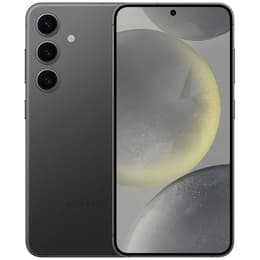
Galaxy S24
Galaxy S24
Starting at

Refurbished price:£273.00

Versus £817.67 new

See options
Google Pixel 7
Google Pixel 7
Starting at

Refurbished price:£134.00

Versus £729.00 new

See options

Ratings

The Samsung Galaxy S24 and the Google Pixel 7 are both Android smartphones, yet they cater to different user priorities through their distinct approaches to hardware and software. Released in January 2024, the Galaxy S24 offers a more recent hardware platform and a refined user interface. The Pixel 7, launched in October 2022, emphasizes a pure Android experience and advanced computational photography. While both devices provide a comprehensive smartphone experience, key differences lie in their long-term software support, display technology, and camera processing.

Scores

Durability

When considering the long-term usability of these devices, their release timelines and software support policies are significant factors.

  • Release Timeline: The Galaxy S24, released in January 2024, is a newer device compared to the Google Pixel 7, which launched in October 2022. This difference in release date inherently means the S24 will receive software updates for a longer period into the future.
  • Software Longevity: Samsung has committed to providing seven years of OS and security updates for the Galaxy S24 series, extending its support significantly. In contrast, the Google Pixel 7 is guaranteed at least five years of security updates from its release date. This means the Galaxy S24 offers a longer period of official software support, potentially making it a more future-proof option for users who keep their devices for many years.
  • Repairability: The Galaxy S24 has demonstrated a high repairability score, with aspects like battery replacement being relatively straightforward due to design choices such as pull tabs and less adhesive. The Pixel 7, while offering parts and guides, has a provisional repairability score that indicates challenges with components like the battery, which is often secured with strong adhesive.

Year of Release

2024

2022

Compatible with latest Update

Yes

Yes

OS

Android

Android

Foldable

No

No

Performance

The performance of a smartphone is crucial for daily tasks, from app usage to demanding multimedia. Both devices offer capable performance, but with different underlying architectures.

  • Everyday Responsiveness: The Galaxy S24 features a more recent generation processor, which contributes to swift performance across various tasks, including multitasking, browsing, and social media. The Pixel 7, powered by its custom-designed processor, delivers a smooth and efficient experience for general use and integrates well with Google's AI features.
  • Demanding Applications: For users engaging in more intensive activities like mobile gaming or heavy video editing, the Galaxy S24's newer processor provides additional headroom for smoother operation and improved thermal efficiency. While the Pixel 7 handles demanding apps, some users have reported that it can run warm and experience performance throttling during extended intensive use.
  • Multitasking and Storage: Both devices offer 8GB of RAM, providing a solid foundation for multitasking. The Galaxy S24 also has a 12GB RAM option and offers storage configurations up to 512GB, while the Pixel 7 is available with up to 256GB of storage.

Memory (GB)

8 GB

8 GB

Screen quality

The display is a primary interface for any smartphone, and both models offer high-quality viewing experiences with distinct characteristics.

  • Display Technology and Clarity: The Galaxy S24 features a 6.2-inch Dynamic AMOLED 2X display, known for its vibrant colors, deep blacks, and excellent contrast. The Pixel 7 comes with a 6.3-inch AMOLED display, also providing rich colors and good clarity for everyday viewing. Both offer FHD+ resolutions, ensuring sharp text and images.
  • Brightness and Outdoor Visibility: The Galaxy S24 boasts a significantly higher peak brightness of up to 2600 nits, which enhances visibility in bright outdoor conditions and improves HDR content viewing. The Pixel 7 offers good brightness for most environments, but may not match the S24's peak output in direct sunlight.
  • Refresh Rate and Smoothness: The Galaxy S24 features an adaptive refresh rate that can scale from 1Hz to 120Hz, providing very smooth scrolling and animations while conserving battery life when static. The Pixel 7 has a 90Hz refresh rate, which offers a noticeably smoother experience than standard 60Hz displays, though it is not as fluid as the S24's 120Hz.

Resolution

1080 x 2340

1080 x 2400

Screen type

Dynamic LTPO AMOLED 2X

AMOLED

Audiovisual

Both the Galaxy S24 and Pixel 7 are recognized for their camera capabilities, each with a different emphasis on image processing and hardware.

  • Rear Camera System: The Galaxy S24 features a versatile triple-camera setup, including a 50MP main sensor with optical image stabilization (OIS), a 12MP ultrawide lens, and a 10MP telephoto lens with 3x optical zoom and OIS. The Pixel 7 offers a dual-camera system with a 50MP main sensor and a 12MP ultrawide lens, relying heavily on its computational photography for zoom and detail.
  • Photography Performance: The Galaxy S24 produces crisp and vibrant images with good detail across various lighting conditions, with Samsung's typical slightly boosted colors. The Pixel 7 is highly praised for its consistent image quality, particularly in challenging lighting, and its ability to capture natural-looking photos with excellent dynamic range, often attributed to its advanced software processing.
  • Video Recording and Front Camera: Both devices support 4K video recording at 60 frames per second, with the S24 also capable of 8K video at 30 fps. For selfies, the Galaxy S24 has a 12MP front camera, while the Pixel 7 features a 10.8MP ultrawide front camera.

Main camera

50 megapixels

50 megapixels

Front camera

12 megapixels

10.8 megapixels

Miscellaneous

Beyond core features, several practical elements contribute to the overall user experience and device utility.

  • Connectivity and Ports: Both smartphones support 5G connectivity and Wi-Fi 6E for fast wireless internet. The Galaxy S24 also supports Bluetooth 5.3, while the Pixel 7 uses Bluetooth 5.2. Both devices utilize a USB-C port for charging and data transfer.
  • Biometric Security: The Galaxy S24 incorporates an ultrasonic in-screen fingerprint sensor for secure unlocking. The Pixel 7 uses an optical under-display fingerprint scanner and also offers face unlock. User feedback on the Pixel 7's fingerprint sensor has been mixed, with some finding it less consistent than desired.
  • Build and Handling: The Galaxy S24 features a glass front and back with an aluminum frame, offering an IP68 rating for dust and water resistance. It is a compact and lightweight device, measuring 147 x 70.6 x 7.6 mm and weighing 167-168g. The Pixel 7 also has Gorilla Glass Victus protection and an IP68 rating, with dimensions of 155.6 x 73.2 x 8.7 mm and a weight of 197g, making it slightly larger and heavier.

Weight

167 g

197 g

Screen size (in)

6.2

6.3

Mobile network

5G

5G

SIM card

Dual Physical SIM + eSIM

Physical SIM + eSIM

Carrier compatibility

Unlocked

Unlocked

Connector

USB-C

USB-C + Jack 3.5mm

The Samsung Galaxy S24 and Google Pixel 7 each present a compelling package, appealing to different user preferences. The Galaxy S24 is often praised for its bright and smooth display, compact design, and the promise of extended software support, making it an attractive option for users seeking a device with a longer update lifespan and a premium feel. Some users, however, have noted that its battery life could be improved.

The Google Pixel 7, on the other hand, is frequently lauded for its exceptional camera performance, particularly its computational photography capabilities that deliver consistent and natural-looking images. Its pure Android experience and integration with Google's AI features are also strong points. Common criticisms from users include concerns about battery life, potential heating during intensive tasks, and the consistency of its fingerprint sensor.

Users prioritizing the absolute latest hardware, a very bright 120Hz display, and the longest possible software update commitment may find the Galaxy S24 more aligned with their needs. Conversely, those who value a streamlined Android experience, advanced camera software, and are comfortable with a slightly older device may lean towards the Pixel 7. Both devices are available as quality-assured refurbished options, providing an eco-friendly alternative for consumers.


See all articles

Our recent comparisons