
Galaxy S10+ Vs iPhone 14

Galaxy S10+
Galaxy S10+
Starting at

Refurbished price:£115.32

Versus £330.00 new

See options
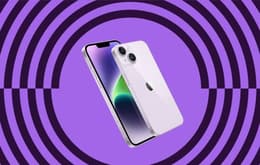
iPhone 14
iPhone 14
Starting at

Refurbished price:£235.00

Versus £599.00 new

See options

Ratings

The Samsung Galaxy S10 Plus (2019) and the Apple iPhone 14 (2022) represent two distinct generations of smartphone evolution. While the Galaxy S10 Plus was a flagship that pushed the boundaries of display design and hardware versatility at the end of the last decade, the iPhone 14 arrived three years later with a focus on refined internal efficiency and modern safety features. These devices operate on fundamentally different platforms—Android and iOS—offering users a choice between Samsung's customisable interface and Apple's integrated ecosystem. Understanding how these age-gapped models compare is essential for anyone looking to balance classic hardware features with modern software longevity.

Scores

Durability

The three-year gap between these devices significantly impacts their expected functional lifespan and the duration of software support they receive from their respective manufacturers.

  • Software Longevity: The iPhone 14, being a much newer release, is positioned to receive official operating system updates and critical security patches for many years to come. In contrast, the Galaxy S10 Plus has reached the end of its major Android update cycle, meaning it will not receive the latest interface features or the most recent security optimisations.
  • Hardware Resilience: The iPhone 14 features a flat glass design and a ceramic-based front cover that provides high resistance to accidental drops. The Galaxy S10 Plus utilises a curved glass aesthetic which, while visually striking, can be more susceptible to impact damage and often requires more specialised care during repairs.
  • Sustainable Maintenance: For those looking to maximise the life of their device, choosing a quality-assured refurbished option ensures that components like the battery have been tested for health. The iPhone 14 generally has better availability for official replacement parts due to its more recent production timeline.

Year of Release

2019

2022

Compatible with latest Update

No

Yes

OS

Android

iOS

Foldable

No

No

Performance

While both smartphones were designed to handle demanding tasks, the generational leap in internal hardware gives the newer device a clear advantage in responsiveness and efficiency.

  • System Responsiveness: The iPhone 14 handles modern, resource-heavy applications and intensive multitasking with ease, showing very little lag even when switching between high-definition video editing and gaming. The Galaxy S10 Plus remains capable for everyday browsing and social media, but users may notice slower loading times when opening large files or the latest mobile games.
  • Battery Efficiency: Although the Galaxy S10 Plus has a physically larger battery capacity, the iPhone 14 benefits from more modern, power-efficient internal components. This allows the iPhone to maintain a full day of use more consistently, whereas the older hardware in the Samsung may require more frequent charging, especially as the battery ages over time.
  • Storage and Memory: The Galaxy S10 Plus offers the rare benefit of expandable storage via a microSD card slot, allowing users to increase their space for photos and videos easily. The iPhone 14 relies on fixed internal storage options, requiring users to decide on their capacity needs at the point of acquisition or use cloud-based services.

Memory (GB)

8 GB

6 GB

Screen quality

The display technologies used in these devices offer different visual experiences, focusing on either high-resolution immersion or balanced brightness and colour accuracy.

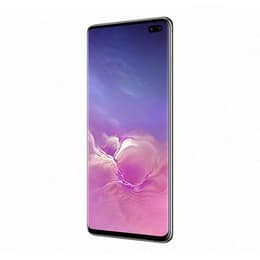
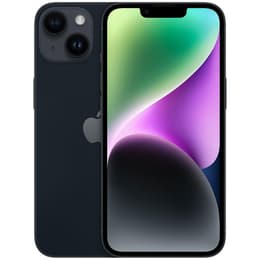
  • Display Technology and Clarity: The Galaxy S10 Plus features a 6.4-inch curved AMOLED display with a very high pixel density, providing exceptionally sharp text and detailed images. The iPhone 14 uses a 6.1-inch flat OLED panel which, while slightly lower in resolution, offers excellent colour calibration and high peak brightness that makes it easier to view under direct sunlight.
  • Viewing Experience: Users who enjoy watching films or media may prefer the larger, uninterrupted canvas of the Galaxy S10 Plus, which uses a small circular cutout for the front cameras. The iPhone 14 retains a traditional notch at the top of the screen, which houses the sensors for facial recognition but takes up a small portion of the viewing area.
  • Smoothness and Interaction: Both devices operate at a standard 60Hz refresh rate, providing a familiar and consistent level of smoothness during scrolling. The flat edges of the iPhone 14 screen may be preferred by those who find curved displays prone to accidental touches, while the Samsung's curves offer a more bezel-less appearance.

Resolution

1440 x 3040

1170 x 2532

Screen type

Dynamic AMOLED

Super Retina XDR OLED

Audiovisual

Photography capabilities have evolved significantly between 2019 and 2022, with the two devices taking different approaches to lens configuration and image processing.

  • Lens Versatility: The Galaxy S10 Plus is equipped with a triple-lens system that includes a dedicated telephoto lens for optical zooming, allowing for clearer close-up shots of distant subjects. The iPhone 14 uses a dual-lens system that lacks a telephoto option but excels in wide-angle photography and general image consistency.
  • Low-Light Performance: Thanks to more advanced image processing software, the iPhone 14 captures significantly more detail and less noise in dark environments. While the Galaxy S10 Plus was highly capable for its time, its night-time photos may appear softer and less vibrant compared to the modern standards set by the newer model.
  • Video and Audio: The iPhone 14 is widely recognised for its stable video recording and natural-looking transitions between lighting conditions. It also features high-quality microphones that capture clear audio for videos and calls, whereas the Galaxy S10 Plus provides a solid but more dated video experience that lacks the advanced stabilisation features found in more recent generations.

Main camera

12 megapixels

12 megapixels

Front camera

10 megapixels

12 megapixels

Miscellaneous

Practical features and physical design choices often dictate the daily user experience as much as the core specifications do.

  • Connectivity and Ports: The Galaxy S10 Plus includes a traditional 3.5mm headphone jack and a USB-C port, making it compatible with a wide range of legacy accessories. The iPhone 14 uses a Lightning port for charging and data transfer and requires wireless headphones or an adapter for wired audio.
  • Biometric Security: Samsung utilises an ultrasonic fingerprint sensor embedded under the display, which works even if fingers are slightly damp. Apple employs FaceID, a sophisticated facial recognition system that allows for secure unlocking and payments by simply looking at the device, which many users find more seamless in daily use.
  • Build and Handling: The iPhone 14 is slightly more compact and easier to use with one hand, featuring a sturdy aluminium frame. The Galaxy S10 Plus is taller and wider but surprisingly light for its size, though its glass-heavy construction and curved edges can make it feel more delicate without a protective case.

Weight

175 g

172 g

Screen size (in)

6.4

6.1

Mobile network

4G

5G

SIM card

Dual Physical SIM

Physical SIM + eSIM

Carrier compatibility

Unlocked

Unlocked

In summary, the choice between the Galaxy S10 Plus and the iPhone 14 depends largely on whether a user prioritises classic hardware versatility or modern software reliability. User discussions often highlight the Galaxy S10 Plus for its beautiful high-resolution screen and the convenience of the headphone jack and expandable storage, which are increasingly rare in newer models. However, some users note that the ageing battery and lack of recent Android updates make it feel less prepared for the demands of 2026. Conversely, the iPhone 14 is frequently praised for its dependable performance, exceptional video quality, and the peace of mind that comes with years of guaranteed software support, though some find the lack of a high-refresh-rate screen a missed opportunity for its release year.

Users who prioritise a larger, high-definition display for media consumption and require legacy features like wired audio and expandable storage may find the Galaxy S10 Plus well-suited to their needs. Meanwhile, users who value long-term security updates, a highly efficient ecosystem, and superior low-light photography will likely lean toward the iPhone 14. Choosing a sustainable choice through a quality-assured refurbished option allows users to access these features while reducing environmental impact. Ultimately, both devices remain functional choices, with the iPhone 14 offering a more future-proof experience and the Galaxy S10 Plus serving as a testament to the feature-rich flagship designs of the late 2010s.

See all articles

Our recent comparisons