
Compare models
Galaxy A16 Vs Galaxy Z Flip7
- 1-year minimum warranty
- Free delivery on all items
- Free 30-day returns
Differences at a glance
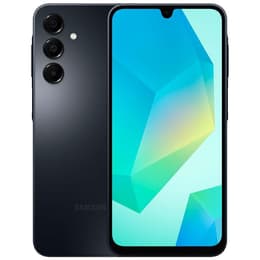
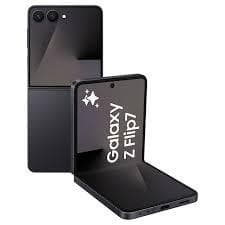
The Samsung Galaxy A16 (2024) and the Samsung Galaxy Z Flip 7 (2025) represent two entirely different approaches to modern smartphone design, catering to distinct user preferences and engineering philosophies. While the Galaxy A16 focuses on traditional slate practicality and everyday reliability, the Galaxy Z Flip 7 introduces a clamshell foldable form factor with a compact footprint and updated auxiliary display functionality. Both devices run on the Android operating system paired with Samsung's custom interface, yet they offer divergent physical builds and feature sets that influence daily handling.
Available Models
Colour
Storage
Scores
Durability
When examining hardware longevity and support timelines, these devices reflect different tiers within the manufacturer lineup while maintaining robust long-term software commitments. Users evaluating expected lifespan will find notable variations in update longevity and structural resilience.
- Software support duration: The Galaxy A16 provides a multi-year software update schedule extending across six years, matching the extended update framework offered by the flagship Galaxy Z Flip 7.
- Build and structural resilience: The Galaxy A16 uses a standard slate configuration with a plastic back and frame, whereas the Galaxy Z Flip 7 utilizes a folding mechanism, aluminum framing, and specialized protective glass layers that require careful handling over years of folding cycles.
- Expected practical lifespan: Both phones handle routine tasks well over time, though the traditional slate design of the Galaxy A16 features fewer moving parts, while the foldable hardware of the Galaxy Z Flip 7 benefits from a higher tier of internal components and processing headroom.
Year of Release
2024
2025
Compatible with latest Update
Yes
Yes
OS
Android
Android
Foldable
No
Yes
Performance
System responsiveness and daily multitasking capabilities vary significantly based on the internal hardware configuration of each device. Users experience different processing speeds depending on whether they run basic daily applications or resource-demanding software.
- Storage and memory configurations: The Galaxy A16 offers varying tiers of memory paired with expandable storage via microSD slots, while the Galaxy Z Flip 7 features larger baseline memory capacities with high-speed internal storage options and no expandable card slot.
- Everyday execution and multitasking: The Galaxy A16 handles messaging, web browsing, and media streaming smoothly under standard use conditions, whereas the Galaxy Z Flip 7 provides faster app loading, smoother resource-heavy gaming, and fluid multitasking thanks to its higher-tier internal processing architecture.
- Battery behavior: The Galaxy A16 includes a larger battery capacity designed to comfortably clear a full day of mixed use, while the Galaxy Z Flip 7 balances a more compact power cell with efficient power management to support its dual-screen configuration.
Screen quality
Display technology creates one of the most visible distinctions between these two models, impacting media consumption, outdoor legibility, and physical interaction. Each model incorporates screen configurations tailored to its specific form factor.
- Display technology and visual clarity: The Galaxy A16 features a flat Super AMOLED screen with sharp resolution, while the Galaxy Z Flip 7 utilizes a flexible Dynamic AMOLED 2X main panel accompanied by a functional outer cover screen for quick interactions.
- Refresh rate and fluidity: The Galaxy A16 supports a smooth 90Hz refresh rate for everyday navigation, whereas the Galaxy Z Flip 7 implements an adaptive 120Hz refresh rate that scales dynamically depending on active content.
- Outdoor visibility: Both models achieve sufficient peak brightness levels to remain legible under direct sunlight, though the advanced panel layers on the Galaxy Z Flip 7 offer enhanced contrast and color reproduction during media playback.
Resolution
1080 x 2340
1080x2520
Audiovisual
Photography and media recording hardware differ to accommodate the physical constraints and target audience of each device line. Users will notice variations in lens versatility and shooting modes.
- Camera system configuration: The Galaxy A16 features a standard multi-lens rear setup including a primary wide sensor, an ultra-wide option, and a macro lens, while the Galaxy Z Flip 7 focuses on a dual-camera array optimized for high-clarity primary and ultra-wide captures.
- Low-light and everyday capture: The Galaxy A16 delivers reliable daytime photos suitable for casual sharing, whereas the Galaxy Z Flip 7 utilizes advanced image processing and larger sensors to capture finer details in challenging lighting conditions.
- Media recording and audio output: Both devices support clear video recording with electronic stabilization, but the Galaxy Z Flip 7 benefits from stereo speakers and multi-microphone arrays that provide a more immersive media consumption and voice calling experience.
Main camera
50 megapixels
50 megapixels
Front camera
13 megapixels
10 megapixels
Miscellaneous
Practical everyday features, connectivity standards, and physical dimensions define how easily each phone integrates into daily routines and travel requirements. Ergonomics play a major role in user preference here.
- Connectivity and ports: Both models support modern 5G networks, stable Wi-Fi standards, and Bluetooth pairing, utilizing reversible USB Type-C ports for charging and data transfer.
- Handling and dimensions: The Galaxy A16 follows a traditional thin slate profile that requires standard pocket or bag space, while the Galaxy Z Flip 7 folds neatly in half to occupy half the vertical footprint when stored in a pocket.
- Security and sensors: Both devices integrate biometric authentication via fingerprint scanners, with the Galaxy Z Flip 7 also offering advanced facial recognition options enabled by its primary camera setup.
Weight
200 g
188 g
Screen size (in)
6.7
6.9
Mobile network
4G
5G
SIM card
Dual Physical SIM
Physical SIM + eSIM
Carrier compatibility
Unlocked
Unlocked
Connector
USB-C
USB-C
What the community thinks
User feedback from online communities highlights distinct preference patterns for both devices. Owners of the Galaxy A16 frequently praise its dependable battery life, reliable daily performance, and straightforward traditional design that requires minimal adjustment. Conversely, users of the Galaxy Z Flip 7 express appreciation for its pocket-friendly folding form factor, the utility of the expanded cover screen for checking notifications without unfolding, and the fluid display performance. Common criticisms for the Galaxy A16 point toward its basic plastic build and slower processing speeds under heavy loads, while Galaxy Z Flip 7 discussions often mention the visible crease on the inner screen and the higher level of care required for the folding mechanism.
Users prioritizing a straightforward, traditional smartphone experience with dependable battery endurance and a flat display will find the Galaxy A16 well-suited to their needs. Meanwhile, users who value a compact footprint, modern multitasking capabilities, and innovative screen layouts will gravitate toward the Galaxy Z Flip 7. Selecting either model as a quality-assured refurbished option from Back Market allows consumers to make an environmentally conscious choice that aligns with their specific technical preferences.