
Galaxy A13 Vs Galaxy A23 5G

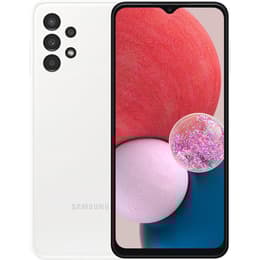
Galaxy A13
Galaxy A13
Starting at

Refurbished price:£73.00

Versus £249.00 new

See options
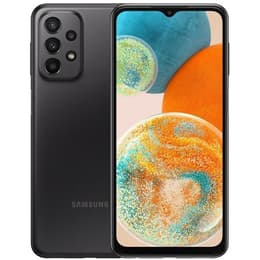
Galaxy A23 5G
Galaxy A23 5G
Starting at

Refurbished price:£100.00

Versus £300.00 new

See options

Ratings

The Samsung Galaxy A13, released in March 2022, and the Samsung Galaxy A23 5G, launched in August 2022, are both Android smartphones from Samsung's A-series. While they share a similar design philosophy and operate on the Android platform, the Galaxy A23 5G introduces notable enhancements in connectivity, display technology, and overall performance. Both devices aim to provide a comprehensive smartphone experience, with the A23 5G offering a more advanced feature set.

Scores

Durability

When considering the longevity of these devices, both the Galaxy A13 and Galaxy A23 5G offer a reasonable period of software support and demonstrate good repairability.

  • Software Updates: The Galaxy A13 (4G LTE model) launched with Android 12 and has received updates up to Android 14 with One UI 6.1. It is expected to receive security updates on a quarterly basis as of February 2026, with major OS updates concluding around early 2025. [7, 19, 23, 27, 28] The Galaxy A23 5G, also launched with Android 12, has been updated to Android 15 as of July 2025, and is also listed for quarterly security updates as of February 2026. [13, 18, 27] This suggests the A23 5G benefits from a slightly longer major OS update cycle.
  • Repairability: The Galaxy A13 (LTE model) has a repairability index score of 8.0 out of 10, indicating good ease of repair, including component availability and ease of disassembly. [8, 12] The Galaxy A23 5G also scores well with an 8.1 out of 10 repairability index, though some reports note the battery can be strongly glued, making replacement moderately challenging. [26, 43] Both devices are designed with repair in mind, contributing to their practical lifespan.
  • Expected Lifespan: Given their update policies and repairability, both phones are built to last several years with proper care. The A23 5G's slightly extended OS update timeline may offer a marginal advantage for users prioritizing the latest Android features for a longer duration.

Year of Release

2022

2022

Compatible with latest Update

No

Yes

OS

Android

Android

Foldable

No

No

Performance

The performance of the Galaxy A13 and Galaxy A23 5G differs primarily due to their internal components, impacting daily usage and responsiveness.

  • Processor Capabilities: The Galaxy A13 is equipped with an octa-core processor, which handles everyday tasks like browsing, social media, and light applications adequately. [6, 7] However, some users have reported noticeable lag and stuttering after several months of use, particularly with more demanding applications or multitasking. [29, 30] The Galaxy A23 5G features a more capable octa-core processor, designed to offer smoother performance for general use, multitasking, and even some moderate gaming. [3, 4, 9, 20]
  • System Responsiveness and Multitasking: The A23 5G generally provides a more responsive user experience, with faster app loading and smoother transitions between applications. [20] Its processor, combined with higher refresh rate display, contributes to a more fluid feel. The A13, while functional, may exhibit slower responses and occasional delays when switching between multiple apps or running resource-intensive tasks.
  • Storage and RAM: Both devices offer various configurations of RAM (3GB, 4GB, 6GB for A13; 4GB, 6GB, 8GB for A23 5G) and internal storage (32GB, 64GB, 128GB for A13; 64GB, 128GB for A23 5G), with both supporting expandable storage via microSD cards up to 1TB. [1, 2, 3, 5, 7, 9, 15, 16] Users who engage in heavy multitasking or gaming may find the higher RAM options of the A23 5G more beneficial for sustained smooth performance.

Memory (GB)

4 GB

4 GB

Screen quality

The visual experience on the Galaxy A13 and Galaxy A23 5G presents key differences, particularly in display technology and smoothness.

  • Display Technology and Resolution: Both smartphones feature a 6.6-inch display with a Full HD+ resolution of 1080 x 2408 pixels, providing clear and detailed visuals for content consumption. [1, 3, 5, 9, 15, 32] The Galaxy A13 uses a PLS TFT LCD panel, which offers good color reproduction and brightness for its class. [1, 15, 25] The Galaxy A23 5G also utilizes a PLS LCD panel, but with a significant upgrade in refresh rate. [3, 9]
  • Refresh Rate and Smoothness: A primary distinction is the refresh rate. The Galaxy A13 has a standard 60Hz refresh rate, which is suitable for everyday use. [15, 25] In contrast, the Galaxy A23 5G boasts a 120Hz refresh rate, resulting in noticeably smoother scrolling, more fluid animations, and a more responsive feel during interactions like gaming or browsing. [2, 3, 31, 32, 35] This higher refresh rate enhances the overall visual fluidity.
  • Brightness and Protection: Both displays are protected by Corning Gorilla Glass 5, offering a degree of scratch resistance. [1, 3, 7, 9, 15] While both provide adequate brightness for indoor use, the A23 5G's panel, combined with its higher refresh rate, generally offers a more vibrant and engaging viewing experience, especially in varied lighting conditions. [25, 32]

Resolution

1080 x 2408

1080 x 2408

Screen type

PLS LCD

PLS LCD

Audiovisual

The camera systems on the Galaxy A13 and Galaxy A23 5G offer similar megapixel counts for their main sensors but differ in capabilities and overall image processing.

  • Rear Camera System: Both devices feature a quad-camera setup with a 50-megapixel main sensor. [5, 16, 30, 32] The Galaxy A13 includes a 5MP ultrawide, 2MP macro, and 2MP depth sensor. [5, 30] The Galaxy A23 5G also has a 5MP ultrawide, 2MP macro, and 2MP depth sensor, but its 50MP main camera benefits from Optical Image Stabilization (OIS). [16, 31, 32, 35, 36] OIS significantly helps in reducing blur from handshakes, leading to clearer photos and more stable videos, especially in challenging lighting conditions.
  • Photography Performance: In good lighting, both phones can capture detailed images with their main sensors. However, the A23 5G's OIS provides a distinct advantage, particularly in low-light scenarios where it can produce sharper and less noisy photos. [31, 36] User reviews for the A13 sometimes note that its camera struggles in dim lighting and that the secondary lenses offer limited utility. [22, 29] The A23 5G's ultrawide camera is generally considered acceptable, though the macro and depth sensors on both models are often seen as less impactful. [31, 34]
  • Video Recording and Audio: Both phones are capable of recording video at 1080p resolution. [31, 34] The A23 5G's OIS also contributes to more stable video footage. For audio, both devices typically feature a single bottom-firing speaker, providing adequate sound for casual media consumption. Microphone quality for calls is generally clear on both.

Main camera

50 megapixels

50 megapixels

Front camera

8 megapixels

8 megapixels

Miscellaneous

Beyond core features, several practical elements differentiate the Galaxy A13 and Galaxy A23 5G, influencing their daily usability and connectivity.

  • Connectivity Options: A key distinction lies in network support. The Galaxy A13 is a 4G LTE device, providing standard mobile data speeds. [15] The Galaxy A23 5G, as its name suggests, offers 5G connectivity, enabling faster download and upload speeds in areas with 5G network coverage. [2, 3] Both support common Wi-Fi standards and Bluetooth for wireless connections. [2, 5]
  • Ports and Sensors: Both smartphones include a USB Type-C port for charging and data transfer, and retain a 3.5mm headphone jack. [1, 2, 3, 15] For security, both feature a side-mounted fingerprint sensor integrated into the power button, offering convenient and quick unlocking. [5, 9, 15, 31, 37] They also include essential sensors like an accelerometer and proximity sensor. The A23 5G additionally features a gyroscope. [2, 3]
  • Physical Characteristics: In terms of build, both phones utilize a plastic construction, contributing to their relatively light weight (around 195g for A13, 197g for A23 5G). [5, 7, 9, 30] Their dimensions are very similar, with both having a large screen and a comfortable in-hand feel for their size. [5, 7, 9, 30] The A23 5G's design integrates the camera module more seamlessly into the back panel, giving it a slightly more refined appearance compared to the A13. [36]

Weight

195 g

197 g

Screen size (in)

6.6

6.6

Mobile network

4G

5G

SIM card

Dual Physical SIM

Dual Physical SIM

Carrier compatibility

Unlocked

Unlocked

The Samsung Galaxy A13 and Galaxy A23 5G cater to users seeking reliable Android smartphones, with the A23 5G offering a more enhanced experience in several key areas. Users frequently praise the Galaxy A13 for its robust battery life and decent main camera performance in good lighting conditions. [21, 25] However, common criticisms include its slower performance over time and the limited utility of its secondary cameras. [29, 30]

The Galaxy A23 5G is often lauded for its smooth 120Hz display, the inclusion of 5G connectivity, and the optical image stabilization (OIS) on its main camera, which improves photo and video quality. [11, 31, 32, 35] Its more capable processor also contributes to a generally more fluid user experience. Some users note that while the main camera is good, the secondary lenses are less impressive, and the overall build, while sturdy, is still plastic. [31, 36]

Users prioritizing a device for basic communication, social media, and casual browsing, and who do not require the fastest performance or 5G connectivity, may find the Galaxy A13 suitable. It remains a functional option for those who value a straightforward smartphone experience. Conversely, users who prioritize a smoother visual experience, faster mobile data speeds, and improved camera capabilities, particularly for capturing stable photos and videos, will find the Galaxy A23 5G to be a more compelling choice. Its enhanced processor also makes it better suited for more demanding applications and multitasking.

For those considering either model, exploring quality-assured refurbished options can provide an eco-friendly alternative, extending the life cycle of these devices and offering a sustainable choice.


See all articles

Our recent comparisons