
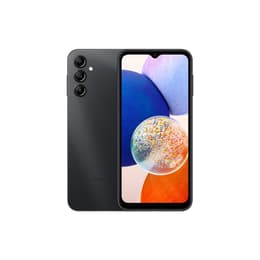
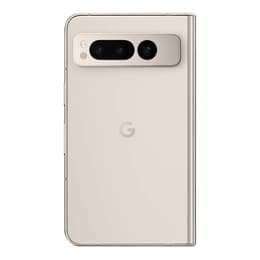

Galaxy A14 Vs Google Pixel Fold

Galaxy A14
Galaxy A14
Starting at

Refurbished price:£81.00

Versus £269.00 new

See options
Google Pixel Fold
Google Pixel Fold
Starting at

Refurbished price:£371.00

Versus £1,499.00 new

See options

Ratings

The Samsung Galaxy A14, released in early 2023, is a traditional slab-style smartphone designed for everyday use, focusing on core functionalities. In contrast, the Google Pixel Fold, launched in mid-2023, represents Google's entry into the foldable smartphone market, offering a unique form factor that transforms from a compact device into a larger tablet-like screen. Both devices run on the Android operating system, but they cater to very different user experiences and priorities.

Scores

Durability

The expected lifespan and software support differ significantly between these two devices, reflecting their distinct market positions.

  • Software Longevity: The Google Pixel Fold is designed for extended software support, offering up to five major Android upgrades and five years of security updates from its release. The Galaxy A14, as an entry-level device, typically receives two major OS updates and four years of security updates, meaning its software support will conclude sooner than the Pixel Fold's.
  • Physical Durability: The Galaxy A14 features a plastic back and frame with a glass front, offering a robust build for its category. The Pixel Fold, with its innovative folding design, incorporates premium materials like Gorilla Glass Victus on the back and outer display, an aluminum frame, and a plastic protective layer on the inner folding screen. While Google markets its hinge as durable, early user reports indicated some concerns regarding the inner display's resilience. The Pixel Fold also boasts IPX8 water resistance, a feature not typically found on the Galaxy A14.
  • Practical Lifespan: Users prioritizing long-term software updates and advanced durability features like water resistance may find the Pixel Fold a more suitable option for extended use. For those seeking a reliable device for a few years with essential functionalities, the Galaxy A14 offers a practical choice.

Year of Release

2023

2023

Compatible with latest Update

No

Yes

OS

Android

Android

Foldable

No

Yes

Performance

Performance capabilities vary widely between these two smartphones, impacting how they handle daily tasks and demanding applications.

  • Processing Power: The Google Pixel Fold is equipped with a high-performance processor, designed to handle demanding applications, intensive multitasking, and graphic-rich gaming smoothly. This allows for a responsive user experience across its dual displays. The Galaxy A14, depending on the specific model, uses an octa-core processor that provides sufficient power for everyday tasks like browsing, social media, and light gaming. However, it may exhibit slower performance with more intensive applications or heavy multitasking.
  • Multitasking and Storage: The Pixel Fold comes with a substantial 12GB of RAM, facilitating seamless transitions between numerous open applications and efficient background processing. It offers storage options of 256GB or 512GB. The Galaxy A14 typically offers 4GB or 6GB of RAM, which is adequate for general use but can be a limiting factor for extensive multitasking. It provides 64GB or 128GB of internal storage, with the added flexibility of a microSDXC card slot for expandable storage.
  • System Responsiveness: Users who frequently engage in power-intensive activities such as advanced mobile gaming, video editing, or running multiple complex applications simultaneously will notice the performance advantages of the Pixel Fold. The Galaxy A14 delivers a consistent and reliable experience for users with more modest performance needs.

Memory (GB)

4 GB

12 GB

Screen quality

The display experience is a primary differentiator, with the Pixel Fold offering a versatile dual-screen setup compared to the Galaxy A14's single, traditional display.

  • Display Technology and Size: The Galaxy A14 features a 6.6-inch PLS LCD display, providing a clear and vibrant viewing experience for a traditional smartphone. The Pixel Fold offers a dual-screen setup: a 5.8-inch OLED outer display and a 7.6-inch foldable OLED inner display. The OLED technology on the Pixel Fold delivers deeper blacks and more vibrant colors compared to the LCD panel on the Galaxy A14.
  • Resolution and Refresh Rate: Both devices offer Full HD+ resolution, with the Galaxy A14 having 1080 x 2408 pixels. The Pixel Fold's outer screen has a resolution of 1080 x 2092 pixels, and its inner screen is 1840 x 2208 pixels, providing sharp visuals across both displays. The Galaxy A14 (5G model) features a 90Hz refresh rate for smoother scrolling, while the 4G model has a 60Hz refresh rate. Both displays on the Pixel Fold support a 120Hz refresh rate, contributing to a fluid and responsive visual experience.
  • Brightness and Viewing Experience: The Pixel Fold's OLED displays offer high peak brightness levels (1550 nits for the outer screen, 1450 nits for the inner screen), ensuring good visibility even in bright outdoor conditions. The Galaxy A14's LCD panel provides good brightness for typical indoor and outdoor use, though it may not match the peak brightness of the Pixel Fold's OLED screens. The foldable nature of the Pixel Fold allows for a larger, immersive viewing area for media consumption and productivity when unfolded.

Resolution

1080 x 2408

1840 x 2208

Screen type

PLS LCD

Foldable OLED

Audiovisual

The camera systems on these two phones are designed for different levels of photographic versatility and image processing capabilities.

  • Rear Camera System: The Galaxy A14 is equipped with a triple rear camera setup, featuring a 50-megapixel main sensor, complemented by a 2-megapixel macro lens and either a 2-megapixel depth sensor (5G model) or a 5-megapixel ultrawide lens (4G model). The Pixel Fold boasts a more advanced triple-lens rear camera system, including a 48-megapixel main camera with optical image stabilization, a 10.8-megapixel ultrawide lens, and a 10.8-megapixel telephoto lens capable of 5x optical zoom.
  • Photography Performance: The Pixel Fold leverages Google's computational photography strengths, known for producing detailed and color-accurate images across various lighting conditions, including strong low-light performance. Its telephoto lens provides significant zoom capabilities. The Galaxy A14 performs well in good lighting conditions, capturing clear everyday photos. However, its performance in low-light environments and its macro/depth sensors are more basic.
  • Video Recording and Front Cameras: Both devices can record video at 1080p resolution at 30 frames per second with their main cameras. The Pixel Fold, however, can record 4K video at up to 60 frames per second, offering higher quality video capture. For selfies, the Galaxy A14 has a 13-megapixel front camera. The Pixel Fold features a 9.5-megapixel camera on its outer display and an 8-megapixel camera on its inner folding display.

Main camera

50 megapixels

48 megapixels

Front camera

13 megapixels

8 megapixels

Miscellaneous

Beyond core features, several practical elements contribute to the overall user experience and daily convenience of each device.

  • Connectivity and Ports: Both devices support 5G connectivity (for the 5G variant of A14) and Bluetooth 5.2. The Pixel Fold supports newer Wi-Fi 6E standards, while the Galaxy A14 uses Wi-Fi 5. Both include a USB-C port for charging and data transfer. A notable difference is the presence of a 3.5mm headphone jack on the Galaxy A14, which is absent on the Pixel Fold.
  • Biometric Security and Sensors: The Galaxy A14 features a side-mounted fingerprint sensor for secure unlocking. The Pixel Fold offers both face recognition and an under-display fingerprint sensor for biometric authentication. Both devices include standard sensors like accelerometers and gyroscopes.
  • Design and Handling: The Galaxy A14 has a traditional smartphone design with dimensions of approximately 167.7 x 78 x 9.1 mm and a weight of around 201-202 grams. The Pixel Fold, when folded, measures 139.7 x 79.5 x 12.1 mm and weighs 283 grams, making it thicker and heavier than the A14. When unfolded, it becomes a thinner, wider device at 139.7 x 158.7 x 5.8 mm. The Pixel Fold's wider outer display is often praised for being more comfortable to use than some other foldable designs.

Weight

201 g

283 g

Screen size (in)

6.6

7.6

Mobile network

4G

5G

SIM card

Dual Physical SIM

Physical SIM + eSIM

Carrier compatibility

Unlocked

Unlocked

The Samsung Galaxy A14 and Google Pixel Fold cater to distinct user needs, offering different strengths and experiences. The Galaxy A14 is frequently praised by users for its long battery life and the inclusion of a 3.5mm headphone jack, making it a practical choice for essential smartphone functions. Common criticisms often point to its more basic camera performance in challenging lighting conditions and its slower processing speed for demanding applications.

Conversely, the Google Pixel Fold receives acclaim for its innovative foldable design, excellent camera system, and powerful performance. Users appreciate its versatile dual displays and the quality of its photography. However, some common concerns include its weight, the visibility of the crease on the inner display, and its tendency to generate heat during intensive tasks.

Users prioritizing a straightforward, reliable smartphone for communication, browsing, and media consumption, with a focus on battery longevity and traditional features like a headphone jack, will find the Galaxy A14 well-suited to their needs. It offers a solid foundation for everyday mobile use. For individuals seeking a cutting-edge device that combines a compact smartphone with a larger tablet-like experience, alongside top-tier camera capabilities and robust performance for advanced tasks, the Google Pixel Fold is a compelling option. Its unique form factor and powerful internals are ideal for those who value innovation and versatility.

Both devices are available as quality-assured refurbished options, providing an eco-friendly alternative for consumers looking to make a sustainable choice.

See all articles

Our recent comparisons





