
Compare models

Google Pixel Fold Vs iPhone 17 Pro Max

  • 1-year minimum warranty
  • Free delivery on all items
  • Free 30-day returns
Google Pixel Fold
Starting at

Refurbished price:£381.00

Versus £1,499.00 new

See options
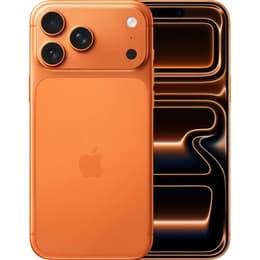
iPhone 17 Pro Max
Starting at

Refurbished price:£964.00

Versus £1,199.00 new

See options

Differences at a glance

The Google Pixel Fold (2023) and the iPhone 17 Pro Max (2025) represent two distinct approaches to high-end smartphone engineering. While the Google Pixel Fold introduces a dual-screen foldable design that transforms from a standard pocket-sized device into a tablet-like display, the iPhone 17 Pro Max focuses on a refined, traditional slate form factor packed with advanced processing power and an expansive single screen. Both devices run on different operating systems—Android and iOS—tailoring their user experiences to distinct preferences in software navigation, customization, and ecosystem integration.

Available Models

Colour

Storage (GB)

Scores

Durability

When evaluating the long-term viability and physical durability of these devices, several structural and software factors come into play regarding their expected practical lifespans.

  • Software support timeline: The iPhone 17 Pro Max benefits from an extended software support window typical of Apple's flagship lineup, whereas the Google Pixel Fold relies on a structured multi-year update commitment that covers major system updates and security patches.
  • Hardware resilience: The traditional single-panel design of the iPhone 17 Pro Max offers inherent sturdiness against daily wear, while the Google Pixel Fold incorporates a specialized hinge mechanism and flexible inner display that require mindful handling during long-term use.
  • Repairability and maintenance: Both manufacturers provide structured repair pathways, though traditional slate devices generally present fewer mechanical complexities over years of daily operation compared to foldable configurations.

Year of Release

2023

2025

Compatible with latest Update

Yes

Yes

OS

Android

iOS

Foldable

Yes

No

Performance

Day-to-day responsiveness and multitasking capabilities vary significantly based on internal hardware optimization and memory allocation.

  • Multitasking and app switching: The Google Pixel Fold utilizes its split-screen capabilities to run multiple applications simultaneously on the inner display, supported by ample memory for fluid switching, while the iPhone 17 Pro Max handles heavy background tasks and resource-intensive software through deep system-level optimization.
  • Battery behavior: The iPhone 17 Pro Max maintains energy efficiency for a full day of mixed usage under standard conditions, whereas the Google Pixel Fold's dual-screen setup demands more power when the larger inner display is active, leading to more frequent charging intervals during heavy media consumption.
  • System fluidity: Both devices deliver swift app loading and responsive navigation for everyday tasks, though users handling high-end mobile gaming or demanding creative workflows will notice distinct advantages in thermal management and sustained processing speeds on the newer Apple hardware.

Screen quality

The visual experience differs fundamentally between these two models due to their contrasting display architectures and form factors.

  • Display technology and form factor: The Google Pixel Fold features an outer OLED cover screen alongside a tablet-sized inner flexible OLED display, whereas the iPhone 17 Pro Max employs a single, highly refined OLED panel with deep contrast and vibrant color reproduction.
  • Brightness and outdoor visibility: Both models achieve high peak brightness levels to ensure readability under direct sunlight, though large foldable inner screens can occasionally catch more ambient reflections depending on lighting angles.
  • Refresh rate and smoothness: Both devices support high refresh rates for fluid scrolling, responsive touch tracking, and smooth animation rendering across all primary user interface interactions.

Resolution

1840 x 2208

2868x1320

Screen type

Foldable OLED

Super Retina XDR

Audiovisual

Media creation, audio reproduction, and photography capabilities shape how each device handles everyday documentation and entertainment.

  • Camera versatility: The iPhone 17 Pro Max utilizes an advanced multi-lens rear array paired with computational photography software to deliver consistent detail and zoom performance, while the Google Pixel Fold leverages computational imaging tuned for balanced exposures and natural skin tones across both folded and unfolded modes.
  • Video recording: Apple devices traditionally lead in stable, high-bitrate video capture with advanced stabilization features, whereas the Google Pixel Fold provides robust cinematic modes and reliable low-light video recording capabilities.
  • Audio output: Both models feature stereo speaker configurations that deliver clear sound for hands-free calls and casual media streaming, complemented by multi-microphone arrays designed to isolate voice clarity during calls and video recordings.

Main camera

48 megapixels

48 megapixels

Front camera

8 megapixels

18 megapixels

Miscellaneous

Practical daily usability is further defined by physical dimensions, connectivity standards, and biometric security features.

  • Form factor and handling: The Google Pixel Fold offers a wider, shorter stance when closed and opens into a broader workspace, carrying a heavier overall mass due to its dual-screen and hinge architecture, whereas the iPhone 17 Pro Max presents a slimmer, traditional profile that is straightforward to grip and carry.
  • Connectivity and ports: Both models support current wireless standards including 5G and advanced Wi-Fi connectivity, using proprietary or universal port standards for charging and wired data transfer.
  • Biometrics and sensors: The Google Pixel Fold combines face recognition with a fingerprint sensor integrated into the power button, while the iPhone 17 Pro Max relies entirely on advanced facial mapping technology for secure authentication and system unlocking.

Weight

283 g

233 g

Screen size (in)

7.6

6.9

Mobile network

5G

5G

SIM card

Physical SIM + eSIM

Physical SIM + eSIM

Carrier compatibility

Unlocked

Unlocked

Connector

USB-C

USB-C

What the community thinks

User discussions across community platforms often highlight distinct preferences for each device. Owners of the Google Pixel Fold frequently praise its multitasking versatility, the convenience of a pocket-sized outer screen that expands into a larger workspace, and clean software customization. At the same time, some users note the heavier weight and the need for careful handling of the folding inner screen mechanism. Conversely, users of the iPhone 17 Pro Max frequently commend its reliable battery duration, robust video recording tools, and smooth performance stability, though some point out the lack of a foldable workspace.

Users prioritizing a versatile, multi-window workspace for reading, split-screen productivity, and media viewing will find the Google Pixel Fold well-suited to their needs. Conversely, users prioritizing a traditional pocketable form factor, streamlined one-handed operation, and extended battery endurance under heavy workloads may lean toward the iPhone 17 Pro Max. For those looking to make a sustainable choice, a quality-assured refurbished option provides an eco-friendly alternative that extends the lifecycle of these advanced electronics without compromising on performance expectations.