
Galaxy A23 5G Vs Galaxy S20 5G

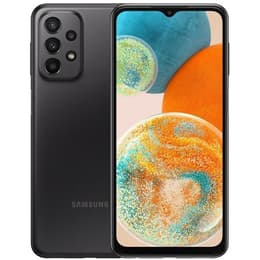
Galaxy A23 5G
Galaxy A23 5G
Starting at

Refurbished price:£100.00

Versus £300.00 new

See options
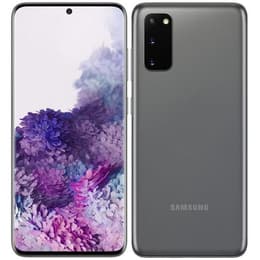
Galaxy S20 5G
Galaxy S20 5G
Starting at

Refurbished price:£133.00

Versus £899.00 new

See options

Ratings

The Samsung Galaxy A23 5G, released in August 2022, and the Samsung Galaxy S20 5G, launched in February 2020, represent different segments of Samsung's smartphone offerings. While the A23 5G is positioned as a more recent mid-range device, the S20 5G was a flagship model at its release. These differences translate into distinct user experiences, particularly concerning display quality, camera capabilities, and overall performance, catering to varying user priorities.

Scores

Durability

The practical lifespan of a smartphone is influenced by its release timeline, software support, and physical durability.

  • Release Timeline: The Galaxy A23 5G, released in August 2022, benefits from a more recent launch, meaning its software support cycle extends further into the future. The Galaxy S20 5G, launched in February 2020, has already reached the end of its major Android OS updates and its security update support officially concluded around April 2025.
  • OS Support: The Galaxy A23 5G shipped with Android 12 and has received updates up to Android 15 as of July 2025, with an expectation of two major OS updates and four years of security updates from its release. In contrast, the Galaxy S20 5G launched with Android 10 and concluded its major OS updates with Android 13.
  • Physical Durability: The Galaxy A23 5G features a glass front with Gorilla Glass 5 protection and a plastic back and frame, without an official IP rating for water and dust resistance. The Galaxy S20 5G offers a more robust build with Gorilla Glass 6 on both the front and back, an aluminum frame, and an IP68 rating for dust and water resistance, indicating better protection against environmental elements.
  • Repairability: The Galaxy A23 5G is considered moderately repairable, with a score of approximately 6.75 out of 10, though battery removal can be challenging due to adhesive. The Galaxy S20 5G received a lower repairability score of 3 out of 10 from iFixit, primarily due to strong adhesives making disassembly difficult and battery replacement complex.

Year of Release

2022

2020

Compatible with latest Update

Yes

No

OS

Android

Android

Foldable

No

No

Performance

Performance in daily use is shaped by a device's internal components, affecting app responsiveness, multitasking, and gaming.

  • Everyday Responsiveness: The Galaxy S20 5G, equipped with a former flagship-tier processor, delivers smooth and rapid performance for demanding applications and multitasking. Users generally report that it handles intensive tasks without significant slowdowns. The Galaxy A23 5G, featuring a mid-range processor, capably handles everyday tasks and general multitasking, though it may exhibit occasional slowdowns with very demanding applications or graphics-intensive games.
  • Multitasking and Storage: The Galaxy S20 5G typically comes with 12GB of RAM, providing ample capacity for extensive multitasking and keeping numerous applications open in the background. It offers 128GB of internal storage, expandable via microSD. The Galaxy A23 5G is available with various RAM configurations, including 4GB, 6GB, or 8GB, which is sufficient for most users but may limit the number of simultaneously active applications compared to the S20 5G. It also offers 64GB or 128GB of internal storage, expandable with a microSD card.
  • Battery Behavior: The Galaxy A23 5G features a larger 5000 mAh battery, which users consistently praise for its long endurance, often lasting through a full day of heavy use or more. The Galaxy S20 5G has a 4000 mAh battery; its battery life is solid with a standard refresh rate, but enabling the higher 120Hz refresh rate significantly increases power consumption, leading to more frequent charging for heavy users.

Memory (GB)

4 GB

12 GB

Screen quality

The display is a primary interface for smartphone interaction, with differences in technology and specifications impacting the visual experience.

  • Display Technology and Clarity: The Galaxy S20 5G features a 6.2-inch Dynamic AMOLED 2X display with a high resolution of 1440 x 3200 pixels, offering deep blacks, vibrant colors, and excellent contrast. The Galaxy A23 5G comes with a larger 6.6-inch PLS LCD panel with a resolution of 1080 x 2408 pixels. While it provides a clear viewing experience, it does not match the contrast or color vibrancy of an AMOLED screen.
  • Refresh Rate and Smoothness: Both devices support a 120Hz refresh rate, which contributes to smoother scrolling and more fluid animations. On the Galaxy S20 5G, this high refresh rate is available at FHD+ resolution, while the A23 5G offers it at its native FHD+ resolution.
  • Brightness and Viewing Experience: The Galaxy S20 5G's AMOLED display generally achieves higher peak brightness, making it more comfortable for outdoor viewing and HDR content consumption. The Galaxy A23 5G's LCD screen offers adequate brightness for most indoor and outdoor conditions, though it may struggle in direct sunlight compared to the S20 5G.

Resolution

1080 x 2408

1440 x 3200

Screen type

PLS LCD

Dynamic AMOLED 2X

Audiovisual

Camera systems are a key differentiator, influencing the quality of photos and videos captured in various scenarios.

  • Rear Camera System: The Galaxy S20 5G features a versatile triple-camera setup, including a 12 MP main sensor with optical image stabilization (OIS), a 64 MP telephoto lens with 3x hybrid optical zoom and OIS, and a 12 MP ultrawide lens. This configuration allows for detailed zoom shots and broad landscape captures. The Galaxy A23 5G is equipped with a quad-camera system, highlighted by a 50 MP main sensor with OIS, a 5 MP ultrawide, a 2 MP macro, and a 2 MP depth sensor.
  • Photography Performance: The S20 5G, as a former flagship, generally delivers high-quality images across various conditions, excelling in detail, dynamic range, and low-light performance. Its telephoto lens provides effective optical zoom capabilities. The A23 5G's 50 MP main camera performs well in good lighting, capturing detailed photos with accurate colors. However, its ultrawide and macro sensors are less capable, and low-light performance is generally not as strong as the S20 5G.
  • Video Recording and Audio: The Galaxy S20 5G supports up to 8K video recording, offering high resolution for capturing moments, alongside robust microphone quality for clear audio. The Galaxy A23 5G is limited to 1080p video recording, which is suitable for casual use but lacks the detail and flexibility of the S20 5G's video capabilities. Both devices offer decent speaker output for media consumption.

Main camera

50 megapixels

12 megapixels

Front camera

8 megapixels

10 megapixels

Miscellaneous

Beyond core features, practical elements like connectivity, ports, and physical design contribute to the overall user experience.

  • Connectivity and Ports: Both devices support 5G connectivity for faster mobile data speeds. The Galaxy S20 5G features Wi-Fi 6 (802.11ax) and Bluetooth 5.0, along with a USB-C 3.2 port, but it lacks a 3.5mm headphone jack. The Galaxy A23 5G includes Wi-Fi 5 (802.11ac) and Bluetooth 5.1, a USB-C 2.0 port, and retains the 3.5mm headphone jack, which can be a convenience for users with wired audio accessories.
  • Biometric Security: The Galaxy S20 5G incorporates an ultrasonic fingerprint sensor embedded under the display, offering a modern and seamless unlocking experience, along with face recognition. The Galaxy A23 5G utilizes a side-mounted fingerprint sensor, integrated into the power button, which is a fast and reliable method for authentication.
  • Design and Handling: The Galaxy S20 5G is more compact and lighter, weighing 163g with dimensions of 151.7 x 69.1 x 7.9 mm, making it easier for one-handed use. Its premium glass and aluminum construction contribute to a more refined feel. The Galaxy A23 5G is larger and heavier at 197g and 165.4 x 76.9 x 8.4 mm, featuring a plastic build that, while sturdy, does not offer the same tactile experience as the S20 5G.

Weight

197 g

163 g

Screen size (in)

6.6

6.2

Mobile network

5G

5G

SIM card

Dual Physical SIM

Dual Physical SIM

Carrier compatibility

Unlocked

Unlocked

Connector

USB-C + Jack 3.5mm

USB-C

The Samsung Galaxy A23 5G and Galaxy S20 5G cater to different user needs, reflecting their original market positioning. Users often praise the Galaxy A23 5G for its exceptional battery life and a main camera that performs well in adequate lighting conditions. Its larger display is also frequently highlighted as a positive for media consumption. However, some users note that its overall performance can be less fluid compared to higher-end devices, and the secondary cameras are not as versatile.

Conversely, the Galaxy S20 5G is frequently lauded for its vibrant, high-resolution AMOLED display and its powerful, responsive performance, which was flagship-tier at its release. Its advanced camera system, including a telephoto lens and 8K video recording, receives considerable praise. Criticisms often revolve around its battery life, particularly when the 120Hz refresh rate is enabled, and its software support has now concluded, meaning no further major Android updates.

Users prioritizing extended software longevity and superior battery endurance for daily tasks may find the Galaxy A23 5G better suited to their needs. Its more recent release ensures a longer period of security updates and newer Android versions. On the other hand, users who value a premium display, robust performance for demanding applications, and a more advanced camera system, and who are comfortable with an older software version, may lean towards the Galaxy S20 5G. Both devices offer a pathway to connectivity and functionality, and considering a quality-assured refurbished option for either model can be an eco-friendly alternative to purchasing new.
See all articles

Our recent comparisons