
Smartphones
Compare models
Differences at a glance
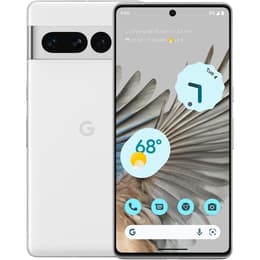
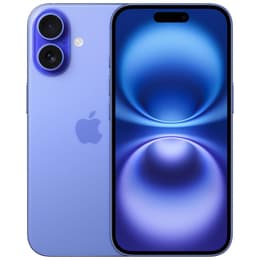
The Google Pixel 7 Pro, released in October 2022, and the iPhone 16, launched in September 2024, represent distinct approaches to the premium smartphone experience. While both devices offer advanced camera systems and robust performance, they differ significantly in their operating systems, design philosophies, and specific feature sets. The Pixel 7 Pro runs on Google's Android platform, emphasizing AI-driven features and computational photography, whereas the iPhone 16 operates on Apple's iOS, focusing on a cohesive ecosystem and integrated hardware-software experience.
Colour
Storage
When considering the long-term usability of a smartphone, factors like software support, physical durability, and repairability are key.
Year of Release
Compatible with latest Update
Foldable
Evaluating smartphone performance involves looking beyond raw specifications to understand how devices handle daily tasks, demanding applications, and power management.
The display is a primary interface for smartphone interaction, and differences in technology and specifications can significantly impact the user experience.
Resolution
Screen type
Both smartphones prioritize advanced photography capabilities, but they achieve their results through different hardware and software integrations.
Main camera
Front camera
Beyond core performance and camera, several practical features contribute to the overall user experience and daily convenience.
Weight
Screen size (in)
Mobile network
SIM card
Carrier compatibility
The Google Pixel 7 Pro and iPhone 16 cater to users with differing priorities, reflecting their respective ecosystems and design philosophies. Users often praise the Pixel 7 Pro for its advanced computational photography, particularly its zoom capabilities and AI-driven features that enhance photos. Its clean Android experience and early access to new Google features are also frequently highlighted. Some users, however, have noted that its battery life can be inconsistent with heavy usage, especially when using the camera extensively.
The iPhone 16, being a more recent release, is generally lauded for its robust performance, the seamless integration of its hardware and software, and its consistent camera output. The introduction of features like the Action Button and Wi-Fi 7 are often seen as practical enhancements. A common point of discussion for the standard iPhone 16 model is its 60 Hz display, which some users might find less fluid compared to devices with higher refresh rates.
Users prioritizing a highly versatile camera system with strong zoom capabilities and a pure Android experience with Google's latest AI innovations may find the Pixel 7 Pro well-suited to their needs. Conversely, those who value a cohesive ecosystem, consistent performance, a slightly more compact design, and a longer period of software updates might lean towards the iPhone 16. Both devices offer a quality-assured refurbished option, providing an eco-friendly alternative for consumers looking to make informed and sustainable choices.