
Galaxy A04S Vs Google Pixel 9a

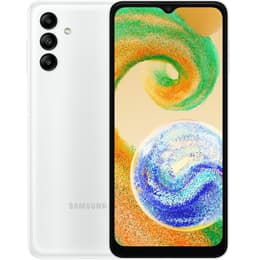
Galaxy A04S
Galaxy A04S
Starting at

Refurbished price:£99.00

Versus £179.00 new

See options
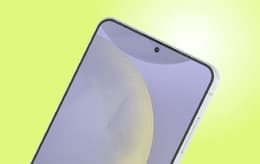
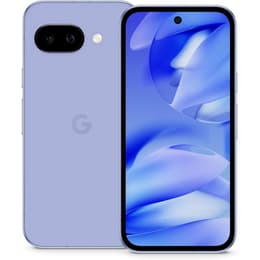
Google Pixel 9a
Google Pixel 9a
Starting at

Refurbished price:£319.00

Versus £499.00 new

See options

Ratings

The Samsung Galaxy A04S, released in late 2022, and the Google Pixel 9A, launched in early 2025, represent different approaches to the smartphone experience. While both devices operate on the Android platform, the Pixel 9A introduces more advanced hardware and a distinct software philosophy compared to the Galaxy A04S. The primary differentiators lie in their processing power, display technology, and camera capabilities.

Scores

Durability

When considering the long-term usability of these devices, their release timelines and software support policies are key factors.

  • Release Timeline and Age: The Samsung Galaxy A04S was released in September 2022, making it an older model compared to the Google Pixel 9A, which launched in April 2025. This age difference impacts the duration of future software support and the overall practical lifespan of the devices.
  • OS Support Duration: The Google Pixel 9A offers a significant advantage with a commitment to seven years of OS and security updates, starting with Android 15. This means it will receive updates until at least March 2032. In contrast, the Samsung Galaxy A04S launched with Android 12 and is upgradable to Android 14, with an expected software support window of approximately two to three years from its release.
  • Physical Durability: The Pixel 9A features an IP68 rating for water and dust resistance and a scratch-resistant display with Corning Gorilla Glass 3, contributing to its overall resilience. The Galaxy A04S, constructed with a plastic back and frame, does not carry an official IP rating, suggesting less protection against environmental elements.

Year of Release

2022

2025

Compatible with latest Update

Yes

Yes

OS

Android

Android

Foldable

No

No

Performance

The performance of a smartphone is largely determined by its internal components and how efficiently they handle daily tasks.

  • Processor Capabilities: The Google Pixel 9A is equipped with a current-generation processor, enabling it to handle demanding applications, multitasking, and AI-powered features smoothly. Users can expect a responsive experience across various tasks. The Samsung Galaxy A04S utilizes an Octa-core processor that provides moderate performance, suitable for everyday tasks but may encounter limitations with more intensive applications or heavy gaming.
  • Memory and Storage: The Pixel 9A comes with 8GB of RAM and offers internal storage options of 128GB or 256GB, which is not expandable. This configuration supports efficient multitasking and app management. The Galaxy A04S is available with 3GB or 4GB of RAM and 32GB, 64GB, or 128GB of internal storage, with the added flexibility of expanding storage up to 1TB via a microSD card.
  • Battery Behavior: Both devices feature large battery capacities, with the Pixel 9A housing a 5100 mAh battery and the Galaxy A04S a 5000 mAh battery. Both are reported to offer good battery life, often lasting through a full day of typical use. The Pixel 9A supports 23W wired charging and 7.5W wireless charging, while the Galaxy A04S supports 15W wired charging.

Memory (GB)

3 GB

8 GB

Screen quality

The visual experience on a smartphone is heavily influenced by its display technology and specifications.

  • Display Technology and Clarity: The Google Pixel 9A features a 6.3-inch Actua OLED display with a Full HD+ resolution (1080 x 2424 pixels), providing vibrant colors, deep blacks, and sharp details. The Samsung Galaxy A04S has a larger 6.5-inch PLS LCD display with an HD+ resolution (720 x 1600 pixels).
  • Brightness and Refresh Rate: The Pixel 9A's display is notably brighter, reaching a peak brightness of 2700 nits, which enhances outdoor visibility. It also offers a dynamic refresh rate that can switch between 60Hz and 120Hz for smoother scrolling and animations. The Galaxy A04S has a maximum refresh rate of 90Hz and a lower typical brightness of around 380-400 nits, which may make it challenging to view in bright sunlight.
  • Viewing Experience: While the Pixel 9A offers a more immersive and visually rich experience due to its OLED technology and higher resolution, some users note its bezels are thicker than flagship models. The Galaxy A04S provides a larger screen size, but its LCD panel may exhibit shifts in contrast at wider viewing angles.

Resolution

720 x 1600

2424 x 1080

Audiovisual

Camera performance is a significant consideration for many users, and these two devices offer different photographic capabilities.

  • Rear Camera System: The Google Pixel 9A features a dual-camera setup with a 48MP main sensor that includes optical image stabilization (OIS) and electronic image stabilization (EIS), alongside a 13MP ultrawide lens. This system is praised for its excellent image quality, particularly in daylight and low-light conditions, and includes a macro focus mode. The Samsung Galaxy A04S has a triple-camera system with a 50MP main sensor, a 2MP macro lens, and a 2MP depth sensor, but it lacks an ultrawide camera. Its daylight photos are decent, but it struggles in low-light environments.
  • Front Camera and Video: For selfies, the Pixel 9A is equipped with a 13MP front camera, while the Galaxy A04S has a 5MP front camera. Both devices can record video at 1080p resolution, with the Pixel 9A also capable of 4K video recording at 60 frames per second. The Pixel 9A's video performance is generally improved over its predecessor, though low-light video can still be noisy.
  • Computational Photography: The Pixel 9A benefits from Google's advanced computational photography, which enhances image processing, color accuracy, and dynamic range, often leading to more consistent and appealing results across various shooting conditions. The Galaxy A04S offers acceptable camera performance for its segment, but without the same level of software-driven enhancements.

Front camera

5 megapixels

13 megapixels

Miscellaneous

Beyond core performance and display, several practical features contribute to the overall user experience.

  • Connectivity and Ports: The Google Pixel 9A supports 5G connectivity, Wi-Fi 6E, Bluetooth, and NFC, offering modern and fast wireless communication options. It features a USB Type-C port. The Samsung Galaxy A04S supports 4G LTE, Wi-Fi 5, and Bluetooth 5.0, but lacks 5G and NFC. It also includes a USB Type-C port and retains a 3.5mm headphone jack, which is absent on the Pixel 9A.
  • Biometric Security: The Pixel 9A typically features an under-display fingerprint sensor and may offer face recognition. The Galaxy A04S includes a side-mounted fingerprint sensor for unlocking the device.
  • Design and Handling: The Pixel 9A has a 6.3-inch display, contributing to a compact form factor that is comfortable for one-handed use. It features a flat design. The Galaxy A04S, with its 6.5-inch display, is slightly larger and has a plastic build.

Weight

195 g

186 g

Screen size (in)

6.5

6.3

Mobile network

4G

5G

SIM card

Dual Physical SIM

Physical SIM + eSIM

Carrier compatibility

Unlocked

Unlocked

Connector

USB-C

USB-C

User feedback for the Google Pixel 9A frequently highlights its excellent main camera performance, impressive battery life, and the smooth, clean Android experience with extended software support. Many users appreciate its bright OLED display and IP68 water and dust resistance. Common criticisms include the slower charging speeds, the absence of a charger in the box, and some users find the bezels to be noticeable. The removal of the signature camera bar design has also been a point of discussion for some.

For the Samsung Galaxy A04S, users often praise its long-lasting 5000 mAh battery and the inclusion of a 3.5mm headphone jack. Its expandable storage is also a positive point. However, frequent concerns revolve around its moderate performance, especially with demanding applications, and the display's lower resolution and brightness, which can affect outdoor visibility. The camera's performance in low light is also a common area of critique.

Users prioritizing a device with a modern, powerful processor, an exceptional camera system, a vibrant display, and long-term software support will find the Google Pixel 9A well-suited to their needs. Its robust durability features also make it a strong contender for those seeking a resilient device. Conversely, users who prioritize a larger screen, expandable storage, a traditional headphone jack, and extended battery life for basic tasks may lean toward the Samsung Galaxy A04S. Both devices offer distinct advantages for different user profiles, and considering a quality-assured refurbished option can be an eco-friendly alternative for either model.


See all articles

Our recent comparisons