
Google Pixel 9a Vs iPhone 15

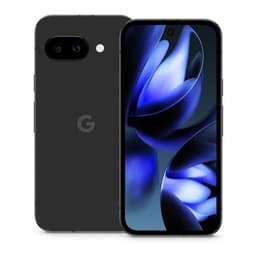
Google Pixel 9a
Google Pixel 9a
Starting at

Refurbished price:£319.00

Versus £499.00 new

See options
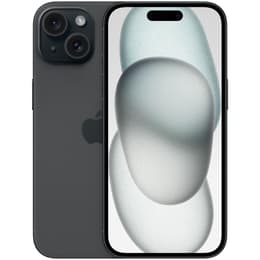
iPhone 15
iPhone 15
Starting at

Refurbished price:£326.00

Versus £699.00 new

See options

Ratings

The Google Pixel 9A, released in 2025, and the Apple iPhone 15, launched in 2023, represent distinct approaches to smartphone design and functionality. While both devices offer robust performance and advanced camera capabilities, they cater to different user preferences through their operating systems and hardware philosophies. The Pixel 9A emphasizes Google's artificial intelligence integration and extended software support, running on Android 15, whereas the iPhone 15 provides Apple's refined iOS experience with a focus on ecosystem integration.

Scores

Durability

When considering the longevity of these devices, both the Pixel 9A and the iPhone 15 offer substantial software support and durable builds, though with some differences in their repairability and material choices.

  • Software Updates: The Google Pixel 9A is notable for offering an extensive seven years of operating system upgrades and security updates, providing a long-term software experience. The iPhone 15, while also receiving consistent updates, typically offers around five to six years of iOS support from its release date.
  • Physical Durability: The Pixel 9A features an IP68 rating for dust and water resistance and is protected by Corning Gorilla Glass 3 on its display. The iPhone 15 also boasts an IP68 rating for dust and water resistance and utilizes Apple's Ceramic Shield on the front, which is designed for enhanced drop performance.
  • Repairability: The Pixel 9A received a repairability score of 7.5 out of 10, with its display being relatively easy to replace. The iPhone 15 initially scored lower but saw its repairability score boosted to 7 out of 10 due to software updates that facilitate part calibration, though battery replacement can be challenging on both devices.

Year of Release

2025

2023

Compatible with latest Update

Yes

Yes

OS

Android

iOS

Foldable

No

No

Performance

Both smartphones deliver capable performance for daily tasks, but they achieve this through different hardware and software optimizations, impacting how they handle demanding applications and multitasking.

  • Processing Power: The Google Pixel 9A is equipped with Google's Tensor G4 processor, which provides smooth operation for everyday apps and integrates advanced AI features. The iPhone 15 is powered by the A16 Bionic chip, known for its strong performance in gaming and intensive applications, offering a fluid user experience across the iOS ecosystem.
  • Multitasking and Storage: The Pixel 9A comes with 8GB of RAM, supporting efficient multitasking and app management. The iPhone 15 features 6GB of RAM, which, combined with iOS optimization, also allows for smooth transitions between applications. Storage options for the Pixel 9A include 128GB and 256GB, while the iPhone 15 offers 128GB, 256GB, and 512GB configurations.
  • Battery Performance: The Pixel 9A houses a 5100mAh battery, which is praised for providing excellent battery life that can extend beyond a full day of typical use. The iPhone 15, with its 3349mAh battery, is also designed to comfortably last a full day for most users, benefiting from the efficiency of its processor and operating system.

Memory (GB)

8 GB

6 GB

Screen quality

The visual experience on both devices is vibrant and clear, though they differ in display technology specifics and refresh rates, which can influence perceived smoothness and brightness.

  • Display Technology: The Google Pixel 9A features a 6.3-inch OLED display with a resolution of 1080x2424 pixels, offering deep blacks and rich colors. The iPhone 15 comes with a 6.1-inch Super Retina XDR OLED display, providing a resolution of 2556x1179 pixels and a high pixel density for sharp visuals.
  • Brightness and Refresh Rate: The Pixel 9A's display dynamically switches between a 60Hz and 120Hz refresh rate, contributing to smoother scrolling and more responsive interactions, and can reach a peak brightness of 2,700 nits. The iPhone 15 features a 60Hz refresh rate and offers a peak outdoor brightness of 2,000 nits, ensuring good visibility in various lighting conditions.
  • Design Elements: The Pixel 9A has a flat display with Corning Gorilla Glass 3 protection and slightly thicker bezels. The iPhone 15 incorporates Apple's Ceramic Shield for display protection and features a Dynamic Island at the top of the screen, which integrates alerts and activities.

Resolution

2424 x 1080

1179 x 2556

Audiovisual

Both the Pixel 9A and iPhone 15 are recognized for their strong camera capabilities, leveraging advanced sensors and computational photography to produce high-quality images and videos.

  • Rear Camera Systems: The Google Pixel 9A features a dual-camera setup with a 48MP main sensor (f/1.7 with optical image stabilization) and a 13MP ultrawide lens (f/2.2). The iPhone 15 also has a dual-camera system, including a 48MP main camera (f/1.6 with sensor-shift optical image stabilization) and a 12MP ultrawide camera (f/2.4).
  • Photography Features: The Pixel 9A excels in computational photography, offering features like unblurring, face replacement, and enhanced low-light performance due to its larger main camera aperture. The iPhone 15 utilizes its Photonic Engine, Deep Fusion, and Smart HDR 5 to deliver sharp images with natural colors and improved low-light performance.
  • Video Recording and Front Camera: Both devices are capable of recording 4K video at up to 60 frames per second. The Pixel 9A includes a 13MP front-facing camera, while the iPhone 15 features a 12MP TrueDepth front camera with autofocus and advanced portrait capabilities.

Front camera

13 megapixels

12 megapixels

Miscellaneous

Beyond their core features, both smartphones offer a range of practical elements that enhance user experience, from connectivity to physical design.

  • Connectivity and Ports: Both the Pixel 9A and iPhone 15 support 5G connectivity, Wi-Fi 6, and Bluetooth 5.3 for modern wireless communication. A significant change for the iPhone 15 is the adoption of a USB-C 2.0 port, aligning with the Pixel 9A's USB-C port, which also supports wired image output.
  • Biometric Security: The Pixel 9A typically features an under-display fingerprint sensor for secure unlocking. The iPhone 15 relies on Face ID, Apple's facial recognition system, for biometric authentication.
  • Design and Handling: The Pixel 9A presents a flat design without a prominent camera bar, contributing to a sleek profile. The iPhone 15 features a design with rounded edges and a slightly curved display, which can offer a comfortable grip. Both devices are designed to be durable for everyday use.

Weight

186 g

171 g

Screen size (in)

6.3

6.1

Mobile network

5G

5G

SIM card

Physical SIM + eSIM

Physical SIM + eSIM

Carrier compatibility

Unlocked

Unlocked

Connector

USB-C

USB-C (USB 2)

Choosing between the Google Pixel 9A and the iPhone 15 involves weighing priorities between operating system preference, camera strengths, and display characteristics. Users often praise the Pixel 9A for its exceptional battery life and Google's advanced AI features, which enhance daily tasks and photography. Its commitment to seven years of software updates is also a significant draw for those seeking long-term device relevance. Some users, however, have noted that the Pixel 9A's processor, while capable, may not match the raw performance of some flagship chipsets, and its repairability, despite a good score, has faced some criticism regarding specific components.

The iPhone 15 is frequently lauded for its consistent and fluid iOS experience, robust app ecosystem, and the reliable performance of its A16 Bionic chip. Its camera system consistently delivers high-quality photos and videos, and the Ceramic Shield front offers enhanced durability. Some users might find the 60Hz refresh rate of the iPhone 15's display less fluid compared to higher refresh rate screens, and its initial repairability score was a point of discussion, though it has since improved. Ultimately, users prioritizing an extended software support timeline, a larger battery, and Google's unique AI-driven features may find the Pixel 9A well-suited to their needs. Conversely, individuals who value Apple's integrated ecosystem, a consistently powerful processor, and a refined user interface may lean towards the iPhone 15. Both devices, whether new or as quality-assured refurbished options, offer compelling experiences for different user profiles.


See all articles

Our recent comparisons