Compare models

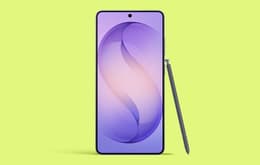
Galaxy S26 Ultra Vs iPhone Air

  • 1-year minimum warranty
  • Free delivery on all items
  • Free 30-day returns
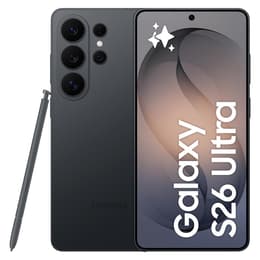
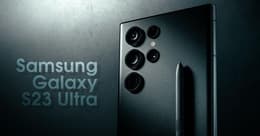
Galaxy S26 Ultra
Starting at

Refurbished price:£840.00

Versus £1,449.00 new

See options
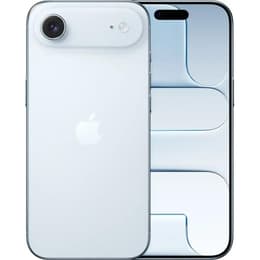
iPhone Air
Starting at

Refurbished price:£624.00

Versus £1,099.00 new

See options

Differences at a glance

The Samsung Galaxy S26 Ultra (2026) and the Apple iPhone Air (2025) represent two distinct approaches to modern mobile engineering, balancing expansive capability with specialized form factors. The Galaxy S26 Ultra functions as a feature-rich, high-capacity flagship running Android, whereas the iPhone Air emphasizes a streamlined, minimalist profile running iOS. Choosing between them depends largely on whether daily routines benefit most from extensive productivity tools or a lightweight, highly portable footprint.

Available Models

Colour

Storage (GB)

Scores

Durability

Both devices are built for long-term usage, though their hardware lifespans are influenced by software support commitments and physical design differences.

  • Software longevity and update cycles: Both manufacturers provide extended operating system and security updates spanning multiple years, ensuring long-term compatibility with modern applications and safety standards.
  • Repairability and physical endurance: The Galaxy S26 Ultra features reinforced framing and modular internal architecture designed for serviceability, while the ultra-thin chassis of the iPhone Air prioritizes structural compactness.
  • Expected practical lifespan: Both smartphones maintain reliable performance over years of typical use, though users looking to minimize environmental impact can explore a quality-assured refurbished option as a sustainable choice.

Year of Release

2026

2025

Compatible with latest Update

Yes

Yes

OS

Android

iOS

Foldable

No

No

Performance

Daily speed and operational smoothness vary according to hardware optimization, multitasking demands, and power management.

  • Multitasking and app switching: Both devices manage demanding applications, heavy browsing, and background tasks smoothly, though the Galaxy S26 Ultra includes higher baseline memory configurations for intensive multitasking.
  • Battery behavior and endurance: The Galaxy S26 Ultra houses a larger battery capacity that comfortably sustains heavy all-day workloads, whereas the slim profile of the iPhone Air requires more frequent recharging during intensive use cases.
  • Storage and system responsiveness: App loading times and local file transfers are fast across both platforms, with ample storage tiers available for large media libraries and documents.

Screen quality

Visual immersion and panel characteristics differ significantly in size, brightness, and overall viewing dynamics.

  • Display technology and clarity: Both models utilize advanced OLED panels that deliver deep contrast levels, sharp resolution, and vibrant color accuracy for everyday media consumption.
  • Brightness and outdoor visibility: Peak outdoor brightness levels on both devices ensure clear readability under direct sunlight, reducing eye strain during outdoor navigation.
  • Refresh rate and sizing: The Galaxy S26 Ultra offers a larger display canvas paired with a high refresh rate for smooth scrolling, while the iPhone Air provides a more compact screen area optimized for single-handed navigation.

Resolution

1440 x 3120

2736x1260

Audiovisual

Multimedia capture capabilities and audio output cater to different content creation styles and media consumption preferences.

  • Camera versatility: The Galaxy S26 Ultra features a multi-lens array including specialized telephoto options for distant subjects, whereas the iPhone Air relies on a streamlined single or dual camera setup optimized for everyday point-and-shoot clarity.
  • Low-light and video performance: Both phones capture detailed low-light photos and stable high-resolution video recordings, with advanced software processing minimizing digital noise in dim environments.
  • Audio output and microphones: Integrated stereo speakers deliver clear dialog and balanced sound for media playback, supported by sensitive microphone arrays for crisp call quality.

Front camera

12.0

18 megapixels

Miscellaneous

Physical dimensions, connectivity standards, and daily handling characteristics define the ergonomic experience of each device.

  • Connectivity and standards: Both smartphones support current-generation 5G networks, fast Wi-Fi standards, and secure short-range data transfer technologies.
  • Biometrics and sensors: Security is handled via responsive biometric authentication systems, utilizing advanced facial recognition on one side and an ultrasonic under-display fingerprint sensor on the other.
  • Weight and physical handling: The iPhone Air focuses on an exceptionally lightweight and thin chassis for effortless pocketability, while the Galaxy S26 Ultra has a larger, heavier footprint that accommodates its expansive screen and integrated stylus slot.

Weight

214 g

165 g

Screen size (in)

6.9

6.5

Mobile network

5G

5G

SIM card

Dual Physical SIM + eSIM

eSIM

Carrier compatibility

Unlocked

Unlocked

Connector

USB-C

USB-C

What the community thinks

Real-world user discussions highlight distinct preferences for each device across online communities. Owners of the Galaxy S26 Ultra frequently praise its extensive versatility, reliable battery endurance, and comprehensive productivity tools, though some note its larger physical footprint can feel heavy during extended single-handed use. Conversely, users favor the iPhone Air for its remarkable thinness, lightweight feel, and streamlined operating experience, though common community feedback points out that its slimmer battery requires more attentive power management throughout heavy days.

Users prioritizing maximum productivity, extensive battery endurance, and versatile camera hardware may prefer the Galaxy S26 Ultra, while individuals prioritizing a lightweight silhouette, minimalist portability, and simple daily navigation will lean toward the iPhone Air. Evaluating these core differences ensures a satisfying match for specific daily routines.