Compare models

Google Pixel 9a Vs iPhone Air

  • 1-year minimum warranty
  • Free delivery on all items
  • Free 30-day returns
Google Pixel 9a
Starting at

Refurbished price:£276.00

Versus £499.00 new

See options
iPhone Air
Starting at

Refurbished price:£613.00

Versus £1,099.00 new

See options

Differences at a glance

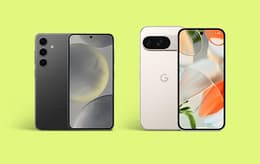
The Google Pixel 9a (2025) and the Apple iPhone Air (2025) represent two distinct approaches to modern smartphone design, targeting users with different priorities regarding build profile and operating system ecosystems. While the Google Pixel 9a focuses on everyday practicality and long-term software backing within the Android environment, the iPhone Air introduces an ultra-slim titanium build running Apple's iOS ecosystem.

Available Models

Colour

Storage

Scores

Durability

Both devices benefit from modern engineering and extended manufacturer support, though their longevity profiles and build architectures differ significantly.

  • Software Support Window: The Google Pixel 9a receives seven years of full operating system and security updates, ensuring long-term feature relevance, whereas Apple provides a standard multi-year update schedule typical of iOS flagships.
  • Build Durability: The iPhone Air utilizes a rigid titanium frame and scratch-resistant glass construction designed for a slim profile, while the Pixel 9a employs an aluminum frame and plastic back designed to withstand everyday wear and tear.
  • Repair Practicality: Both models feature standardized internal layouts supported by growing repair networks, making quality-assured refurbished options an eco-friendly choice for sustainable technology use.

Year of Release

2025

2025

Compatible with latest Update

Yes

Yes

OS

Android

iOS

Foldable

No

No

Performance

System responsiveness varies based on hardware architecture, storage tiers, and energy management strategies implemented by each manufacturer.

  • Daily Multitasking: Both devices handle demanding applications, web browsing, and routine background tasks smoothly, maintaining fluid transitions without noticeable stutter during normal use.
  • Battery Efficiency: The Pixel 9a incorporates a high-capacity battery designed to easily clear a full day of intensive usage, while the iPhone Air balances its much thinner battery footprint with power-efficient processing architecture.
  • Storage Configuration: Both models offer multiple internal storage tiers to accommodate media libraries, applications, and local file storage without expandable card slots.

Screen quality

Display characteristics prioritize visual clarity, smooth motion reproduction, and comfortable viewing across varying lighting conditions.

  • Panel Technology: Both devices feature vibrant OLED displays that deliver deep black levels, high contrast ratios, and vivid color reproduction for media consumption.
  • Refresh Rate and Motion: Each model supports adaptive high refresh rate technology up to 120Hz, ensuring smooth scrolling through web pages and responsive touch interactions.
  • Outdoor Visibility: High peak brightness capabilities on both screens allow for clear legibility under direct sunlight, while minimum brightness settings reduce eye strain in dark environments.

Resolution

2424 x 1080

2736x1260

Audiovisual

Imaging hardware and computational processing cater to different styles of everyday photography and multimedia capture.

  • Lens Configuration: The Pixel 9a features a dual-lens rear camera system including an ultra-wide option, whereas the iPhone Air utilizes a single high-resolution main lens setup integrated into its slim chassis.
  • Computational Processing: Google relies on advanced automated image stacking for sharp everyday shots and low-light fidelity, while Apple emphasizes natural color science, detailed video stabilization, and high dynamic range recording.
  • Audio and Media: Built-in microphone arrays capture clear audio for calls and video recording, complemented by capable speaker outputs for casual media playback.

Front camera

13 megapixels

18 megapixels

Miscellaneous

Physical dimensions and connectivity standards shape how each device fits into daily transport and workflow routines.

  • Handling and Dimensions: The iPhone Air emphasizes a featherlight, ultra-slim profile measuring just a few millimeters thick, whereas the Pixel 9a features a slightly thicker, contoured form factor that rests comfortably in one hand.
  • Connectivity Options: Both models support modern 5G networks, high-speed Wi-Fi standards, and Bluetooth for accessory pairing, alongside secure biometric authentication methods.
  • Port Architecture: Both devices utilize universal USB-C ports for charging and wired data transfers, aligning with contemporary accessory standards.

Weight

186 g

165 g

Screen size (in)

6.3

6.5

Mobile network

5G

5G

SIM card

Physical SIM + eSIM

eSIM

Carrier compatibility

Unlocked

Unlocked

Connector

USB-C

USB-C

What the community thinks

User feedback from online communities highlights distinct preferences for each device. Owners of the Google Pixel 9a frequently praise its dependable battery longevity, robust software support window, and straightforward utility. Conversely, users drawn to the iPhone Air often emphasize its exceptionally slim and lightweight titanium profile, premium display brightness, and seamless integration within the iOS ecosystem. Common criticisms for the Pixel involve its plain aesthetic design, while iPhone Air users occasionally note limitations tied to its single-lens camera setup and slender battery capacity.

Users prioritizing a featherlight form factor and Apple's software environment may prefer the iPhone Air, while individuals seeking extended multi-year software backing and reliable daily battery endurance will find the Pixel 9a well-suited to their needs. Exploring a quality-assured refurbished option provides an eco-friendly way to acquire either device while supporting sustainable consumption habits.