
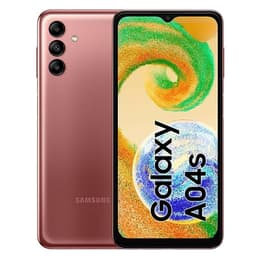
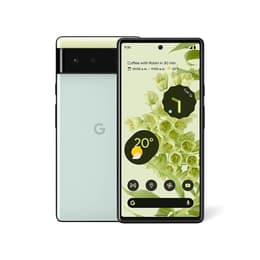

Galaxy A04S Vs Google Pixel 6

Galaxy A04S
Galaxy A04S
Starting at

Refurbished price:£99.00

Versus £179.00 new

See options
Google Pixel 6
Google Pixel 6
Starting at

Refurbished price:£101.00

Versus £649.99 new

See options

Ratings

The Samsung Galaxy A04S, released in September 2022, and the Google Pixel 6, launched in October 2021, are smartphones designed for different user expectations. While both operate on the Android platform, the Pixel 6 emphasizes advanced processing and camera capabilities, whereas the Galaxy A04S focuses on core smartphone functions with a larger battery capacity. These devices offer distinct experiences in terms of performance and photographic output.

Scores

Durability

The longevity of a smartphone is influenced by its release date and the manufacturer's commitment to software updates, which impacts security and feature access over time.

  • Release Timeline: The Google Pixel 6 was released in October 2021, making it approximately a year older than the Samsung Galaxy A04S, which launched in September 2022. This difference in release dates affects their respective software support cycles. [3, 5, 17, 21]
  • Software Support: The Pixel 6 is notable for its extended software commitment, receiving five years of both OS and security updates from its launch, meaning it is expected to receive updates up to Android 17. [12, 25, 27, 30, 33] The Galaxy A04S, while launching with Android 12, typically receives fewer major OS updates compared to Pixel devices, though security updates are provided for a reasonable period. [13, 21, 35]
  • Practical Lifespan: Users prioritizing the latest Android features and security patches for a longer duration may find the Pixel 6 more suitable due to its extended update policy. The Galaxy A04S offers a solid practical lifespan for essential tasks, but its software feature set will likely age more quickly.

Year of Release

2022

2021

Compatible with latest Update

Yes

Yes

OS

Android

Android

Foldable

No

No

Performance

Performance in smartphones is determined by the internal components, affecting how smoothly applications run, how quickly tasks are completed, and the overall responsiveness of the device.

  • Processing Power: The Google Pixel 6 features a custom-designed processor, which is optimized for artificial intelligence and machine learning tasks, contributing to a fluid user experience and efficient handling of demanding applications and multitasking. [6, 19, 20] The Galaxy A04S is equipped with an octa-core processor that handles everyday tasks and general navigation adequately. [1, 3, 9]
  • Multitasking and Storage: The Pixel 6 typically comes with 8GB of RAM, allowing for robust multitasking and smoother transitions between applications. [5, 6, 14] It offers internal storage options of 128GB or 256GB, utilizing UFS 3.1 for faster data access. [5, 17] The Galaxy A04S is available with 3GB or 4GB of RAM, which is sufficient for lighter usage, and offers 32GB, 64GB, or 128GB of internal storage, expandable via a microSD card. [1, 3, 9]
  • Battery Behavior: The Galaxy A04S includes a larger 5000mAh battery, which generally translates to extended usage times for many users. [1, 3, 32] The Pixel 6 has a 4614mAh battery and supports faster wired charging, wireless charging, and reverse wireless charging capabilities. [5, 14, 37, 39]

Memory (GB)

3 GB

8 GB

Screen quality

The display is a primary interface for smartphone interaction, and differences in technology, resolution, and refresh rate significantly impact the visual experience.

  • Display Technology and Resolution: The Google Pixel 6 features a 6.4-inch AMOLED display with a resolution of 1080x2400 pixels, providing vibrant colors, deep blacks, and sharp image clarity. [5, 14, 17] The Samsung Galaxy A04S has a 6.5-inch PLS LCD screen with a resolution of 720x1600 pixels, offering a clear viewing experience for general use. [3, 9, 13, 21]
  • Refresh Rate and Brightness: Both devices offer a 90Hz refresh rate, contributing to smoother scrolling and a more responsive feel during navigation. [3, 13, 14, 17, 21, 24] The Pixel 6's AMOLED panel generally provides better contrast and is bright enough for outdoor visibility. [19, 24] The Galaxy A04S has a peak brightness of 400 nits, which can be challenging to view in direct sunlight. [21, 36]
  • Screen Protection: The Pixel 6's display is protected by Corning Gorilla Glass Victus, offering enhanced durability against scratches and drops. [5, 39] The Galaxy A04S does not specify advanced screen protection. [21]

Resolution

720 x 1600

1080 x 2400

Screen type

PLS LCD

AMOLED

Audiovisual

Camera systems are a key differentiator, with varying sensor capabilities, computational photography features, and video recording options influencing the quality of captured media.

  • Rear Camera System: The Google Pixel 6 features a dual-camera setup with a 50MP main sensor (with optical image stabilization and PDAF) and a 12MP ultrawide lens, excelling in computational photography for detailed and color-accurate images, particularly in varied lighting conditions. [6, 14, 17, 20, 24, 26] The Samsung Galaxy A04S has a triple-camera system, including a 50MP main sensor (with PDAF), a 2MP macro lens, and a 2MP depth sensor, but lacks an ultrawide camera. [1, 3, 13, 21]
  • Photography Performance: The Pixel 6 is highly regarded for its low-light performance and ability to capture natural-looking photos with strong dynamic range. [15, 22, 26, 31] The Galaxy A04S performs well in good lighting conditions, producing decent sharpness and color, but its low-light capabilities are more limited. [4, 18, 36]
  • Video and Front Camera: The Pixel 6 supports video recording up to 4K at 60 frames per second and features an 8MP front camera. [37] The Galaxy A04S records video at a maximum of 1080p at 30 frames per second and has a 5MP front camera. [4, 34, 35] The Pixel 6 also offers stereo speakers and noise suppression for improved audio. [38]

Main camera

50 megapixels

50 megapixels

Front camera

5 megapixels

8 megapixels

Miscellaneous

Beyond core features, practical elements like connectivity, physical design, and additional sensors contribute to the overall user experience and device utility.

  • Connectivity and Ports: The Google Pixel 6 supports 5G connectivity, Wi-Fi 6E, and Bluetooth 5.2, along with a USB-C 3.1 port. [2, 5, 14, 19, 37, 38] It also offers dual SIM capabilities (nanoSIM + eSIM). [2, 14] The Samsung Galaxy A04S supports 4G LTE, Wi-Fi 5 (802.11 a/b/g/n/ac), and Bluetooth 5.0, featuring a USB-C 2.0 port and a 3.5mm headphone jack. [3, 7, 9, 13, 21, 40]
  • Build and Handling: The Pixel 6 has a more premium build with Gorilla Glass Victus on both the front and back, and an aluminum frame, weighing 207g. [5, 14, 17, 39] It also carries an IP68 rating for dust and water resistance. [5, 14, 39] The Galaxy A04S features a glass front with a plastic back and frame, weighing 195g. [1, 9, 21]
  • Security and Sensors: The Pixel 6 incorporates an optical in-display fingerprint sensor and a range of sensors including a barometer and gyroscope. [5, 14, 37, 39] The Galaxy A04S uses a side-mounted fingerprint sensor. [3, 13, 21]

Weight

195 g

207 g

Screen size (in)

6.5

6.4

Mobile network

4G

5G

SIM card

Dual Physical SIM

Physical SIM + eSIM

Carrier compatibility

Unlocked

Unlocked

User feedback for the Google Pixel 6 often highlights its exceptional camera performance, particularly its computational photography features and low-light capabilities, as a major strength. [15, 22, 23, 26, 31] Users also appreciate its clean Android experience and the extended software update policy. [23, 25, 27] Some common criticisms include the in-display fingerprint sensor being occasionally slow or finicky, and battery life, while generally good, not always matching some competitors. [14, 20, 24] The Samsung Galaxy A04S is frequently praised for its large battery capacity, offering extended usage between charges. [32, 36] Its 90Hz display is also a positive point for its segment. [3, 32] However, users sometimes note its more modest processing power can lead to occasional slowdowns, and its camera performance in challenging conditions is not as strong as higher-end devices. [18, 36]

Users prioritizing a robust camera system, long-term software support, and a premium build with advanced features will find the Google Pixel 6 well-suited to their needs. Its focus on a refined Android experience and AI-driven capabilities makes it a strong choice for those who value photography and software longevity. Conversely, users who prioritize a large battery for extended use, expandable storage, and a more budget-conscious approach to core smartphone functions may lean towards the Samsung Galaxy A04S. It serves well for essential communication, media consumption, and light productivity. Both devices, when considered as quality-assured refurbished options, offer an eco-friendly alternative for consumers seeking reliable technology.


See all articles

Our recent comparisons





