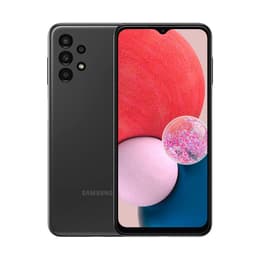
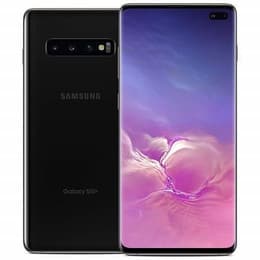

Galaxy A13 Vs Galaxy S10+

Galaxy A13
Galaxy A13
Starting at

Refurbished price:£73.00

Versus £249.00 new

See options
Galaxy S10+
Galaxy S10+
Starting at

Refurbished price:£115.32

Versus £330.00 new

See options

Ratings

The Samsung Galaxy A13, released in March 2022, and the Samsung Galaxy S10 Plus, launched in March 2019, represent distinct segments of the smartphone market. While both operate on the Android platform, the Galaxy A13 was introduced as a budget-friendly option, focusing on core functionalities, whereas the Galaxy S10 Plus was a flagship device at its release, offering premium features and performance. These differences lead to varying user experiences in terms of display quality, processing power, and camera capabilities.

Scores

Durability

The practical lifespan of a smartphone is influenced by its physical resilience and the duration of software support it receives.

  • Software Longevity: The Galaxy A13, being a newer device (March 2022 release), launched with Android 12 and was eligible for approximately two major OS updates, likely concluding with Android 14. Security updates for the A13 are expected to continue until around the end of 2025. In contrast, the Galaxy S10 Plus, released in March 2019, launched with Android 9 and received three major OS updates, ending with Android 12. Its security updates officially concluded around March 2023. This means the A13 offers a longer period of ongoing software and security support.
  • Physical Durability: The Galaxy A13 features a plastic frame and back, with its display protected by Corning Gorilla Glass 5. The Galaxy S10 Plus boasts a more premium construction, incorporating Gorilla Glass 6 on the front, Gorilla Glass 5 on the back, and an aluminum frame, along with an IP68 rating for dust and water resistance.
  • Repairability: The Galaxy A13 has been noted for a relatively high repairability score, with some models receiving an 8 out of 10. The Galaxy S10 Plus, due to its more complex construction and extensive use of adhesive, received a lower repairability score of 3 out of 10, indicating that repairs can be more challenging and potentially more involved.

Year of Release

2022

2019

Compatible with latest Update

No

No

OS

Android

Android

Foldable

No

No

Performance

The performance of these devices varies significantly, reflecting their original market positioning and the technology available at their respective release times.

  • Processing Power: The Galaxy A13 is equipped with an octa-core processor, such as the Exynos 850 or MediaTek Helio G80, designed for everyday tasks. User experiences suggest that while it handles basic functions adequately, performance can degrade over time, leading to occasional lag and stuttering with more demanding applications or multitasking. The Galaxy S10 Plus, as a former flagship, features a powerful processor (Exynos 9820 or Snapdragon 855) that was top-tier at its release. This allows it to handle demanding apps, complex games, and extensive multitasking with greater fluidity and responsiveness.
  • Multitasking and Storage: The Galaxy A13 offers RAM configurations ranging from 3GB to 6GB, which is suitable for light to moderate multitasking. The Galaxy S10 Plus typically comes with 8GB or 12GB of RAM, providing substantial headroom for seamless app switching and running multiple applications simultaneously without noticeable slowdowns. Both devices offer expandable storage via a microSD card.
  • Battery Behavior: The Galaxy A13 houses a large 5000 mAh battery, often praised for its ability to last through a full day of use and sometimes beyond. The Galaxy S10 Plus has a 4100 mAh battery, which provided solid, though not exceptional, all-day battery life for moderate to intense users at its release.

Memory (GB)

4 GB

8 GB

Screen quality

The visual experience offered by these two devices differs considerably, primarily due to their display technologies and resolutions.

  • Display Technology and Clarity: The Galaxy A13 features a 6.6-inch PLS TFT LCD panel with a resolution of 1080 x 2408 pixels. This display provides clear visuals for general use, though it lacks the deep blacks and vibrant contrast of OLED technology. The Galaxy S10 Plus, on the other hand, sports a 6.4-inch Dynamic AMOLED display with a higher resolution of 1440 x 3040 pixels. This results in exceptionally sharp images, rich colors, and true blacks, contributing to a more immersive viewing experience.
  • Brightness and Refresh Rate: The Galaxy S10 Plus's AMOLED screen is capable of higher peak brightness, making it more comfortable to view in bright outdoor conditions and supporting HDR10+ content for enhanced dynamic range. Both devices feature a standard 60Hz refresh rate, meaning the smoothness of scrolling and animations will be similar, though the S10 Plus's more powerful processor may make its 60Hz feel more fluid in practice.
  • Viewing Experience: While the Galaxy A13 offers a larger screen size, the Galaxy S10 Plus provides a more premium and visually engaging viewing experience due to its superior display technology and higher pixel density, which is particularly noticeable when consuming high-resolution media.

Resolution

1080 x 2408

1440 x 3040

Screen type

PLS LCD

Dynamic AMOLED

Audiovisual

The camera systems on the Galaxy A13 and Galaxy S10 Plus reflect their different design philosophies, with the S10 Plus offering a more versatile and refined photography experience.

  • Rear Camera Capabilities: The Galaxy A13 includes a quad-camera setup with a 50 MP main sensor, a 5 MP ultrawide, and two 2 MP sensors for macro and depth. While the 50 MP sensor uses pixel binning to produce 12.5 MP images, user feedback indicates that overall camera performance can be inconsistent, with challenges in low light, motion, and zoom quality. The Galaxy S10 Plus features a triple-camera system comprising a 12 MP main sensor with a variable aperture, a 12 MP telephoto lens with 2x optical zoom, and a 16 MP ultrawide lens. This setup provides greater flexibility and generally produces photos with better detail, color accuracy, and dynamic range in good lighting conditions.
  • Low-Light and Video Performance: The Galaxy S10 Plus, despite being an older flagship, generally offers better low-light performance than the A13, though it was noted at its release that there was room for improvement compared to some rivals. Both devices can record video at 1080p at 30 frames per second, but the S10 Plus also supports 4K video recording, offering higher detail.
  • Front Camera and Audio: The Galaxy A13 has an 8 MP front camera, which some users have found to be of limited quality. The Galaxy S10 Plus features a dual front camera system with a 10 MP main sensor and an 8 MP depth sensor, capable of producing more detailed selfies and better portrait effects. For audio, the S10 Plus provides a more immersive experience with stereo speakers, while the A13 typically features a single, side-firing speaker.

Main camera

50 megapixels

12 megapixels

Front camera

8 megapixels

10 megapixels

Miscellaneous

Beyond core performance and display, several practical features and design elements differentiate these two Samsung smartphones.

  • Connectivity and Ports: Both devices support 4G LTE connectivity. The Galaxy A13 includes Wi-Fi 5 (802.11 a/b/g/n/ac) and Bluetooth 5.0. The Galaxy S10 Plus offers more advanced Wi-Fi 6 (802.11 a/b/g/n/ac/ax) and Bluetooth 5.0. Both phones feature a USB-C port for charging and data transfer, and notably, both retain a 3.5mm headphone jack.
  • Biometric Security: The Galaxy A13 incorporates a side-mounted fingerprint sensor for secure unlocking. The Galaxy S10 Plus features an ultrasonic in-display fingerprint sensor, which was a cutting-edge technology at its launch, alongside face recognition.
  • Design and Handling: The Galaxy A13 has a plastic construction, contributing to its lighter feel, and measures 165.1 x 76.4 x 8.8 mm, weighing 195g. The Galaxy S10 Plus, with its glass and aluminum build, offers a more premium in-hand feel and is slightly more compact at 157.6 x 74.1 x 7.8 mm, weighing 175g.

Weight

195 g

175 g

Screen size (in)

6.6

6.4

Mobile network

4G

4G

SIM card

Dual Physical SIM

Dual Physical SIM

Carrier compatibility

Unlocked

Unlocked

The Samsung Galaxy A13 and Galaxy S10 Plus cater to different user needs, reflecting their distinct market positions and release timelines. The Galaxy A13 is often praised for its robust battery life, which can comfortably last a full day or more, and its generally acceptable screen and camera performance for casual use, especially in good lighting conditions. However, common criticisms include noticeable performance slowdowns over time, particularly with heavier usage, and a camera system that may not meet expectations for detailed or low-light photography.

Conversely, the Galaxy S10 Plus, a former flagship, is frequently lauded for its stunning Dynamic AMOLED display, offering vibrant colors and deep blacks that enhance any viewing experience. Its camera system, while not always excelling in extreme low-light scenarios, is generally considered capable and versatile, producing high-quality images in most situations. Users also appreciate its premium build quality and strong performance for demanding tasks. Key criticisms for the S10 Plus revolve around its software update cycle having concluded, potentially raising concerns about long-term security and access to the latest features, and its more challenging repairability due to its construction.

Users prioritizing extended software support and a more repairable device for basic daily tasks may find the Galaxy A13 well-suited to their needs. Those who value a superior display, higher performance for intensive applications, and a more advanced camera system, and are comfortable with an older software version, might lean towards the Galaxy S10 Plus. Both models are available as quality-assured refurbished options, providing an eco-friendly alternative for consumers seeking to extend the life cycle of electronic products.


See all articles

Our recent comparisons