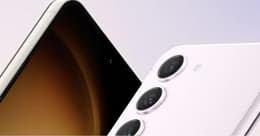
Galaxy S23 Vs iPhone 14 Plus

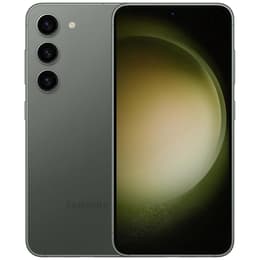
Galaxy S23
Galaxy S23
Starting at

Refurbished price:£189.00

Versus £831.51 new

See options
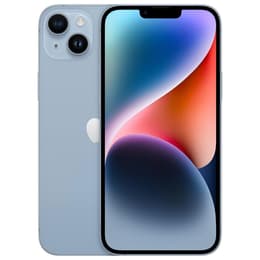
iPhone 14 Plus
iPhone 14 Plus
Starting at

Refurbished price:£249.00

Versus £699.00 new

See options

Ratings

The Samsung Galaxy S23, released in February 2023, and the iPhone 14 Plus, launched in October 2022, are both prominent smartphones from their respective manufacturers. While the Galaxy S23 operates on Android with Samsung's One UI, the iPhone 14 Plus runs on Apple's iOS platform. These devices offer distinct user experiences, primarily differing in their display technology, camera systems, and overall ecosystem integration.

Scores

Durability

When considering the long-term usability of these devices, their release timelines and software support policies are key factors. Both phones are built with robust materials designed for daily use.

  • Release Timeline: The iPhone 14 Plus was released in October 2022, preceding the Samsung Galaxy S23, which launched in February 2023. This difference means the Galaxy S23 is a slightly newer device.
  • OS Support: Samsung has committed to providing four years of major Android OS updates and five years of security updates for the Galaxy S23, extending support until at least 2028. Apple typically offers five to six years of iOS updates for its iPhones, suggesting a comparable or slightly longer software longevity for the iPhone 14 Plus.
  • Repairability: The Galaxy S23 series has received positive feedback for its repairability, with features like easier battery replacement due to pull tabs. The iPhone 14 Plus, while durable with its Ceramic Shield, has historically presented more challenges for independent repairs, often requiring screen and battery to be replaced as a single assembly.

Year of Release

2023

2022

Compatible with latest Update

Yes

Yes

OS

Android

iOS

Foldable

No

No

Performance

The performance of a smartphone is crucial for smooth daily operation, from launching applications to handling demanding tasks. Both the Galaxy S23 and iPhone 14 Plus deliver responsive experiences, though they achieve this through different hardware and software optimizations.

  • System Responsiveness: The Galaxy S23 is powered by a current-generation processor optimized for its ecosystem, enabling smooth multitasking and efficient handling of demanding applications. The iPhone 14 Plus utilizes a powerful processor from the previous generation of Apple's Pro models, ensuring a fluid user experience across iOS applications and games.
  • Storage and RAM: The Galaxy S23 comes with 8GB of RAM and offers storage options starting from 128GB, with higher capacities utilizing faster storage technology. The iPhone 14 Plus features 6GB of RAM and also starts with 128GB of storage, providing ample space for most users.
  • Battery Behavior: The Galaxy S23 is equipped with a 3900 mAh battery, offering reliable power for a full day of typical use. The iPhone 14 Plus features a 4325 mAh battery, which users often report provides extended battery life, making it suitable for heavy usage throughout the day.

Memory (GB)

8 GB

6 GB

Screen quality

The display is a primary interface for smartphone interaction, and both devices offer high-quality viewing experiences with distinct characteristics.

  • Display Technology and Size: The Galaxy S23 features a 6.1-inch Dynamic AMOLED 2X display, known for its vibrant colors and deep blacks. The iPhone 14 Plus sports a larger 6.7-inch Super Retina XDR OLED display, also delivering excellent contrast and color accuracy, providing more screen real estate for media consumption.
  • Resolution and Brightness: The Galaxy S23 has a 2340x1080 (FHD+) resolution and can reach a peak brightness of 1750 nits, ensuring good visibility even in bright outdoor conditions. The iPhone 14 Plus offers a 2778 x 1284 resolution and a typical brightness of 800 nits, with a peak of 1200 nits for HDR content, which is also sufficient for outdoor viewing.
  • Refresh Rate: A notable difference is the refresh rate; the Galaxy S23 features an adaptive 120Hz refresh rate, contributing to smoother scrolling and more fluid animations. The iPhone 14 Plus maintains a standard 60Hz refresh rate, which some users accustomed to higher refresh rates might notice, though iOS animations remain smooth.

Resolution

1080 x 2340

1284 x 2778

Screen type

Dynamic AMOLED 2X

Super Retina XDR OLED

Audiovisual

Both the Galaxy S23 and iPhone 14 Plus offer capable camera systems, designed to capture high-quality photos and videos in various conditions, though they approach imaging with different hardware configurations.

  • Rear Camera System: The Galaxy S23 features a versatile triple-camera setup, including a 50MP main sensor, a 12MP ultrawide lens, and a 10MP telephoto lens with 3x optical zoom, providing flexibility for different shooting scenarios. The iPhone 14 Plus comes with a dual-camera system, comprising a 12MP main camera with a larger sensor for improved light capture and a 12MP ultrawide camera. It lacks a dedicated telephoto lens.
  • Photography Performance: The Galaxy S23 generally produces vibrant images, with strong performance in good lighting. Its telephoto lens allows for clear zoomed-in shots. The iPhone 14 Plus excels in everyday photography and offers enhanced low-light performance on its main sensor, capturing detailed images with natural tones.
  • Video Capabilities and Front Camera: Both devices offer high-quality video recording, including 4K at 60fps. The iPhone 14 Plus includes features like Cinematic Mode in 4K and Action Mode for stabilized video. The front cameras are 12MP on both, with the iPhone 14 Plus's TrueDepth camera gaining autofocus for clearer selfies.

Main camera

50 megapixels

12 megapixels

Front camera

12 megapixels

12 megapixels

Miscellaneous

Beyond core specifications, several practical elements contribute to the overall user experience and differentiate these two smartphones.

  • Connectivity and Ports: Both devices support 5G connectivity for fast mobile data. The Galaxy S23 features a USB-C port, while the iPhone 14 Plus uses Apple's Lightning port. The Galaxy S23 supports Wi-Fi 6E, offering potentially faster and more stable wireless connections than the iPhone 14 Plus's Wi-Fi 6.
  • Biometric Security: The Galaxy S23 incorporates an ultrasonic in-display fingerprint sensor for secure unlocking. The iPhone 14 Plus relies on Face ID, Apple's facial recognition system.
  • Design and Handling: The Galaxy S23 is a more compact device, weighing 168g and measuring 146.3 x 70.9 x 7.6 mm, making it comfortable for one-handed use. The iPhone 14 Plus is larger and heavier at 203g and 160.8 x 78.1 x 7.8 mm, providing a more expansive viewing experience while remaining lighter than some larger Pro models. Both devices feature an IP68 rating for dust and water resistance.

Weight

167 g

150 g

Screen size (in)

6.1

6.7

Mobile network

5G

5G

SIM card

Physical SIM + eSIM

Physical SIM + eSIM

Carrier compatibility

Unlocked

Unlocked

The Samsung Galaxy S23 and iPhone 14 Plus cater to users with varying preferences, each offering a compelling set of features. Users often praise the Galaxy S23 for its vibrant 120Hz display, versatile camera system with a dedicated telephoto lens, and its compact form factor. Some common criticisms from users include occasional blurry photos from the 50MP main camera due to processing, and some reports of system lag or battery drain, though these are not widespread.

The iPhone 14 Plus is frequently lauded for its expansive display, exceptional battery life, and consistent camera performance, particularly in low light. User feedback often points to the 60Hz display and the absence of a telephoto lens as areas where it falls short compared to some competitors.

For individuals prioritizing a compact device with a high refresh rate display, a telephoto camera, and the flexibility of the Android ecosystem, the Galaxy S23 may be a suitable choice. Conversely, users who value a larger screen for media consumption, extended battery endurance, and the integrated experience of iOS, along with strong video capabilities, might find the iPhone 14 Plus more aligned with their needs. Both models are available as quality-assured refurbished options, providing an eco-friendly alternative for consumers.
See all articles

Our recent comparisons