
iPhone 16 Vs Xiaomi Redmi Note 11 Pro 5G

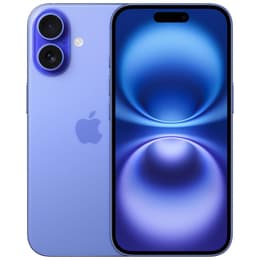
iPhone 16
iPhone 16
Starting at

Refurbished price:£475.00

Versus £699.00 new

See options
Xiaomi Redmi Note 11 Pro 5G
Starting at

Refurbished price:£102.00

Versus £599.00 new

See options

Ratings

The iPhone 16, released in September 2024, and the Xiaomi Redmi Note 11 Pro 5G, launched in January 2022, represent distinct approaches to smartphone design and functionality. While both devices offer 5G connectivity and capable displays, the iPhone 16 features a more advanced internal architecture and a refined camera system, whereas the Redmi Note 11 Pro 5G emphasizes a larger battery capacity and expandable storage. They operate on different ecosystems, with the iPhone 16 running Apple's iOS and the Redmi Note 11 Pro 5G utilizing Android with Xiaomi's MIUI overlay.

Scores

Durability

The practical lifespan of a smartphone is influenced by its initial release date, software support, and physical resilience. The significant difference in release dates between these two models plays a crucial role in their expected longevity.

  • Release Timeline: The iPhone 16, launched in September 2024, benefits from a more recent release, typically translating to a longer period of software updates and security patches from Apple. The Xiaomi Redmi Note 11 Pro 5G, released in January 2022, has already received several years of updates, and its remaining support window will be shorter.
  • Software Longevity: Apple is known for providing extended software support for its devices, with the iPhone 16 expected to receive iOS updates for many years to come, potentially extending its usable life. The Redmi Note 11 Pro 5G, running on Android 11 with MIUI 13 at launch, will likely see fewer major Android version updates in its future compared to the iPhone 16.
  • Physical Durability: The iPhone 16 features a Ceramic Shield front cover, which offers enhanced drop performance and scratch resistance compared to previous models. It also carries an IP68 rating for water and dust resistance, allowing submersion up to 6 meters for 30 minutes. The Redmi Note 11 Pro 5G uses Corning Gorilla Glass 5 for its front display and has a 'spray resistant' certification, indicating a lower level of protection against water ingress.

Year of Release

2024

2022

Compatible with latest Update

Yes

No

Foldable

No

No

Performance

Performance is a key differentiator, impacting how smoothly applications run, how quickly tasks are completed, and the overall responsiveness of the device. The internal components of these two smartphones cater to different user expectations.

  • Processing Power: The iPhone 16 is equipped with a current-generation processor designed for demanding applications, complex multitasking, and advanced computational features, including Apple Intelligence. This results in fluid navigation and efficient handling of intensive workloads. The Redmi Note 11 Pro 5G utilizes a processor that capably handles everyday tasks and general usage, providing a responsive experience for browsing, social media, and casual gaming.
  • Multitasking and Responsiveness: With its advanced processor and ample memory, the iPhone 16 offers seamless transitions between multiple open applications and maintains high performance during extended use. The Redmi Note 11 Pro 5G, while capable for daily multitasking, may exhibit more noticeable pauses when switching between a large number of demanding applications due to its less powerful processor and different memory architecture.
  • Storage and Battery Behavior: The iPhone 16 offers various internal storage options without expansion capabilities. Its battery provides substantial power for a full day of typical use, with optimized standby time. The Redmi Note 11 Pro 5G provides internal storage options that can be expanded using a microSD card, offering flexibility for users with large media libraries. Its larger battery capacity is designed to support extended usage, often lasting up to two days under moderate conditions.

Memory (GB)

8 GB

6 GB

Screen quality

The display is the primary interface for user interaction, and both devices offer vibrant viewing experiences, though with differing specifications and capabilities.

  • Display Technology and Clarity: The iPhone 16 features a 6.1-inch Super Retina XDR OLED display, known for its deep blacks, accurate colors, and high pixel density, resulting in sharp text and detailed images. The Redmi Note 11 Pro 5G sports a larger 6.67-inch Super AMOLED display, also delivering rich colors and strong contrast, with a resolution that provides clear visuals for media consumption.
  • Brightness and Refresh Rate: The iPhone 16's display can reach a peak brightness of 2000 nits outdoors, ensuring excellent visibility even in direct sunlight. It maintains a standard 60Hz refresh rate. The Redmi Note 11 Pro 5G offers a 120Hz refresh rate, providing smoother scrolling and a more fluid visual experience, though it is not adaptive and can be manually switched to 60Hz to conserve battery. Its peak brightness reaches 1200 nits.
  • Viewing Experience: The iPhone 16 incorporates the Dynamic Island, an interactive area at the top of the display that adapts to show alerts and background activities. The Redmi Note 11 Pro 5G offers a larger screen size, which can enhance the immersive quality for watching videos and gaming.

Resolution

1179 x 2556

1080 x 2400

Screen type

Super Retina XDR OLED

Super AMOLED

Audiovisual

Both smartphones are equipped with capable camera systems designed to capture moments, but they differ in their advanced features and video recording capabilities.

  • Rear Camera System: The iPhone 16 features an advanced dual-camera system with a 48-megapixel main sensor that uses pixel-binning for detailed photos and offers 2x optical-quality telephoto zoom. It also includes a 12-megapixel ultra-wide lens with autofocus for macro shots. The Redmi Note 11 Pro 5G boasts a triple-camera setup, highlighted by a 108-megapixel main sensor, complemented by an 8-megapixel ultra-wide and a 2-megapixel macro lens.
  • Photography Features: The iPhone 16 includes advanced computational photography features like Photonic Engine, Deep Fusion, Smart HDR 5, and next-generation Photographic Styles, allowing for greater creative control and improved image quality in various conditions. It also supports spatial video recording. The Redmi Note 11 Pro 5G's 108-megapixel sensor captures detailed images, and its camera system performs well in everyday lighting, with a dedicated night mode for low-light situations.
  • Video Recording and Audio: The iPhone 16 supports 4K Dolby Vision video recording at various frame rates, offering high-quality video capture with advanced stabilization. The Redmi Note 11 Pro 5G records video at a maximum of 1080p at 30 frames per second, which is suitable for general use but lacks the higher resolution and advanced features of the iPhone. For audio, the Redmi Note 11 Pro 5G features dual speakers and a 3.5mm headphone jack, providing a versatile audio experience.

Main camera

48 megapixels

108 megapixels

Front camera

12 megapixels

16 megapixels

Miscellaneous

Beyond core performance and display, several practical elements contribute to the overall user experience, from connectivity to physical design.

  • Connectivity and Ports: Both devices support 5G connectivity for fast mobile data. The iPhone 16 features Wi-Fi 7 and Bluetooth 5.3, along with a USB-C port for charging and data transfer. The Redmi Note 11 Pro 5G supports Wi-Fi 5 (802.11ac) and Bluetooth 5.1, also utilizing a USB-C 2.0 port. It uniquely includes a 3.5mm headphone jack.
  • Security and Interaction: The iPhone 16 relies on Face ID for secure facial recognition and includes the customizable Action Button for quick access to various functions. The Redmi Note 11 Pro 5G features a side-mounted fingerprint sensor and AI Face Unlock for security.
  • Design and Handling: The iPhone 16 has an aluminum frame and a Ceramic Shield front, weighing 170 grams with dimensions of 147.6 x 71.6 x 7.8 mm. The Redmi Note 11 Pro 5G has a glass front and back with a matte finish, weighing 202 grams and measuring 164.2 x 76.1 x 8.1 mm, offering a larger form factor.

Weight

170 g

202 g

Screen size (in)

6.1

6.67

Mobile network

5G

5G

SIM card

Physical SIM + eSIM

Dual Physical SIM

Carrier compatibility

Unlocked

Unlocked

The iPhone 16 and Xiaomi Redmi Note 11 Pro 5G cater to different user priorities, reflecting their respective release timelines and design philosophies. Users frequently praise the iPhone 16 for its powerful performance, advanced camera capabilities, and the seamless integration of its operating system. Common criticisms sometimes point to its standard 60Hz display, which some users feel could be smoother. The Redmi Note 11 Pro 5G is often lauded for its impressive battery life, fast charging speeds, and its vibrant 120Hz AMOLED display. However, some users note its processor may not be as robust for intensive tasks, and the lack of 4K video recording is a frequent point of concern.

Users prioritizing a device with the latest processing power, a highly capable and versatile camera system with advanced video features, and long-term software support will find the iPhone 16 well-suited to their needs. Its robust build and advanced security features also appeal to those seeking a premium and durable experience. Conversely, individuals who value extended battery life, very fast wired charging, a larger high-refresh-rate display for media consumption, and the flexibility of expandable storage may lean towards the Xiaomi Redmi Note 11 Pro 5G. This device also appeals to users who prefer the Android ecosystem and its customization options.

For those considering either of these devices, exploring quality-assured refurbished options can provide an eco-friendly alternative, offering access to these features while contributing to a more sustainable consumption model.


See all articles

Our recent comparisons