Galaxy A25 Vs iPhone 14 Pro

Galaxy A25
Galaxy A25
Starting at

Refurbished price:£121.00

Versus £272.58 new

See options
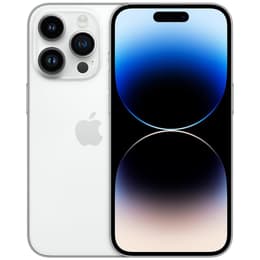
iPhone 14 Pro
iPhone 14 Pro
Starting at

Refurbished price:£304.00

Versus £1,099.00 new

See options

Ratings

The Samsung Galaxy A25 (2023) and the iPhone 14 Pro (2022) represent two distinct approaches to the modern smartphone experience. While the Galaxy A25 is a contemporary mid-range device focusing on essential features and a large display, the iPhone 14 Pro is a high-end flagship that introduced advanced camera technology and a unique interface design. The Galaxy A25 runs on the Android operating system with Samsung's custom interface, whereas the iPhone 14 Pro utilises Apple's iOS, offering distinct ecosystems for users to consider. Both devices are designed to provide a reliable mobile experience, though they cater to different user priorities regarding size and functionality.

Scores

Durability

These devices offer different levels of long-term support and physical resilience based on their original market positioning and release dates.

  • Software longevity: The iPhone 14 Pro typically receives software updates for six to seven years from its release, ensuring access to new features and security patches well into the late 2020s. The Galaxy A25 is supported by a commitment of four years of major operating system updates and five years of security updates, which is quite extensive for its category.
  • Build and repairability: The iPhone 14 Pro features a stainless steel frame and Ceramic Shield glass, designed for high durability, while the Galaxy A25 uses a sturdy plastic construction that is less prone to shattering but more susceptible to scratches. Both manufacturers have made strides in repairability, with parts for both models becoming increasingly available through professional repair networks.
  • Expected lifespan: Users can expect both phones to remain functional for several years, though the iPhone's more powerful internal components may help it maintain its speed more effectively as apps become more demanding over time.

Year of Release

2023

2022

Compatible with latest Update

Yes

Yes

OS

Android

iOS

Foldable

No

No

Performance

Performance differences between these two models are most noticeable when handling intensive tasks or multitasking with several large applications. Choosing a sustainable choice like a quality-assured refurbished model ensures these high-performance components are kept in use longer.

  • Everyday responsiveness: The iPhone 14 Pro provides a highly fluid experience, with apps opening almost instantly and smooth transitions throughout the interface, even when running professional-grade editing software. The Galaxy A25 handles daily tasks like social media, web browsing, and video streaming reliably, though users might notice slight pauses when switching between many open apps.
  • Battery and charging: The Galaxy A25 houses a large battery that comfortably lasts through a full day of heavy use, often extending into a second day for light users. The iPhone 14 Pro has a smaller physical battery but benefits from high efficiency, typically requiring a nightly charge for most active users.
  • Storage and multitasking: Both devices offer various storage capacities to house photos and files, but the iPhone 14 Pro's internal memory management allows it to keep more apps active in the background for quicker access when returning to them.

Memory (GB)

6 GB

6 GB

Screen quality

Both smartphones feature high-quality display technology that offers smooth motion, though they differ in size and peak brightness levels.

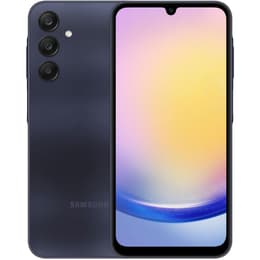
  • Display technology: The Galaxy A25 uses a Super AMOLED screen that provides deep blacks and vivid colours, making it excellent for watching movies. The iPhone 14 Pro features an advanced OLED display that can reach much higher brightness levels, making the screen significantly easier to read under direct sunlight.
  • Smoothness and motion: Both screens support a 120Hz refresh rate, which means scrolling through lists and animations looks very fluid compared to standard screens. The iPhone 14 Pro can also lower its refresh rate to save battery when the screen is static, a feature not found on the Galaxy A25.
  • Size and viewing: With a 6.5-inch screen, the Galaxy A25 offers a larger canvas for media, while the 6.1-inch iPhone 14 Pro is more compact and easier to use with one hand while still maintaining high pixel density for sharp text.

Resolution

1080 x 2340

1179 x 2556

Screen type

Super AMOLED

LTPO Super Retina XDR OLED

Audiovisual

The camera systems on these devices are designed for different levels of photographic detail and versatility in various lighting conditions.

  • Photography versatility: The iPhone 14 Pro includes a dedicated telephoto lens for high-quality zoomed-in shots, alongside its main and ultra-wide sensors. The Galaxy A25 features a high-resolution main camera and an ultra-wide lens, but lacks a dedicated zoom lens, instead using a macro lens for close-up photography of small objects.
  • Video and low light: The iPhone 14 Pro is widely recognised for its stable video recording and its ability to capture clear, detailed images in very dark environments. The Galaxy A25 performs well in daylight, producing bright and clear photos, but may show more grain in low-light settings.
  • Audio experience: Both devices feature stereo speakers, but the iPhone 14 Pro provides a fuller sound with more noticeable bass, which enhances the experience of watching videos or listening to podcasts without headphones.

Main camera

50 megapixels

48 megapixels

Front camera

13 megapixels

12 megapixels

Miscellaneous

Practical features like connectivity and physical design play a significant role in how these devices fit into the daily life of a user.

  • Connectivity and ports: The Galaxy A25 includes a traditional 3.5mm headphone jack, allowing the use of wired headphones without an adapter, and uses a USB-C port for charging. The iPhone 14 Pro uses a Lightning port and requires wireless headphones or a dongle for wired audio.
  • Security and sensors: The iPhone 14 Pro uses advanced facial recognition technology for secure unlocking, while the Galaxy A25 utilises a fingerprint sensor built into the power button on the side of the frame for quick access.
  • Dimensions and weight: The iPhone 14 Pro feels denser and heavier due to its metal and glass construction, whereas the Galaxy A25 is lighter despite its larger physical footprint, making it less noticeable in a pocket during long walks.

Weight

197 g

206 g

Screen size (in)

6.5

6.1

Mobile network

5G

5G

SIM card

Dual Physical SIM

Physical SIM + eSIM

Carrier compatibility

Unlocked

Unlocked

Connector

USB-C

Lightning

Users on community forums often praise the Galaxy A25 for its impressive screen quality and long battery life relative to its category. However, some note that it can feel slower when pushed with heavy gaming or intensive multitasking. The iPhone 14 Pro receives high marks for its exceptional camera system and the Dynamic Island feature, though some users mention the device feels heavy for its size due to the stainless steel frame.

Users who prioritise a large screen for media consumption and a long-lasting battery may find the Galaxy A25 aligns well with their needs. Those who require professional-level photography tools, a more compact design, and the fastest possible performance for demanding apps will likely lean toward the iPhone 14 Pro. Choosing a quality-assured refurbished option for either of these models is an eco-friendly alternative that helps reduce electronic waste while providing a reliable device. Ultimately, the decision depends on whether you prefer the expansive display and headphone jack of the Samsung or the advanced camera and ecosystem integration of the Apple device. Both smartphones are capable of serving users reliably for several years, making them solid choices for different types of mobile users.


See all articles

Our recent comparisons