
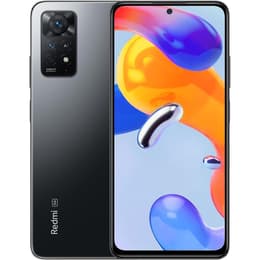

Google Pixel 8 Vs Xiaomi Redmi Note 11 Pro 5G

Google Pixel 8
Google Pixel 8
Starting at

Refurbished price:£189.00

Versus £699.99 new

See options
Xiaomi Redmi Note 11 Pro 5G
Starting at

Refurbished price:£102.00

Versus £599.00 new

See options

Ratings

The Google Pixel 8, released in October 2023, and the Xiaomi Redmi Note 11 Pro 5G, launched in January 2022, represent different approaches to the smartphone experience. While both offer modern features, the Pixel 8 emphasizes advanced computational photography and long-term software support, running on Google's Android operating system. The Redmi Note 11 Pro 5G, on the other hand, focuses on a large, vibrant display and robust battery performance, operating with Xiaomi's MIUI interface based on Android.

Scores

Durability

These two devices offer distinct timelines for software support and expected practical lifespan.

  • Software Longevity: The Google Pixel 8 is notable for its commitment to seven years of software support, including OS upgrades, security updates, and new features, extending its usability well into 2030. The Xiaomi Redmi Note 11 Pro 5G launched with Android 11 and typically receives around two years of major OS updates, meaning its official software support window is considerably shorter.
  • Repairability: The Google Pixel 8 has received repairability scores ranging from 6 to 7 out of 10, indicating it is moderately repairable, with parts availability and screen replacement being strong points, though battery replacement can be challenging. Specific repairability scores for the Redmi Note 11 Pro 5G are not widely available, but mid-range devices often present challenges for self-repair due to construction methods.
  • Practical Lifespan: Users prioritizing extended software updates and security patches will find the Pixel 8 designed for a longer practical lifespan from a software perspective. The Redmi Note 11 Pro 5G, while physically durable with its IP53 rating, will see its software support end sooner, which can impact its long-term security and access to new features.

Year of Release

2023

2022

Compatible with latest Update

Yes

No

OS

Android

Android

Foldable

No

No

Performance

The performance of these smartphones is influenced by their internal components and how they handle daily tasks.

  • Processing Capabilities: The Google Pixel 8 features a current-generation processor designed for efficient handling of demanding applications, multitasking, and advanced AI features, contributing to a responsive user experience. The Xiaomi Redmi Note 11 Pro 5G is equipped with a processor that provides decent performance for its class, suitable for everyday use and moderate multitasking.
  • System Responsiveness: Users of the Pixel 8 generally report a smooth software experience with consistent responsiveness across applications. The Redmi Note 11 Pro 5G offers a generally smooth experience, though some users have noted occasional lags in the user interface.
  • Battery Behavior: The Pixel 8 has a 4575 mAh battery, offering good but not exceptional battery life, typically providing 8-10 hours of screen time with mixed usage, though some users have reported faster drain with mobile data. The Redmi Note 11 Pro 5G comes with a larger 5000 mAh battery and is frequently praised for its strong battery endurance, often lasting a full day even for heavy users.

Memory (GB)

8 GB

6 GB

Screen quality

Both devices offer high-quality displays, but with some differences in their characteristics and viewing experience.

  • Display Technology and Resolution: The Google Pixel 8 features a 6.2-inch OLED display with a 2400x1080 resolution, providing deep blacks and vibrant colors. The Xiaomi Redmi Note 11 Pro 5G has a larger 6.67-inch Super AMOLED display, also with a 2400x1080 resolution, known for its vividness and contrast.
  • Brightness and Refresh Rate: The Pixel 8's display can reach a peak brightness of up to 2000 nits, making it highly visible in bright outdoor conditions. It also supports a 120Hz refresh rate for smooth scrolling and animations. The Redmi Note 11 Pro 5G also offers a 120Hz refresh rate and can achieve a peak brightness of up to 1200 nits, which is bright enough for most outdoor scenarios.
  • Viewing Experience: The Pixel 8's slightly smaller screen size may appeal to users preferring a more compact device for one-handed use, while the Redmi Note 11 Pro 5G's larger display provides a more expansive canvas for media consumption and gaming.

Resolution

1080 x 2400

1080 x 2400

Screen type

OLED

Super AMOLED

Audiovisual

The camera systems on these phones offer different strengths for photography and videography.

  • Rear Camera System: The Google Pixel 8 features a dual-camera setup with a 50-megapixel main sensor and a 12-megapixel ultrawide lens. Its camera performance is heavily supported by advanced software processing, excelling in detail, color accuracy, and low-light conditions. The Xiaomi Redmi Note 11 Pro 5G includes a triple-camera system with a 108-megapixel main sensor, an 8-megapixel ultrawide, and a 2-megapixel macro lens.
  • Low-Light and Video Performance: The Pixel 8 is known for its strong low-light photography and video capabilities, including features like Night Sight Timelapse. The Redmi Note 11 Pro 5G's camera performs well in good lighting, but some users have expressed concerns about its low-light performance and the absence of 4K video recording, limiting its video capabilities to 1080p at 30fps.
  • Front Camera: For selfies and video calls, the Pixel 8 has an 11-megapixel front camera, while the Redmi Note 11 Pro 5G features a 16-megapixel front camera.

Main camera

50 megapixels

108 megapixels

Front camera

10.5 megapixels

16 megapixels

Miscellaneous

Beyond core features, several practical elements differentiate these two smartphones.

  • Connectivity and Ports: The Google Pixel 8 supports Wi-Fi 7 and Bluetooth 5.3, offering advanced wireless connectivity. It uses a USB-C 3.2 port. The Xiaomi Redmi Note 11 Pro 5G supports Wi-Fi 802.11ac and Bluetooth 5.1, and includes a 3.5mm headphone jack, which is absent on the Pixel 8. It also uses a USB-C port.
  • Biometrics and Sensors: The Pixel 8 features an optical in-screen fingerprint sensor and face recognition for security. The Redmi Note 11 Pro 5G uses a side-mounted fingerprint sensor and AI face unlock. The Redmi also includes an IR blaster, allowing it to function as a universal remote.
  • Design and Durability: The Pixel 8 has a glass back with Corning Gorilla Glass Victus and an aluminum frame, offering IP68 dust and water resistance. It weighs 187 grams. The Redmi Note 11 Pro 5G features a dual-glass design with an IP53 rating for splash and dust resistance, weighing 202 grams.

Weight

187 g

202 g

Screen size (in)

6.2

6.67

Mobile network

5G

5G

SIM card

Physical SIM + eSIM

Dual Physical SIM

Carrier compatibility

Unlocked

Unlocked

User feedback for the Google Pixel 8 often highlights its exceptional camera performance, particularly its computational photography and low-light capabilities, as well as its long-term software support. Some users have noted that while battery life is generally good, it can be inconsistent, especially with mobile data usage. The device is praised for its smooth software experience and responsive display.

For the Xiaomi Redmi Note 11 Pro 5G, common praise points include its vibrant AMOLED display, impressive battery life, and fast charging capabilities. Criticisms sometimes revolve around its camera performance, with some users finding it less consistent, particularly for video recording, and the presence of ads in the MIUI software. Its performance is generally considered adequate for daily tasks, but not for demanding applications.

Users prioritizing a compact device with cutting-edge camera technology, extensive software longevity, and a premium build will find the Google Pixel 8 well-suited to their needs. Its focus on AI-driven features and long-term support makes it a compelling choice for those who keep their phones for many years. Conversely, users who value a larger, bright display, exceptional battery endurance, and very fast charging, along with features like a headphone jack and expandable storage, may lean toward the Xiaomi Redmi Note 11 Pro 5G. This device offers a strong multimedia experience and practical features for everyday use.

Both models are available as quality-assured refurbished options, providing an eco-friendly alternative for consumers looking to make a sustainable choice while still enjoying advanced smartphone technology.


See all articles

Our recent comparisons