Google Pixel 8 Vs iPhone 12 Pro Max

Google Pixel 8
Google Pixel 8
Starting at

Refurbished price:£187.00

Versus £699.99 new

See options
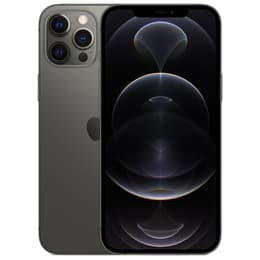
iPhone 12 Pro Max
iPhone 12 Pro Max
Starting at

Refurbished price:£238.00

Versus £979.00 new

See options

Ratings

The Google Pixel 8, released in October 2023, and the iPhone 12 Pro Max, launched in November 2020, represent different generations and operating systems within the smartphone landscape. While the Pixel 8 operates on Android and emphasizes AI-driven features, the iPhone 12 Pro Max runs on iOS, offering a robust ecosystem. Key differentiators lie in their display technology, camera capabilities, and long-term software support.

Scores

Durability

When considering the longevity of these devices, their release timelines and software support policies are significant factors.

  • Release Timeline: The Google Pixel 8 was released in October 2023, making it a more recent device compared to the iPhone 12 Pro Max, which launched in November 2020. This difference in release date inherently impacts their remaining software support.
  • OS Support Duration: Google has committed to an extensive seven years of software updates for the Pixel 8, covering OS upgrades, security updates, and feature drops. The iPhone 12 Pro Max, having been released in 2020, is nearing the typical end of its major iOS update cycle, which usually spans five to six years from release.
  • Repairability: The Pixel 8 has received repairability scores around 7 out of 10 from some assessments, indicating a moderate ease of self-repair for certain components. The iPhone 12 Pro Max, while featuring a durable Ceramic Shield front, generally scores lower in repairability due to practices like parts pairing, which can complicate independent repairs. Both devices carry an IP68 rating for water and dust resistance, contributing to their physical durability.

Year of Release

2023

2020

Compatible with latest Update

Yes

Yes

OS

Android

iOS

Foldable

No

No

Performance

The performance of a smartphone is crucial for daily operations, from app handling to multitasking and gaming.

  • Processor Capabilities: The Pixel 8 is powered by Google's Tensor G3, designed to optimize AI and machine learning tasks, contributing to smooth app loading and efficient background processes. The iPhone 12 Pro Max features the A14 Bionic chip, which was a leading processor at its release, providing strong performance for demanding applications and a responsive user experience.
  • Multitasking and Storage: The Pixel 8 comes with 8GB of RAM, supporting fluid transitions between multiple applications. The iPhone 12 Pro Max is equipped with 6GB of RAM, which also allows for effective multitasking within the iOS environment. Both devices offer various storage options, typically starting at 128GB, to accommodate user data and applications.
  • Battery Behavior: The Pixel 8 houses a 4575 mAh battery. Users report varying experiences, with some achieving 8-10 hours of screen time with mixed usage, while heavy use might require more frequent charging. The iPhone 12 Pro Max has a 3687 mAh battery. Despite the smaller capacity, its optimized software often allows for a full day of typical use, with some tests indicating over 14 hours of browsing.

Memory (GB)

8 GB

6 GB

Screen quality

The display is a primary interface for smartphone interaction, and both devices offer distinct viewing experiences.

  • Display Technology and Size: The Google Pixel 8 features a 6.2-inch OLED display, offering deep blacks and vibrant colors. The iPhone 12 Pro Max boasts a larger 6.7-inch Super Retina XDR OLED display, providing an expansive canvas for content.
  • Resolution and Brightness: The Pixel 8 has a resolution of 2400x1080 pixels, resulting in a pixel density of 428 ppi. It can reach a peak brightness of up to 2000 nits, enhancing visibility in bright outdoor conditions. The iPhone 12 Pro Max offers a resolution of 2778x1284 pixels at 458 ppi, delivering sharp images and text. Its display reaches 800 nits typical brightness and 1200 nits for HDR content.
  • Refresh Rate: The Pixel 8 features a variable refresh rate from 60Hz to 120Hz, allowing for smoother scrolling and more fluid animations. The iPhone 12 Pro Max has a standard 60Hz refresh rate.

Resolution

1080 x 2400

1284 x 2778

Screen type

OLED

Super Retina XDR OLED

Audiovisual

Both smartphones offer advanced camera systems, though with different approaches to image processing and hardware.

  • Rear Camera Systems: The Google Pixel 8 includes a dual-camera setup with a 50MP main sensor (f/1.68) and a 12MP ultrawide lens (f/2.2). The iPhone 12 Pro Max features a triple 12MP camera system, comprising a wide (f/1.6), ultrawide (f/2.4), and telephoto (f/2.2) lens, offering 2.5x optical zoom. The iPhone also incorporates sensor-shift optical image stabilization on its wide lens for improved stability.
  • Photography Features: The Pixel 8 leverages Google's computational photography for enhanced detail and color accuracy, particularly in low-light conditions. The iPhone 12 Pro Max utilizes features like Deep Fusion and Smart HDR 3, along with a LiDAR Scanner for faster autofocus and improved Night mode portraits.
  • Video Recording: The Pixel 8 supports 4K video recording at various frame rates, including 60fps. The iPhone 12 Pro Max is capable of HDR video recording with Dolby Vision at up to 60fps, providing a high dynamic range for video content.

Main camera

50 megapixels

12 megapixels

Front camera

10.5 megapixels

12 megapixels

Miscellaneous

Beyond core features, several practical elements contribute to the overall user experience and device utility.

  • Connectivity and Ports: The Google Pixel 8 supports Wi-Fi 7 and Bluetooth 5.3, offering advanced wireless connectivity. It uses a USB-C port for charging and data transfer. The iPhone 12 Pro Max supports Wi-Fi 6 and Bluetooth 5.0. It utilizes Apple's proprietary Lightning port. Both devices support 5G cellular connectivity.
  • Biometrics and Sensors: The Pixel 8 features an optical in-screen fingerprint sensor and supports face unlock. The iPhone 12 Pro Max relies on Face ID for secure authentication and includes a LiDAR Scanner, which enhances augmented reality experiences and low-light photography.
  • Design and Handling: The Pixel 8 measures 150.5 x 70.8 x 8.9 mm and weighs 187 g, making it a relatively compact and manageable device. It features a glass back and an aluminum frame, with Corning Gorilla Glass Victus protection. The iPhone 12 Pro Max is larger and heavier at 160.8 x 78.1 x 7.4 mm and 228 g, offering a more substantial feel and a larger screen. It features a Ceramic Shield front, a stainless steel frame, and a glass back.

Weight

187 g

226 g

Screen size (in)

6.2

6.7

Mobile network

5G

5G

SIM card

Physical SIM + eSIM

Physical SIM + eSIM

Carrier compatibility

Unlocked

Unlocked

The Google Pixel 8 and iPhone 12 Pro Max cater to different user preferences, reflecting their distinct operating systems and design philosophies. User sentiment for the Pixel 8 often highlights its advanced computational photography, long-term software support, and the integration of AI features as strong points. Some users, however, have noted concerns regarding battery performance, particularly when using mobile data. For the iPhone 12 Pro Max, common praise points include its robust build quality, the consistent performance of its camera system, and the overall stability of the iOS ecosystem. Its larger size and weight are sometimes mentioned as a trade-off for the expansive display.

Users prioritizing extended software longevity, a more compact form factor, and cutting-edge AI-driven features may find the Google Pixel 8 well-suited to their needs. Conversely, those who prefer a larger display, a telephoto camera lens, and the established Apple ecosystem might lean towards the iPhone 12 Pro Max. Both devices offer reliable performance for everyday tasks, and choosing between them often comes down to individual preferences for operating system, camera capabilities, and device size. For those considering either model, exploring quality-assured refurbished options can provide an eco-friendly alternative.


See all articles

Our recent comparisons