
iPhone 12 Pro Max Vs iPhone 14

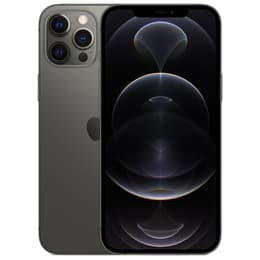
iPhone 12 Pro Max
iPhone 12 Pro Max
Starting at

Refurbished price:£238.00

Versus £979.00 new

See options
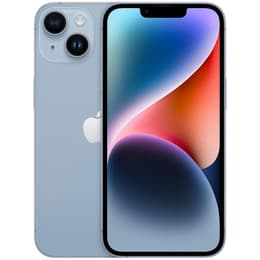
iPhone 14
iPhone 14
Starting at

Refurbished price:£229.00

Versus £599.00 new

See options

Ratings

The iPhone 12 Pro Max, released in November 2020, and the iPhone 14, launched in September 2022, represent different generations within Apple's smartphone lineup. While both operate on Apple's iOS ecosystem, the iPhone 14 introduces a more recent processor and enhanced camera capabilities, whereas the iPhone 12 Pro Max offers a larger display and a dedicated telephoto lens. These differences cater to varying user preferences, from screen size to photographic needs.

Scores

Durability

When considering the longevity of these devices, several factors come into play, including software support and physical resilience. The iPhone 12 Pro Max, being an older model, will naturally reach its end-of-life for major iOS updates sooner than the iPhone 14.

  • Software Support: The iPhone 12 Pro Max, launched with iOS 14, is expected to receive major iOS updates for approximately 5-7 years from its release, with security updates potentially extending beyond that. It is anticipated to support iOS 26. The iPhone 14, released with iOS 16, will benefit from a longer period of major software updates, likely until around 2034, offering extended access to new features and security patches.
  • Physical Durability: Both models feature Apple's Ceramic Shield front cover, designed to improve drop performance. They also share an IP68 rating for water and dust resistance, indicating protection against submersion.
  • Repairability: The iPhone 12 Pro Max received an initial repairability score of 6 out of 10 from iFixit, noting that while many parts are replaceable, proprietary screws and software locks can complicate repairs. The iPhone 14 initially garnered praise for a hardware redesign that made internal components, particularly the back glass, more accessible for repair. However, iFixit later downgraded its repairability score from 7 to 4 out of 10 due to software-based 'parts pairing' that limits functionality when non-Apple-authorized components are used.

Year of Release

2020

2022

Compatible with latest Update

Yes

Yes

OS

iOS

iOS

Foldable

No

No

Performance

The performance of a smartphone is largely dictated by its internal processing power and how efficiently it manages tasks. Both the iPhone 12 Pro Max and iPhone 14 deliver capable performance for daily use, though the newer model benefits from a more advanced architecture.

  • Processing Power: The iPhone 12 Pro Max is equipped with a processor that handles demanding applications and multitasking effectively, providing a smooth user experience for most tasks. The iPhone 14 features a newer generation processor with an enhanced graphics processing unit, contributing to slightly faster app loading times, smoother transitions, and improved performance in graphically intensive games and applications.
  • Multitasking and Responsiveness: Both devices come with 6GB of RAM, which allows for efficient multitasking and keeps multiple applications running in the background without significant slowdowns. Users can expect a responsive interface and quick app switching on both models.
  • Storage Options: Both phones offer identical storage configurations, starting at 128GB and extending to 256GB and 512GB, providing ample space for apps, photos, and videos.

Memory (GB)

6 GB

6 GB

Screen quality

The visual experience on a smartphone is heavily influenced by its display technology, resolution, and brightness. The iPhone 12 Pro Max and iPhone 14 both offer high-quality OLED screens, but differ in size and subtle characteristics.

  • Display Technology and Size: The iPhone 12 Pro Max features a larger 6.7-inch Super Retina XDR OLED display, providing an expansive viewing area. The iPhone 14 has a 6.1-inch Super Retina XDR OLED display, offering a more compact form factor. Both OLED panels deliver deep blacks and vibrant colors.
  • Resolution and Clarity: The iPhone 12 Pro Max has a resolution of 2778x1284 pixels at 458 pixels per inch (ppi). The iPhone 14 offers a resolution of 2532x1170 pixels at 460 ppi. Both provide sharp and clear visuals for text, images, and video content.
  • Brightness and Refresh Rate: Both models achieve a typical maximum brightness of 800 nits and a peak HDR brightness of 1200 nits, ensuring good visibility in various lighting conditions. Both devices feature a standard 60Hz refresh rate, which provides a consistent and smooth scrolling experience for everyday use.

Resolution

1284 x 2778

1170 x 2532

Screen type

Super Retina XDR OLED

Super Retina XDR OLED

Audiovisual

The camera systems on both the iPhone 12 Pro Max and iPhone 14 are designed to capture high-quality images and videos, though they approach this with different hardware and software enhancements.

  • Rear Camera Systems: The iPhone 12 Pro Max boasts a triple 12-megapixel camera setup, including a wide, ultra-wide, and a 2.5x telephoto lens, along with a LiDAR scanner for improved low-light focusing and Night Mode portraits. The iPhone 14 features a dual 12-megapixel camera system with an improved main wide-angle lens (f/1.5 aperture) and an ultra-wide lens. It introduces the Photonic Engine for better low-light performance and Action Mode for enhanced video stabilization.
  • Low-Light and Video Performance: The iPhone 12 Pro Max excels in low-light photography, particularly with its larger sensor and LiDAR scanner. It supports 4K video recording at 60 frames per second with Dolby Vision HDR. The iPhone 14 also offers improved low-light capabilities through its larger main sensor and Photonic Engine, and its Action Mode provides smooth video capture, comparable to action cameras.
  • Front Camera: Both phones include a 12-megapixel front-facing camera. The iPhone 14's front camera benefits from autofocus and a wider f/1.9 aperture, which can lead to clearer selfies and improved low-light performance for video calls.

Main camera

12 megapixels

12 megapixels

Front camera

12 megapixels

12 megapixels

Miscellaneous

Beyond core specifications, practical features like connectivity, physical design, and biometric security contribute to the overall user experience. The iPhone 12 Pro Max and iPhone 14 share many modern conveniences but also have distinct characteristics.

  • Connectivity and Ports: Both devices support 5G cellular networks, Wi-Fi 6 (802.11ax), and Bluetooth for wireless connections. They both utilize the Lightning port for charging and data transfer.
  • Biometric Security and Additional Features: Both models rely on Face ID for secure authentication. The iPhone 14 introduces Emergency SOS via satellite and Crash Detection, offering enhanced safety features. Both also support MagSafe for magnetic accessories and wireless charging.
  • Physical Attributes: The iPhone 12 Pro Max is a larger and heavier device, weighing 228 grams with dimensions of 160.8 x 78.1 x 7.4 mm, which can impact one-handed use. The iPhone 14 is more compact and lighter at 172 grams, with dimensions of 146.7 x 71.5 x 7.8 mm, making it easier to handle for some users.

Weight

226 g

172 g

Screen size (in)

6.7

6.1

Mobile network

5G

5G

SIM card

Physical SIM + eSIM

Physical SIM + eSIM

Carrier compatibility

Unlocked

Unlocked

Connector

Lightning

Lightning

User feedback for the iPhone 12 Pro Max often highlights its exceptional battery life and large, immersive display as significant advantages. Many users appreciate the versatility of its triple camera system, particularly the dedicated telephoto lens and LiDAR scanner for photography enthusiasts. Criticisms sometimes point to its considerable size and weight, which can make one-handed operation challenging.

The iPhone 14 is frequently praised for its reliable everyday performance, improved main camera with better low-light capabilities, and the addition of safety features like Emergency SOS via satellite. Some users have expressed concerns about its battery life compared to Pro Max models, and the practical repairability has been noted as a drawback due to software locks despite hardware improvements.

Users prioritizing a larger screen, a dedicated telephoto camera, and extended battery life may find the iPhone 12 Pro Max well-suited to their needs. Its robust build and established performance make it a strong choice for media consumption and photography. Conversely, users who prefer a more compact device, desire the latest software features, and value enhanced safety capabilities might lean towards the iPhone 14. Its updated main camera and newer processor offer a refined experience for general use and casual photography.

Both models remain capable smartphones, and choosing between them often comes down to individual priorities regarding size, specific camera features, and the desire for the most recent software and safety innovations. Opting for a quality-assured refurbished option for either device can provide an eco-friendly alternative, extending the life of these products and offering a sustainable choice.


See all articles

Our recent comparisons