
Google Pixel 6 Vs Google Pixel 6A

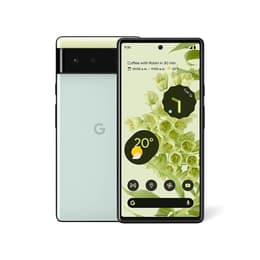
Google Pixel 6
Google Pixel 6
Starting at

Refurbished price:£101.00

Versus £649.99 new

See options
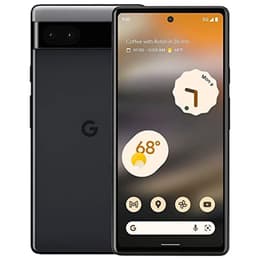
Google Pixel 6A
Google Pixel 6A
Starting at

Refurbished price:£107.00

Versus £459.00 new

See options

Ratings

The Google Pixel 6, released in October 2021, and the Google Pixel 6a, launched in July 2022, are both Android smartphones from Google's Pixel line. While they share a similar design language and the same core processor, the Pixel 6 offers a more premium build and display experience, whereas the Pixel 6a presents a more compact form factor with slightly different camera hardware. Both devices run on the Android operating system, providing a consistent software experience with Google's signature features.

Scores

Durability

When considering the practical lifespan of these devices, several factors come into play, including their release timelines, software support, and ease of repair.

  • Release Timeline and Age: The Pixel 6 was released in October 2021, making it approximately nine months older than the Pixel 6a, which launched in July 2022. This difference in release date impacts their remaining software support window.
  • OS and Security Updates: Google has committed to providing five years of OS and security updates for both models from their respective launch dates. This means the Pixel 6 is expected to receive updates until October 2026, while the Pixel 6a will continue to receive updates until July 2027, offering a slightly longer period of official software support.
  • Repairability: The Pixel 6a generally boasts a better repairability score, often rated around 6.5 to 7 out of 10. This is partly due to easier battery removal and display attachment using clips, making certain repairs more straightforward. The Pixel 6, while also having a relatively easy screen replacement process, can present challenges with fingerprint sensor recalibration after a display swap.

Year of Release

2021

2022

Compatible with latest Update

Yes

Yes

OS

Android

Android

Foldable

No

No

Performance

Both the Google Pixel 6 and Pixel 6a are powered by the same custom-designed processor, which influences their overall performance and responsiveness in daily use.

  • Processor Capabilities: Both devices utilize Google's Tensor chip, enabling smooth handling of everyday applications, efficient multitasking, and advanced on-device artificial intelligence features. This shared processor ensures a consistent experience for tasks like photo processing and voice commands.
  • RAM and Multitasking: The Pixel 6 comes with 8GB of RAM, while the Pixel 6a features 6GB of RAM. For users who frequently switch between many applications or engage in demanding tasks, the additional RAM in the Pixel 6 can contribute to a more fluid multitasking experience and better app retention in memory.
  • Storage Options: The Pixel 6 offers storage configurations of 128GB and 256GB, providing more choice for users with extensive media libraries or numerous applications. The Pixel 6a is available exclusively with 128GB of internal storage.

Memory (GB)

8 GB

6 GB

Screen quality

The display is a primary point of interaction, and there are notable differences in the screen technology and specifications between the two Pixel models.

  • Display Technology and Size: The Pixel 6 features a larger 6.4-inch OLED display, while the Pixel 6a has a more compact 6.1-inch OLED screen. Both offer vibrant colors and deep blacks characteristic of OLED panels, with a resolution of 1080 x 2400 pixels.
  • Refresh Rate: A key differentiator is the refresh rate; the Pixel 6 boasts a 90Hz refresh rate, providing smoother scrolling and a more fluid visual experience. In contrast, the Pixel 6a features a standard 60Hz refresh rate.
  • Screen Protection: The Pixel 6 utilizes Gorilla Glass Victus for enhanced durability, offering greater resistance to scratches and drops. The Pixel 6a uses Gorilla Glass 3, which provides good protection but is less robust than the Victus glass.

Resolution

1080 x 2400

1080 x 2400

Screen type

AMOLED

OLED

Audiovisual

Both Pixel phones are known for their computational photography capabilities, but they feature different camera hardware that can impact image capture.

  • Main Camera Sensor: The Pixel 6 is equipped with a larger 50-megapixel main sensor, which uses pixel-binning to produce detailed 12-megapixel photos and generally performs better in low-light conditions due to its ability to capture more light. The Pixel 6a uses a 12.2-megapixel main sensor, similar to previous Pixel generations.
  • Ultra-wide and Front Cameras: Both devices share a 12-megapixel ultra-wide camera, providing a consistent experience for wider shots. For selfies, the Pixel 6 features a 10-megapixel front camera, while the Pixel 6a has an 8-megapixel front camera.
  • Computational Photography: Thanks to the shared Tensor processor, both phones benefit from Google's advanced image processing features like Magic Eraser, Real Tone, and Night Sight, ensuring high-quality results across various lighting conditions. However, the Pixel 6's larger sensor can give it an edge in challenging low-light scenarios.

Main camera

50 megapixels

12.2 megapixels

Front camera

8 megapixels

8 megapixels

Miscellaneous

Beyond the core specifications, several other features contribute to the overall user experience and practical utility of these smartphones.

  • Build Materials and Dimensions: The Pixel 6 features a more premium construction with an aluminum frame and glass back (Gorilla Glass 6), giving it a substantial feel. The Pixel 6a opts for a plastic back, which can be more resistant to impacts. The Pixel 6 is larger and heavier at 158.6 x 74.8 x 8.9mm and 207 grams, compared to the Pixel 6a's more compact 152.2 x 71.8 x 8.9mm and 178 grams, making the 6a easier for one-handed use.
  • Water and Dust Resistance: The Pixel 6 carries an IP68 rating, indicating a higher level of resistance to dust and water immersion. The Pixel 6a has an IP67 rating, offering good protection against splashes and some immersion.
  • Charging and Connectivity: The Pixel 6 supports faster wired charging (up to 30W) and includes wireless charging capabilities, along with reverse wireless charging. The Pixel 6a supports 18W wired charging but lacks wireless charging. Both phones support 5G connectivity (sub-6GHz), with the Pixel 6 also supporting mmWave 5G, and some carrier versions of the Pixel 6a also supporting mmWave. Both include an in-display fingerprint sensor, though the Pixel 6a's sensor has been noted by some users as being more responsive.

Weight

207 g

250 g

Screen size (in)

6.4

6.1

Mobile network

5G

5G

SIM card

Physical SIM + eSIM

Physical SIM + eSIM

Carrier compatibility

Unlocked

Unlocked

The Google Pixel 6 and Pixel 6a both offer a strong Android experience, largely due to their shared processor and Google's software optimizations. User feedback often highlights the Pixel 6's more premium feel, smoother display, and superior main camera performance, particularly in challenging lighting conditions. However, some users have noted that the Pixel 6a's battery life can be more consistent, potentially due to its smaller screen and lower refresh rate, despite having a slightly smaller battery capacity.

Users prioritizing a larger, smoother display and a more robust build with faster charging and wireless charging capabilities may find the Pixel 6 to be a more suitable choice. Its enhanced camera hardware also appeals to those who value photography performance, especially in varied lighting. Conversely, individuals seeking a more compact device that is easier to handle with one hand, and who are content with a standard refresh rate display, might lean towards the Pixel 6a. Its slightly extended software support timeline and better repairability score also make it an appealing option for those looking for longevity and ease of maintenance.

For consumers evaluating these models, considering a quality-assured refurbished option can provide an eco-friendly alternative, extending the life cycle of these capable smartphones while offering a reliable device for various user needs, from daily communication to content creation.


See all articles

Our recent comparisons