
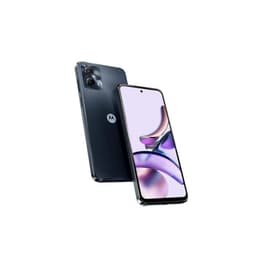

Google Pixel 9 Pro Vs Motorola Moto G13

Google Pixel 9 Pro
Google Pixel 9 Pro
Starting at

Refurbished price:£395.25

Versus £917.17 new

See options
Motorola Moto G13
Motorola Moto G13
Starting at

Refurbished price:£99.00

Versus £166.76 new

See options

Ratings

The Google Pixel 9 Pro (released September 2024) and the Motorola Moto G13 (released January 2023) are smartphones designed for distinct user needs and expectations. While both devices offer core smartphone functionalities, the Pixel 9 Pro stands out with its advanced camera system, high-resolution OLED display, and extended software support, positioning it as a premium device. In contrast, the Moto G13 focuses on delivering essential features with a strong emphasis on battery longevity, making it a practical choice for users seeking reliability in everyday tasks.

Scores

Durability

The expected lifespan and software support differ significantly between these two devices, reflecting their respective market segments.

  • Software Longevity: The Google Pixel 9 Pro launched with Android 14 and is promised an extensive seven years of operating system updates, ensuring it remains current with the latest features and security patches well into the future. This commitment provides a long software lifespan for users. The Motorola Moto G13, released with Android 13, typically receives fewer major OS updates, often one or two, meaning its software support will conclude much sooner than the Pixel 9 Pro's.
  • Physical Durability: The Pixel 9 Pro features an aluminum frame and Gorilla Glass Victus 2 on both the front and back, contributing to its robust build. It also carries an IP68 rating for dust and water resistance, offering substantial protection against environmental elements. Google claims improved drop test performance for the Pixel 9 series. The Moto G13, on the other hand, utilizes a plastic back and frame with Panda Glass protecting its display, and it has a water-repellent design with an IP52 rating, providing basic splash and dust resistance.
  • Practical Lifespan: Users prioritizing long-term usability, including consistent access to the latest software innovations and enhanced physical resilience, will find the Pixel 9 Pro better suited for extended ownership. The Moto G13, while durable for its class, is designed for a shorter practical lifespan in terms of software currency and high-level protection.

Year of Release

2024

2023

Compatible with latest Update

Yes

No

OS

Android

Android

Foldable

No

No

Performance

The performance capabilities of the Pixel 9 Pro and Moto G13 cater to different usage patterns, primarily due to their internal components.

  • Processing Power: The Google Pixel 9 Pro is equipped with a current-generation processor designed to handle demanding applications, intensive multitasking, and complex AI features smoothly. This results in quick app loading times and a responsive user experience, even with graphically intensive games or advanced photo and video editing. Some users have noted that while performance is generally good for everyday use, it might not always match the absolute top-tier competitors in sustained heavy workloads and can sometimes lead to the device warming up. The Motorola Moto G13 features a processor that capably manages daily tasks such as web browsing, social media, and light gaming. While it provides a smooth experience for these common activities, it is not intended for high-performance applications or extensive multitasking, where users might notice slower response times.
  • Memory and Storage: The Pixel 9 Pro comes with 16GB of RAM, facilitating seamless multitasking and efficient handling of numerous open applications. It offers various storage options, including 128GB, 256GB, 512GB, and 1TB, without expandable storage. The Moto G13 typically includes 4GB of RAM, which is sufficient for basic multitasking. It offers 64GB or 128GB of internal storage, with the added flexibility of expandable storage via a microSD card, allowing users to increase capacity for photos, videos, and apps.
  • Battery Behavior: The Pixel 9 Pro houses a 4700mAh battery, providing excellent battery life that can comfortably last a full day or more for many users, even with moderate to heavy usage. Charging is supported up to 27W wired and 21W wirelessly with compatible accessories. The Moto G13 is powered by a larger 5000mAh battery, which consistently delivers impressive longevity, often extending to one and a half to two days of use for average users. However, its charging speed is limited to 10W, meaning a full charge takes approximately three hours.

Memory (GB)

16 GB

4 GB

Screen quality

The visual experience on these two smartphones is a key differentiator, stemming from their display technologies and specifications.

  • Display Technology and Resolution: The Google Pixel 9 Pro features a 6.3-inch OLED display with a resolution of 2856 x 1280 pixels, resulting in a high pixel density of 495 pixels per inch (ppi). This delivers exceptionally sharp text and vibrant, rich colors with deep blacks, enhancing the viewing experience for all types of content. The Motorola Moto G13 sports a 6.5-inch IPS LCD panel with a 720 x 1600 pixel (HD+) resolution, offering a pixel density of 270 ppi. While it provides clear visuals for everyday use, the lower resolution means that fine details may not appear as sharp as on higher-density displays.
  • Brightness and Refresh Rate: The Pixel 9 Pro's display boasts a typical brightness of 2000 nits and a peak brightness of 3000 nits, ensuring excellent visibility even in bright outdoor conditions. Its LTPO technology allows for a variable refresh rate from 1Hz to 120Hz, providing smooth scrolling and animations while optimizing power consumption. The Moto G13 offers a 90Hz refresh rate, which provides a smoother scrolling experience compared to standard 60Hz displays. Its average brightness ranges from 400 to 553 cd/m², making it viewable outdoors, though it may struggle in direct sunlight compared to the Pixel 9 Pro.
  • Viewing Experience: Users who prioritize a premium visual experience with exceptional clarity, color accuracy, and fluid motion, especially for media consumption or detailed work, will find the Pixel 9 Pro's OLED display superior. The Moto G13's display is well-suited for general browsing and casual media viewing, offering a good balance for its segment.

Resolution

1280 x 2856

720 x 1600

Screen type

LTPO OLED

IPS LCD

Audiovisual

The camera systems of the Google Pixel 9 Pro and Motorola Moto G13 are designed for different levels of photographic capability and user expectations.

  • Rear Camera Systems: The Google Pixel 9 Pro features a versatile triple-camera setup, including a 50MP main sensor, a 48MP ultrawide lens with a wide field of view, and a 48MP 5x telephoto lens. This system is enhanced by advanced computational photography and AI features like Night Sight, Astrophotography, Macro Focus, and Super Res Zoom up to 30x, delivering high-quality, detailed images across various lighting conditions. Video recording capabilities include 4K and 8K with features like Video Boost and Cinematic blur. The Motorola Moto G13 comes with a triple rear camera array consisting of a 50MP main sensor, a 2MP macro lens, and a 2MP depth sensor. It performs well in good lighting conditions, capturing decent detail and colors for everyday photography. Video recording is limited to 1080p at 30 frames per second.
  • Front Camera and Features: The Pixel 9 Pro is equipped with a 42MP front camera that offers a wider field of view and improved light sensitivity, making it suitable for high-quality selfies and video calls, even in challenging lighting. The Moto G13 has an 8MP front camera, which captures decent selfies with accurate colors and details, and can record 1080p video at 30fps.
  • Overall Photography Experience: For users who prioritize advanced photography features, exceptional image quality, and versatile shooting options, particularly in low light or with zoom, the Pixel 9 Pro offers a comprehensive experience. The Moto G13 provides a competent camera for casual users who primarily take photos in well-lit environments and do not require extensive post-processing or advanced video capabilities.

Main camera

50 megapixels

50 megapixels

Front camera

42 megapixels

8 megapixels

Miscellaneous

Beyond core performance and display, several other features contribute to the overall user experience of these devices.

  • Connectivity and Ports: The Google Pixel 9 Pro supports 5G connectivity, ensuring access to the fastest mobile network speeds available. It features a USB-C port for charging and data transfer, and includes modern wireless standards like Wi-Fi 6E and Bluetooth 5.x. It also offers Satellite SOS for emergency situations in areas without cellular coverage. The Motorola Moto G13 is a 4G LTE device, suitable for current mobile network standards but without 5G capabilities. It includes a USB-C 2.0 port, Wi-Fi 5 (802.11 a/b/g/n/ac), Bluetooth 5.1, NFC for contactless payments, and retains a 3.5mm headphone jack.
  • Biometric Security and Audio: The Pixel 9 Pro incorporates an ultrasonic in-display fingerprint scanner and face recognition for secure unlocking. It typically offers stereo speakers for an immersive audio experience. The Moto G13 features a side-mounted fingerprint sensor and face unlock for security. It boasts stereo speakers with Dolby Atmos support, providing an enhanced audio experience for media consumption.
  • Design and Handling: The Pixel 9 Pro features a premium build with flat sides and a metal frame, contributing to a solid in-hand feel. Its dimensions are designed for comfortable handling, with some users appreciating its relatively compact form factor for a Pro model. The Moto G13 has a plastic back and frame, which contributes to its lighter weight (183.5 grams) and comfortable grip. Its water-repellent design adds a layer of practical durability.

Weight

199 g

183 g

Screen size (in)

6.3

6.5

Mobile network

5G

4G

SIM card

Physical SIM + eSIM

Dual Physical SIM

Carrier compatibility

Unlocked

Unlocked

User sentiment for the Google Pixel 9 Pro often highlights its exceptional camera capabilities, with many praising the natural-looking photos and advanced AI-driven features like Video Boost and Night Sight. Users also frequently commend its vibrant OLED display, smooth 120Hz refresh rate, and robust battery life, often reporting a full day of heavy use. Some criticisms include occasional warming during intensive tasks and a desire for even faster charging speeds. The software experience, with its long update commitment, is generally well-received, though some users express minor frustrations with certain Google app integrations.

For the Motorola Moto G13, common praise points revolve around its impressive battery life, which can easily last for one to two days on a single charge, and its inclusion of a 90Hz display at its segment. Users appreciate the stereo speakers with Dolby Atmos and the presence of a 3.5mm headphone jack. Frequent criticisms include the slow 10W charging speed and the limitations of its HD+ display resolution. The camera performs adequately in good lighting but shows limitations in more challenging conditions.

Users prioritizing cutting-edge camera technology, a high-resolution and bright display, and long-term software support will find the Google Pixel 9 Pro well-suited to their needs. It is ideal for those who engage in demanding applications, extensive photography, and value a premium, responsive experience. Conversely, users who prioritize exceptional battery longevity, a smooth display for everyday tasks, and essential smartphone features without needing the latest performance or camera advancements may lean toward the Motorola Moto G13. It serves as a reliable, practical device for communication and casual media consumption.

Both devices are available as quality-assured refurbished options, providing an eco-friendly alternative for consumers looking to make informed and sustainable choices.


See all articles

Our recent comparisons