
Galaxy S24 FE Vs Google Pixel 9a

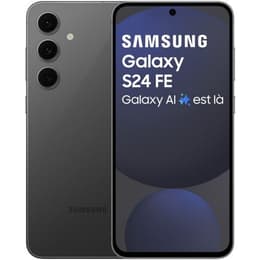
Galaxy S24 FE
Galaxy S24 FE
Starting at

Refurbished price:£250.00

Versus £741.91 new

See options
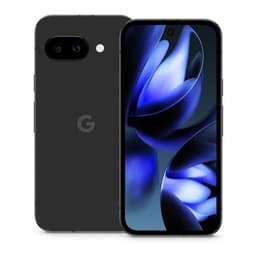
Google Pixel 9a
Google Pixel 9a
Starting at

Refurbished price:£319.00

Versus £499.00 new

See options

Ratings

The Samsung Galaxy S24 FE, released in October 2024, and the Google Pixel 9A, launched in April 2025, are both contemporary smartphones designed to offer a balanced experience. While both devices operate on the Android platform, they present distinct approaches to hardware and software integration. The Galaxy S24 FE emphasizes a versatile camera system and a larger display, whereas the Pixel 9A focuses on Google's integrated AI features and a streamlined user experience.

Scores

Durability

When considering the long-term usability of these devices, both the Galaxy S24 FE and the Pixel 9A offer substantial software support, a key factor in their practical lifespan.

  • Software Longevity: Both smartphones are committed to providing seven years of operating system and security updates from their respective release dates [2, 3, 12, 17, 19]. This extended support ensures that users will receive new features and security patches well into the future, with the Pixel 9A potentially receiving updates for a few months longer due to its later release.
  • Physical Durability: The Galaxy S24 FE features Corning Gorilla Glass Victus+ for its display, offering advanced protection against drops and scratches [29]. The Pixel 9A, on the other hand, utilizes Corning Gorilla Glass 3, which provides good scratch resistance but may be more vulnerable to drops compared to newer glass technologies [3, 11, 18, 19, 24]. Both devices carry an IP68 rating for dust and water resistance, indicating protection against immersion in fresh water [14, 3, 5, 6, 26].
  • Repairability: User reports suggest that the Pixel 9A has some repair-friendly aspects, such as a modular camera system and a screen that can be replaced without removing the entire back panel, though battery replacement can be challenging [11]. Information on the specific repairability score for the Galaxy S24 FE is less detailed, but Samsung generally offers repair services and parts.

Year of Release

2024

2025

Compatible with latest Update

Yes

Yes

OS

Android

Android

Foldable

No

No

Performance

The performance of a smartphone is crucial for daily tasks, and both the Galaxy S24 FE and the Pixel 9A are equipped to handle a range of applications, though with different underlying architectures.

  • Processing Power: The Galaxy S24 FE is powered by an Exynos 2400e processor, an underclocked variant of a flagship-grade chipset, which allows it to manage demanding applications and multitasking smoothly [2, 4, 27]. The Pixel 9A integrates Google's Tensor G4 processor, designed to optimize AI-driven features and provide a fluid Android experience [1, 3, 7, 17, 19, 20, 24]. Users of the Pixel 9A have noted that it feels fast and smooth for everyday use, though some reported occasional software bugs [5].
  • Multitasking and Storage: Both devices come with 8GB of RAM, enabling efficient multitasking and app switching [4, 16, 27, 1, 3, 7, 19, 24]. For storage, the Galaxy S24 FE offers options up to 512GB, while the Pixel 9A is available with up to 256GB [22, 27, 3, 7, 19, 24]. Neither phone supports expandable storage via a microSD card.
  • Battery Performance: The Pixel 9A features a larger 5100 mAh battery, which users report can last through a full day of normal use, often achieving seven to eight hours of screen-on time [1, 3, 7, 19, 24, 5, 15, 26]. The Galaxy S24 FE has a 4700 mAh battery [4, 16, 27]. Both support fast charging, with the S24 FE supporting 25W and the Pixel 9A supporting 23W, and the Pixel 9A also includes 7.5W wireless charging [14, 16, 3, 19, 24].

Memory (GB)

8 GB

8 GB

Screen quality

The visual experience is a primary interaction point for smartphones, and both models offer vibrant displays with distinct characteristics.

  • Display Technology and Size: The Galaxy S24 FE features a larger 6.7-inch Dynamic AMOLED 2X display, providing ample screen real estate for media consumption and productivity [4, 16, 29]. The Pixel 9A comes with a 6.3-inch pOLED Actua display, which is slightly more compact but still offers a rich viewing experience [1, 3, 6, 7, 12, 17, 19].
  • Resolution and Brightness: Both phones offer Full HD+ resolutions, ensuring sharp and clear visuals for text and images [4, 16, 29, 1, 3, 6, 7, 12, 17, 19]. The Pixel 9A boasts a peak brightness of 2700 nits, making it highly visible even in bright outdoor conditions [1, 6, 7, 17, 19]. The Galaxy S24 FE has a peak brightness of 1900 nits [4, 16, 29].
  • Refresh Rate and Smoothness: Both devices support a 120Hz refresh rate, contributing to smoother scrolling and more fluid animations [16, 29, 3, 19, 24]. The Pixel 9A's display can dynamically switch between 60Hz and 120Hz, optimizing for both smoothness and battery efficiency [3, 19, 24].

Resolution

1080 x 2340

2424 x 1080

Audiovisual

Photography is a significant aspect of modern smartphones, and both the Galaxy S24 FE and the Pixel 9A offer capable camera systems, each with its own strengths.

  • Rear Camera Systems: The Galaxy S24 FE features a triple-camera setup, including a 50MP main sensor with optical image stabilization (OIS), a 12MP ultrawide lens, and an 8MP telephoto lens with 3x optical zoom and OIS [2, 4, 16, 27]. This provides versatility for various shooting scenarios. The Pixel 9A opts for a dual-camera system, with a 48MP main sensor (f/1.7, OIS) and a 13MP ultrawide lens [1, 3, 6, 7, 17, 19, 24]. Users praise the Pixel 9A's camera for its impressive photos in daylight and indoor settings, with good exposure and color reproduction [1].
  • Low-Light and Video Performance: The Pixel 9A is noted for its strong low-light performance, often capturing brighter images with sharper details compared to some competitors [1]. It also offers 4K video recording at both 30fps and 60fps on its main rear camera [3, 17, 24]. The Galaxy S24 FE supports 8K video recording at up to 30fps, offering higher resolution video capture [2].
  • Front Camera and Features: For selfies, the Galaxy S24 FE has a 10MP front camera [2, 16], while the Pixel 9A features a 13MP front camera [1, 3, 7, 17, 19, 24]. The Pixel 9A's camera system is also enhanced by Google's computational photography and AI features, which contribute to its image quality and offer editing capabilities like Magic Eraser [24, 25].

Front camera

10 megapixels

13 megapixels

Miscellaneous

Beyond the core components, several other features contribute to the overall user experience and practical utility of these smartphones.

  • Connectivity and Ports: Both devices support modern connectivity standards, including 5G for fast mobile data and Wi-Fi 6E for high-speed wireless internet on the Galaxy S24 FE [27]. Both utilize a USB-C port for charging and data transfer. Neither phone includes a traditional 3.5mm headphone jack.
  • Biometric Security: The Galaxy S24 FE incorporates an optical in-screen fingerprint sensor for secure unlocking [2, 4]. The Pixel 9A also features an optical under-display fingerprint scanner, which users describe as fast and reliable [24]. Both devices offer face recognition as an additional authentication method.
  • Design and Handling: The Galaxy S24 FE has dimensions of 77.3 x 162.0 x 8.0mm and weighs 213g [14, 27]. The Pixel 9A is slightly more compact and lighter, measuring 154.7 x 73.3 x 8.9 mm and weighing 185.9g [3, 7, 19]. The Pixel 9A's design has been described as having an aluminum frame with a matte plastic back, which some users find comfortable to hold but potentially slippery [5, 26].

Weight

213 g

186 g

Screen size (in)

6.7

6.3

Mobile network

5G

5G

SIM card

Dual Physical SIM

Physical SIM + eSIM

Carrier compatibility

Unlocked

Unlocked

Connector

USB-C

USB-C

The Samsung Galaxy S24 FE and the Google Pixel 9A each present a compelling package for different user priorities. Users frequently praise the Pixel 9A for its exceptional camera capabilities, often noting that it produces photos comparable to more expensive flagship devices, especially in daylight and low-light conditions [1, 5, 6, 12, 17, 24, 25]. Its long battery life and consistent software updates are also commonly highlighted as strong points [1, 5, 15, 24, 26]. However, some users have reported occasional software bugs and a display with noticeably thick bezels [1, 5, 26]. The Galaxy S24 FE is often lauded for its larger, vibrant display and the versatility offered by its triple-camera system, including a dedicated telephoto lens [4, 16, 29]. Its powerful processor also receives positive remarks for handling demanding tasks [2, 4, 27].

Users prioritizing a larger screen for media consumption and a versatile camera with optical zoom may find the Galaxy S24 FE well-suited to their needs. Conversely, individuals who value a streamlined Android experience with advanced AI features, exceptional computational photography, and a slightly more compact design will likely lean towards the Google Pixel 9A. Both devices offer extended software support, making them suitable for long-term use. For those seeking an eco-friendly alternative, considering a quality-assured refurbished option for either of these models can be a smart and sustainable choice.


See all articles

Our recent comparisons