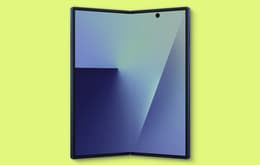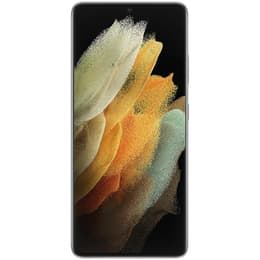

Galaxy S21 Ultra 5G Vs Google Pixel 9 Pro Fold

Galaxy S21 Ultra 5G
Galaxy S21 Ultra 5G
Starting at

Refurbished price:£186.00

Versus £1,800.00 new

See options
Google Pixel 9 Pro Fold
Starting at

Refurbished price:£538.00

Versus £1,739.49 new

See options

Ratings

The Samsung Galaxy S21 Ultra 5G, released in January 2021, is a traditional flagship smartphone known for its expansive display and comprehensive camera system. In contrast, the Google Pixel 9 Pro Fold, launched in August 2024, represents a newer generation of foldable technology, offering a versatile dual-screen experience. While the Galaxy S21 Ultra 5G provides a premium, conventional smartphone experience, the Pixel 9 Pro Fold introduces the flexibility of a large, folding internal display alongside a capable external screen, running on Google's optimized Android platform.

Scores

Durability

When considering the longevity of these devices, their respective release timelines and software support policies are key factors.

  • Release Timeline: The Galaxy S21 Ultra 5G, launched in January 2021, is an older device compared to the Google Pixel 9 Pro Fold, which debuted in August 2024. This difference in release year directly impacts the remaining period of official software support.
  • OS Support Duration: The Galaxy S21 Ultra 5G typically received four years of Android OS updates and five years of security updates, meaning its major OS updates likely concluded in 2025, with security updates extending into 2026. The Google Pixel 9 Pro Fold, however, is promised seven years of OS and security updates from its launch, extending its support until at least August 2031.
  • Repairability: The Pixel 9 Pro Fold has been noted for its modular design, which can simplify certain repairs, such as replacing the USB-C port, though battery replacement can be challenging due to flimsy pull tabs. Information regarding the specific repairability score for the Galaxy S21 Ultra 5G is less prominent, but as a traditional slab phone, it generally presents different repair challenges compared to foldables.

Year of Release

2021

2024

Compatible with latest Update

Yes

Yes

OS

Android

Android

Foldable

No

Yes

Performance

The performance of these devices is influenced by their internal components and how they handle daily tasks and demanding applications.

  • Processor Capabilities: The Galaxy S21 Ultra 5G is powered by a processor from 2021, which capably handles everyday tasks, multitasking, and moderately demanding applications. The Google Pixel 9 Pro Fold features a newer generation processor, designed to offer enhanced performance for more intensive tasks, advanced AI features, and smoother operation across its dual displays.
  • System Responsiveness: Users of the Galaxy S21 Ultra 5G generally experience fluid navigation and quick app loading. The Pixel 9 Pro Fold, with its more recent processor and increased RAM (16GB compared to the S21 Ultra's 12GB or 16GB), is engineered for highly responsive interactions, especially when switching between applications or utilizing the larger internal screen for productivity.
  • Battery Behavior: The Galaxy S21 Ultra 5G is equipped with a 5000mAh battery, providing substantial power for a full day of typical use, with some tests showing over 7 hours of screen-on time. The Pixel 9 Pro Fold has a 4650mAh battery, and despite powering two displays, it has demonstrated strong endurance, lasting over 16 hours in certain usage scenarios.

Memory (GB)

12 GB

16 GB

Screen quality

The display experience differs significantly between these two devices, primarily due to their form factors and display technologies.

  • Display Technology and Size: The Galaxy S21 Ultra 5G features a single 6.8-inch Dynamic AMOLED 2X display, offering vibrant colors and deep blacks. The Pixel 9 Pro Fold offers a dual-screen setup: an 8.0-inch folding OLED internal display and a 6.3-inch OLED cover display, providing flexibility for different viewing needs.
  • Resolution and Clarity: The S21 Ultra 5G boasts a QHD+ resolution (3200x1440 pixels) with a high pixel density of 515 PPI, resulting in exceptionally sharp images. The Pixel 9 Pro Fold's internal display has a resolution of 2076 x 2152 pixels (373 PPI), while its cover display is 1080 x 2424 pixels (422 PPI), both delivering clear visuals.
  • Brightness and Refresh Rate: Both devices feature adaptive refresh rates up to 120Hz for smooth scrolling and responsiveness. The S21 Ultra 5G can reach a peak brightness of 1500 nits. The Pixel 9 Pro Fold's displays offer a higher peak brightness of 2700 nits, enhancing visibility in bright outdoor conditions.

Resolution

1440 x 3200

2076 x 2152

Audiovisual

Both smartphones offer advanced camera systems, though their approaches and capabilities reflect their respective generations and design philosophies.

  • Rear Camera Systems: The Galaxy S21 Ultra 5G features a versatile quad-camera setup, including a 108MP main sensor, a 12MP ultrawide lens, and two 10MP telephoto lenses offering 3x and 10x optical zoom. The Pixel 9 Pro Fold comes with a triple-lens rear camera system, comprising a 48MP main sensor with optical image stabilization, a 10.5MP ultrawide lens, and a 10.8MP telephoto lens with 5x optical zoom.
  • Photography Performance: The S21 Ultra 5G is known for its detailed photos and strong zoom capabilities, performing well in various lighting conditions. The Pixel 9 Pro Fold leverages Google's computational photography, which is designed to produce consistent and high-quality images, particularly excelling in areas like low-light performance and dynamic range, even with potentially different sensor specifications.
  • Video Recording and Front Cameras: Both devices support 4K video recording at 60 frames per second, with the S21 Ultra 5G also capable of 8K video at 24fps. For selfies, the S21 Ultra 5G has a 40MP front camera, while the Pixel 9 Pro Fold features a 10MP front camera and an additional 10MP inner camera for use when unfolded.

Front camera

40 megapixels

10 megapixels

Miscellaneous

Beyond core performance, several practical elements contribute to the overall user experience of these devices.

  • Connectivity and Ports: Both the Galaxy S21 Ultra 5G and the Pixel 9 Pro Fold support 5G connectivity and Wi-Fi 6E for fast wireless internet. They both utilize a USB-C port for charging and data transfer, with the Pixel 9 Pro Fold featuring USB-C 3.2 Gen 2. Neither device includes a traditional 3.5mm headphone jack.
  • Dimensions, Weight, and Build: The Galaxy S21 Ultra 5G is a substantial device, weighing around 227-229 grams and featuring a glass and aluminum construction with IP68 water resistance. The Pixel 9 Pro Fold, as a foldable, has different dimensions when folded (155.2 x 77.1 x 10.5mm) and unfolded (155.2 x 150.2 x 5.1mm), and weighs 257 grams. It features Gorilla Glass Victus on its external display and back, ultra-thin glass with a plastic layer on the internal folding display, and an aluminum frame with IPX8 water resistance.
  • Security and Sensors: Both devices offer modern biometric security. The Galaxy S21 Ultra 5G includes an under-display fingerprint sensor and face recognition. The Pixel 9 Pro Fold also features a fingerprint sensor and face unlock.

Weight

227 g

257 g

Screen size (in)

6.8

8.0

Mobile network

5G

5G

SIM card

Dual Physical SIM + eSIM

Physical SIM + eSIM

Carrier compatibility

Unlocked

Unlocked

Connector

USB-C

USB-C

The Samsung Galaxy S21 Ultra 5G and the Google Pixel 9 Pro Fold cater to different user preferences, primarily distinguished by their form factors and release generations. Users often praise the Galaxy S21 Ultra 5G for its robust build, excellent single-screen display, and versatile camera system with strong zoom capabilities. Some common criticisms, particularly as it ages, might revolve around its software update longevity compared to newer devices and its overall weight for a non-foldable phone.

The Google Pixel 9 Pro Fold, on the other hand, receives acclaim for its innovative foldable design, offering a large tablet-like screen in a more portable form factor, and its extended software support. Users appreciate the flexibility of having two displays and Google's advanced computational photography. However, some users of foldable devices may express concerns about the durability of the folding screen over time or the overall thickness when folded, though the Pixel 9 Pro Fold aims to address some of these with a thinner design than its predecessor.

Users prioritizing a traditional, high-end smartphone experience with a proven camera system and a single, expansive display may find the Galaxy S21 Ultra 5G well-suited to their needs. Conversely, those who value cutting-edge technology, the versatility of a large folding screen for productivity and media consumption, and a longer software support commitment will likely lean towards the Pixel 9 Pro Fold. Both devices offer distinct advantages, and for those seeking an eco-friendly, quality-assured option, considering either model as a refurbished product can be a sustainable choice.


See all articles

Our recent comparisons