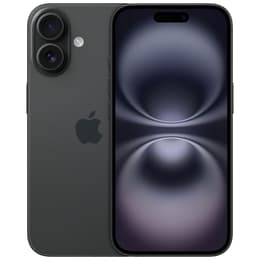

Galaxy A35 Vs iPhone 16

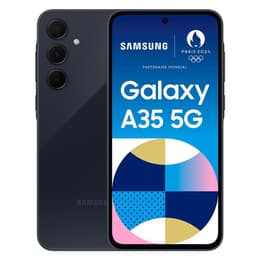
Galaxy A35
Galaxy A35
Starting at

Refurbished price:£118.00

Versus £367.31 new

See options
iPhone 16
iPhone 16
Starting at

Refurbished price:£484.00

Versus £699.00 new

See options

Ratings

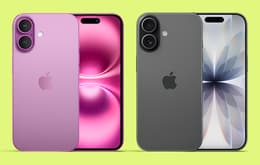
The Samsung Galaxy A35, released in March 2024, and the Apple iPhone 16, launched in September 2024, represent distinct approaches to smartphone design and functionality. While the Galaxy A35 operates on the Android ecosystem, offering a larger display and a versatile camera array, the iPhone 16 runs on Apple's iOS, featuring a powerful processor and advanced camera capabilities. These differences cater to varying user preferences, from operating system familiarity to specific hardware priorities.

Scores

Durability

When considering the long-term usability of a smartphone, software support and physical resilience are key factors. Both devices offer robust support timelines and durable designs, though with some distinctions.

  • Software Longevity: The Samsung Galaxy A35 launched with Android 14 and is slated to receive four years of major OS updates and five years of security updates, extending its software relevance until approximately 2028 and 2029, respectively. [4, 8, 13, 21] The iPhone 16, running iOS 18 at launch, typically benefits from a longer software support cycle, often receiving major iOS updates for six to seven years, suggesting support well into the early 2030s. [6, 17]
  • Physical Durability: The Galaxy A35 features a glass front protected by Gorilla Glass Victus+ and a glass back, encased in a plastic frame, offering IP67 dust and water resistance. [13, 19] This rating means it can withstand immersion in up to 1 meter of fresh water for 30 minutes. The iPhone 16 incorporates a Ceramic Shield front cover, which is designed for enhanced drop performance, and an aluminum frame, alongside an IP68 rating, allowing for immersion in up to 6 meters of water for 30 minutes. [9, 20]
  • Repairability Considerations: While specific repairability scores can vary, both manufacturers offer repair services and parts. The choice between these devices may also involve considering quality-assured refurbished options, which provide an eco-friendly alternative for extending the life cycle of electronic products.

Year of Release

2024

2024

Compatible with latest Update

Yes

Yes

Foldable

No

No

Performance

The performance of a smartphone is central to its daily user experience, influencing everything from app responsiveness to gaming capabilities. Both the Galaxy A35 and iPhone 16 deliver capable performance, though they achieve it through different hardware architectures.

  • Processing Power: The iPhone 16 is equipped with a current-generation processor, which provides substantial power for demanding applications, complex multitasking, and graphically intensive games, ensuring a highly responsive user experience. [9, 11, 12, 20, 28] The Galaxy A35 features a capable processor that handles everyday tasks smoothly, including browsing, social media, and light gaming. [1, 7, 8, 19, 21] Users report it is snappy for daily tasks, though occasional lag might occur with heavier applications. [19]
  • Multitasking and Storage: The iPhone 16 typically comes with 8GB of RAM, contributing to efficient multitasking and smooth transitions between applications. [11, 17, 27] Storage options are generally available up to 512GB. The Galaxy A35 offers 6GB or 8GB of RAM, which is sufficient for most users' multitasking needs, and comes with 128GB or 256GB of internal storage, expandable via microSD card for additional flexibility. [1, 4, 8]
  • Battery Performance: The Galaxy A35 houses a large 5000 mAh battery, often providing a full day of heavy use and sometimes extending to a day and a half with moderate usage. [1, 4, 8, 19, 21, 22, 24] The iPhone 16, despite potentially having a smaller battery capacity, is designed for efficiency, with users often reporting a full day of power even with active use. [18, 30]

Memory (GB)

6 GB

8 GB

Screen quality

The display is a primary interface for smartphone interaction, and both devices offer vibrant and clear viewing experiences, albeit with distinct characteristics.

  • Display Technology and Clarity: The Samsung Galaxy A35 features a 6.6-inch Super AMOLED display, delivering rich colors, deep blacks, and excellent contrast. [1, 4, 7, 14] Its Full HD+ resolution (1080 x 2340 pixels) ensures sharp visuals for everyday content consumption. The iPhone 16 sports a 6.1-inch Super Retina XDR OLED display, known for its precise color accuracy, high contrast, and detailed resolution of 2556x1179 pixels at 460 pixels per inch. [17, 20, 23]
  • Brightness and Refresh Rate: The Galaxy A35 offers a 120Hz refresh rate, providing a smoother scrolling experience and more fluid animations, along with a peak brightness of 1000 nits for good outdoor visibility. [1, 4, 7, 14] The iPhone 16's display typically features a standard refresh rate, but offers excellent brightness levels, ensuring content remains visible even in bright outdoor conditions. [20]
  • Viewing Experience: The larger screen of the Galaxy A35 provides an expansive canvas for media consumption and productivity. The iPhone 16's display, while smaller, offers a compact form factor that some users find easier for one-handed use, without compromising on visual quality.

Resolution

1080 x 2340

1179 x 2556

Screen type

Super AMOLED

Super Retina XDR OLED

Audiovisual

Camera capabilities are a significant consideration for many smartphone users, and both the Galaxy A35 and iPhone 16 offer advanced systems for capturing photos and videos.

  • Rear Camera Systems: The Samsung Galaxy A35 features a triple-camera setup on the rear, including a 50-megapixel main sensor with optical image stabilization (OIS), an 8-megapixel ultrawide lens, and a 5-megapixel macro lens. [1, 4, 7, 8, 14] Users generally praise its daylight photography, noting vibrant and detailed images, though low-light performance can be less consistent, and the macro lens is often considered a niche feature. [19, 24, 29] The iPhone 16 comes with an advanced dual-camera system, featuring a 48-megapixel main sensor with sensor-shift OIS and a 12-megapixel ultrawide lens. [9, 20] Its main camera can capture super-high-resolution photos and offers a 2x telephoto option by utilizing the main sensor. [9, 20]
  • Front Camera and Video: For selfies and video calls, the Galaxy A35 includes a 13-megapixel front camera. [1, 4, 8, 14] Both its main rear camera and front camera can record video in 4K resolution at 30 frames per second. [8, 14, 19] The iPhone 16 features a 12-megapixel TrueDepth front camera and supports 4K Dolby Vision video recording, along with capabilities for spatial video capture. [9, 20]
  • Photography Features: The iPhone 16 introduces a new vertical camera alignment, which is designed to support spatial video capture, and includes features like Photonic Engine and Smart HDR for enhanced image processing. [6, 9, 11, 12, 20, 28] The Galaxy A35 also offers improved photography with an upgraded NPU on its processor. [1]

Main camera

50 megapixels

48 megapixels

Front camera

13 megapixels

12 megapixels

Miscellaneous

Beyond core performance and display, several practical elements contribute to the overall user experience of a smartphone.

  • Connectivity and Ports: Both devices support 5G connectivity for fast mobile data. [16, 17] The Galaxy A35 includes Wi-Fi 6 and Bluetooth 5.3, along with a USB-C 2.0 port for charging and data transfer. [7, 16] The iPhone 16 also features a USB-C port, typically supporting USB 2.0 speeds for the base model, and offers Wi-Fi 6E or potentially Wi-Fi 7, alongside Bluetooth 5.3 or 5.4. [9, 16, 17, 20]
  • Biometric Security and Controls: The Galaxy A35 utilizes an in-display fingerprint sensor for secure unlocking. [7] The iPhone 16 relies on Face ID for facial recognition. [20] A notable addition to the iPhone 16 is the Action Button, which can be customized for various functions, and a new Capture Button designed to enhance photo and video taking with intuitive gestures. [2, 9, 11, 28, 30, 33]
  • Design and Handling: The Galaxy A35 measures 161.7 x 78 x 8.2 mm and weighs 209g, offering a larger form factor. [7, 13, 14, 17] The iPhone 16 is more compact and lighter at 147.6 x 71.6 x 7.8 mm and 170g, which may appeal to users preferring a smaller device. [17, 20] Both devices feature stereo speakers, providing an enhanced audio experience for media consumption. [1, 18]

Weight

209 g

170 g

Screen size (in)

6.6

6.1

Mobile network

5G

5G

SIM card

Dual Physical SIM

Physical SIM + eSIM

Carrier compatibility

Unlocked

Unlocked

Connector

USB-C

USB-C (USB 2)

The Samsung Galaxy A35 and Apple iPhone 16 cater to different user priorities, each excelling in specific areas based on user feedback and design philosophy.

Users frequently praise the Galaxy A35 for its impressive battery life, often lasting a full day or more, and its vibrant Super AMOLED display with a smooth 120Hz refresh rate. [19, 21, 22, 24] Its daylight camera performance is also a common point of appreciation, delivering detailed and colorful photos. [19, 24, 29] Criticisms sometimes point to its performance not being a powerhouse for the most demanding tasks and its low-light camera capabilities being less consistent. [19, 29]

The iPhone 16 is often lauded for its powerful and efficient processor, ensuring smooth performance across all applications, and its advanced camera system, which consistently delivers high-quality photos and videos, including new spatial video capabilities. [9, 11, 12, 20, 28, 33] The integration of new features like the Action Button and Capture Button also receives positive attention for enhancing user interaction. [2, 9, 11, 30, 33] Some user sentiment, however, suggests that while the iPhone 16 offers solid improvements, some perceive the overall innovation as incremental compared to previous generations. [25, 32]

Users prioritizing a larger, high-refresh-rate display and extended battery life, coupled with the flexibility of the Android ecosystem and expandable storage, may find the Samsung Galaxy A35 well-suited to their needs. Conversely, individuals who value top-tier processing power, a highly refined camera experience with advanced video features, a compact design, and the long-term software support of iOS will likely lean towards the iPhone 16. Both devices are available as quality-assured refurbished options, offering a sustainable choice for consumers.
See all articles

Our recent comparisons