Galaxy A13 Vs Galaxy S25

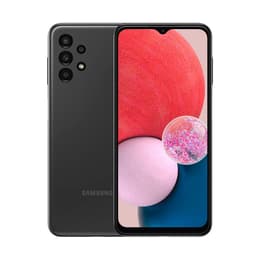
Galaxy A13
Galaxy A13
Starting at

Refurbished price:£73.00

Versus £249.00 new

See options
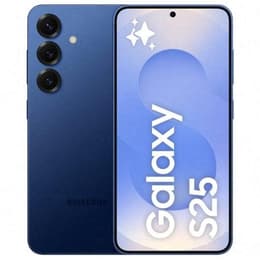
Galaxy S25
Galaxy S25
Starting at

Refurbished price:£435.00

Versus £766.13 new

See options

Ratings

The Samsung Galaxy A13, released in March 2022, is an entry-level smartphone designed for essential daily tasks, while the Samsung Galaxy S25, launched in February 2025, represents a premium flagship device with advanced capabilities. These two models cater to distinct user needs, offering different levels of performance, camera technology, and overall user experience. The primary differentiators lie in their processing power, display quality, and camera systems, reflecting their respective market segments and release timelines.

Scores

Durability

The longevity of a smartphone is influenced by its build quality, software support, and ease of repair. Both devices offer different propositions in these areas.

  • Software Support: The Galaxy A13, launched with Android 12, was eligible for two major OS updates, reaching Android 14 and One UI 6.1, with security updates extending until the end of 2025. In contrast, the Galaxy S25, released with Android 15 and One UI 7.0, is guaranteed an extensive seven years of OS and security updates, ensuring support until 2032.
  • Build Materials: The Galaxy A13 features a Gorilla Glass 5 front and a plastic back and frame, offering a practical level of durability for everyday use. The Galaxy S25, as a flagship, incorporates more robust materials such as Gorilla Glass Victus+ or Armor and an Armor Aluminum frame, along with an IP68 rating for water and dust resistance, contributing to its enhanced resilience.
  • Repairability: The Galaxy A13 (LTE model) has demonstrated a high repairability score of 8 out of 10, indicating a design that facilitates easier repairs. The Galaxy S25 series has also shown improved repairability compared to previous flagships, with models like the S25 Edge scoring 8.5/10 and the S25 FE scoring 9/10, reflecting a focus on serviceability.

Year of Release

2022

2025

OS

Android

Android

Foldable

No

No

Performance

Performance is a key area where these two devices diverge significantly, impacting everything from app responsiveness to multitasking capabilities.

  • Processing Power: The Galaxy A13 is equipped with a processor suitable for general daily tasks such as browsing, social media, and light applications. The Galaxy S25, featuring a current-generation, customized processor, delivers substantially faster CPU and GPU speeds, enabling smooth handling of demanding applications, complex games, and advanced AI features.
  • Multitasking and Storage: The Galaxy A13 typically offers 3GB, 4GB, or 6GB of RAM and storage options up to 128GB, which can be expanded with a microSD card. This configuration supports basic multitasking. The Galaxy S25 comes with a standard 12GB of RAM across all models and internal storage options starting from 128GB or 256GB, without microSD expansion, providing ample capacity for extensive multitasking and storing large files.
  • Battery Behavior: The Galaxy A13 houses a 5000 mAh battery, providing extended usage for typical daily activities. The Galaxy S25, with a 4000 mAh battery in its base model, benefits from a more power-efficient processor and display technology, which optimizes battery life for its advanced features and performance demands, offering up to 38 hours of talk time.

Memory (GB)

4 GB

12 GB

Screen quality

The visual experience offered by these smartphones differs considerably due to their display technologies and specifications.

  • Display Technology and Clarity: The Galaxy A13 features a 6.6-inch PLS LCD screen with a 1080 x 2408 (FHD+) resolution, providing clear visuals for everyday content. The Galaxy S25 boasts a 6.2-inch Dynamic AMOLED 2X display with a 2340 x 1080 (FHD+) resolution, offering deeper blacks, higher contrast, and more vibrant colors.
  • Refresh Rate and Brightness: The Galaxy A13 has a standard 60Hz refresh rate, which is suitable for general use. The Galaxy S25 features an adaptive 120Hz refresh rate, resulting in smoother scrolling and more fluid animations. Additionally, the S25's display can reach a peak brightness of 2600 nits, significantly improving visibility in bright outdoor conditions compared to the A13.
  • Viewing Experience: The larger screen of the A13 offers more screen real estate for media consumption. However, the S25's superior display technology, higher refresh rate, and brightness contribute to a more immersive and comfortable viewing experience, especially for high-quality video content and gaming.

Resolution

1080 x 2408

1080x2340

Screen type

PLS LCD

Dynamic LTPO AMOLED 2X

Audiovisual

The camera systems on the Galaxy A13 and Galaxy S25 are designed for different photographic needs and offer varying levels of image quality and features.

  • Rear Camera System: The Galaxy A13 includes a quad-camera setup with a 50MP main sensor, a 5MP ultrawide, and two 2MP sensors for macro and depth. This system is capable of capturing decent photos in well-lit conditions. The Galaxy S25 features a more advanced triple-camera system, typically comprising a 50MP wide-angle main camera, a 12MP ultrawide lens, and a 10MP telephoto lens with 3x optical zoom, providing greater versatility and detail.
  • Photography Performance: The A13 performs adequately for casual photography, but its low-light performance and detail retention are more limited. The S25, with its larger sensors and advanced image processing, excels in various lighting conditions, offering improved detail, dynamic range, and low-light capabilities. It also includes features like Night Video with Audio Eraser for enhanced video capture.
  • Front Camera and Video: The Galaxy A13 has an 8MP front camera and records video at 1080p at 30 frames per second. The Galaxy S25 features a 12MP front camera, capable of capturing higher-resolution selfies and supporting more advanced video recording features, aligning with its flagship status.

Miscellaneous

Beyond the core features, several other elements contribute to the overall user experience and practical utility of these devices.

  • Connectivity and Ports: The Galaxy A13 supports 4G LTE networks, Wi-Fi 5, and Bluetooth 5.0, and includes a 3.5mm headphone jack and a USB-C 2.0 port. The Galaxy S25 offers advanced connectivity with 5G capabilities, Wi-Fi 7, and Bluetooth 5.4, utilizing a USB-C port for charging and data transfer, but it omits the traditional headphone jack.
  • Biometric Security: Both devices incorporate biometric security features. The Galaxy A13 typically uses a side-mounted fingerprint sensor for secure unlocking. The Galaxy S25 often features an in-display fingerprint sensor and advanced facial recognition for quick and secure access.
  • Design and Handling: The Galaxy A13 has a practical design with dimensions of 165.1 x 76.4 x 8.8 mm and a weight of 195g, offering a comfortable grip. The Galaxy S25, while also designed for comfortable handling, often features a more refined and compact form factor for its base model, with premium finishes and a slightly different weight distribution.

Weight

195 g

162 g

Screen size (in)

6.6

6.2

Mobile network

4G

5G

SIM card

Dual Physical SIM

Physical SIM + eSIM

Carrier compatibility

Unlocked

Unlocked

The Samsung Galaxy A13 and Galaxy S25 cater to fundamentally different user expectations and budgets. Users often praise the Galaxy A13 for its reliable battery life and its inclusion of a 3.5mm headphone jack, making it a practical choice for those who value these features. Criticisms sometimes point to its more modest performance and display quality compared to higher-end devices. Conversely, the Galaxy S25 is frequently lauded for its powerful performance, vibrant display, and advanced camera capabilities, often highlighted by users for its smooth operation and premium feel. Some users might find its battery capacity, while efficient, to be less than the A13's larger cell, or note the absence of a headphone jack.

Users prioritizing extended software support, high-end performance for demanding applications and gaming, and advanced camera features will find the Galaxy S25 well-suited to their needs. Its premium build and cutting-edge display also appeal to those seeking a top-tier multimedia experience. For individuals who require a dependable device for essential communication, browsing, and casual media consumption, and who appreciate a longer-lasting battery and the convenience of a headphone jack, the Galaxy A13 remains a functional option. It is also a suitable choice for those seeking a quality-assured refurbished option, offering an eco-friendly alternative for everyday use. Ultimately, the decision between these two devices hinges on whether a user prioritizes flagship-level innovation and longevity or a more straightforward, practical smartphone experience.


See all articles

Our recent comparisons