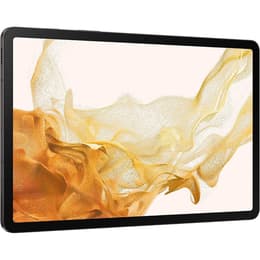
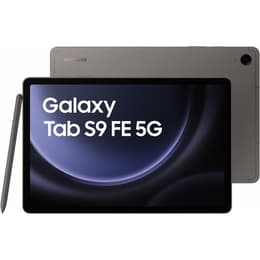

Galaxy Tab S8+ (12.4", 2022) Vs Galaxy Tab S9 FE (10.9", 2023)

Galaxy Tab S8+ (12.4", 2022)
Starting at

Refurbished price:£323.36

Versus £999.00 new

See options
Galaxy Tab S9 FE (10.9", 2023)
Starting at

Refurbished price:£227.00

Versus £606.86 new

See options

Ratings

The Samsung Galaxy Tab S8 Plus, released in 2022, and the Samsung Galaxy Tab S9 FE, launched in 2023, represent different approaches within Samsung's tablet lineup. While the Tab S8 Plus offered a premium experience with a larger, high-quality display and powerful internal components, the newer Tab S9 FE focuses on delivering a balanced feature set with enhanced durability and a slightly more compact form factor. Both devices run on the Android operating system with Samsung's One UI, providing a consistent software experience.

Scores

Durability

When considering the long-term usability of these tablets, several factors come into play, including their release timelines, software support, and physical resilience.

  • Release Timeline: The Galaxy Tab S8 Plus was released in early 2022, while the Galaxy Tab S9 FE followed in late 2023. This difference means the Tab S9 FE will likely receive software updates for a longer period, extending its practical lifespan.
  • Software Support: Samsung typically provides several years of Android operating system upgrades and security patches for its devices. The Tab S9 FE is guaranteed to receive at least three OS upgrades and five years of security patches, offering extended software longevity compared to the older Tab S8 Plus. [5, 8]
  • Durability Features: The Galaxy Tab S9 FE features an aluminum shell and Corning Gorilla Glass 3 for display protection, along with an IP68 rating for water and dust resistance, making it more resilient to environmental factors. [1, 3, 36] The Galaxy Tab S8 Plus, while featuring an aluminum frame, does not carry an official IP rating. [9, 11]

Year of Release

2022

2023

Compatible with latest Update

Yes

Yes

OS

Android

Android

Performance

The performance capabilities of these two tablets cater to different user expectations, primarily influenced by their internal processing power and memory configurations.

  • Processing Power: The Galaxy Tab S8 Plus is equipped with a high-performance processor from its release year, enabling it to handle demanding applications, complex multitasking, and graphic-intensive games with fluidity. [2, 11] The Galaxy Tab S9 FE utilizes a capable mid-range processor that provides smooth performance for everyday tasks, web browsing, and light gaming, though it may show limitations with very intensive applications or heavy multitasking compared to its more powerful counterpart. [14, 15, 23, 34]
  • Storage and RAM: Both tablets offer configurations with 6GB or 8GB of RAM and 128GB or 256GB of internal storage, expandable via a microSD card. [1, 2, 11, 16, 28, 34] The Tab S8 Plus also had a 12GB RAM option, which can contribute to smoother operation during extensive multitasking. [2, 11]
  • Battery Behavior: The Galaxy Tab S8 Plus houses a larger 10,090 mAh battery, typically providing 8 to 12 hours of active screen time, though heavy use can reduce this to around 6-10 hours. [9, 13, 18, 28, 29, 32] The Galaxy Tab S9 FE, with its 8,000 mAh battery, is reported by users to offer between 10 to 17 hours of usage, with video playback tests showing around 14-15 hours, suggesting efficient power management for its components. [3, 4, 5, 6, 31]

Memory (GB)

8 GB

6 GB

Processor

Qualcomm SM8450 Snapdragon 8 Gen 1

Exynos 1380

Screen quality

The visual experience on these tablets differs significantly due to their display technologies and specifications.

  • Display Technology and Size: The Galaxy Tab S8 Plus features a 12.4-inch Super AMOLED display, known for its deep blacks, high contrast, and vibrant colors. [2, 9, 11, 22, 27, 28] The Galaxy Tab S9 FE comes with a 10.9-inch TFT-LCD display, which offers good color reproduction and clarity, though it does not achieve the same level of contrast as an AMOLED panel. [1, 3, 10, 16, 23, 36, 37]
  • Resolution and Refresh Rate: The Tab S8 Plus offers a resolution of 2800 x 1752 pixels with a 120Hz refresh rate, providing a very smooth scrolling and viewing experience. [9, 11, 22, 27, 28] The Tab S9 FE has a resolution of 2304 x 1440 pixels and a 90Hz refresh rate, which still delivers a fluid visual experience for most content. [1, 3, 10, 16, 37]
  • Brightness and Clarity: The Tab S9 FE boasts high brightness levels, with an average of nearly 700 nits and a high brightness mode reaching 720 nits, making it quite legible in bright outdoor conditions. [1, 36] The Tab S8 Plus also offers good brightness, suitable for various lighting environments, though its peak brightness is slightly lower. [2, 11, 22]

Resolution

1752 x 2800

1440 x 2304

Screen type

Super AMOLED

IPS LCD

Pixel density

270ppp

250ppp

Audiovisual

The camera systems on both tablets are designed for different primary uses, with varying capabilities for photography and video conferencing.

  • Rear Camera Capabilities: The Galaxy Tab S8 Plus features a dual-camera setup on the rear, including a 13MP main sensor and a 6MP ultra-wide lens, capable of recording 4K video. [11, 22, 28] The Galaxy Tab S9 FE has a single 8MP rear camera, which is suitable for scanning documents or occasional photos but may not offer the same detail or versatility as the Tab S8 Plus. [1, 10, 12, 15, 17, 23, 37]
  • Front Camera and Video Conferencing: Both tablets are equipped with a 12MP ultra-wide front-facing camera, which is beneficial for video calls and selfies. [1, 11, 21, 27, 28] The Tab S9 FE's front camera supports 4K video recording and includes an auto-framing feature, which can adjust the frame to keep subjects in view during video conferences. [8, 21]
  • Audio Experience: The Galaxy Tab S8 Plus features quad stereo speakers tuned by AKG, providing a rich audio experience for media consumption. [2, 28] The Galaxy Tab S9 FE comes with stereo speakers, also tuned by AKG, offering clear sound for general use. [10, 12]

Miscellaneous

Beyond core performance and display, several practical elements differentiate these two Samsung tablets, impacting their overall user experience.

  • Connectivity and Ports: Both tablets support modern Wi-Fi standards (Wi-Fi 6 for S9 FE, Wi-Fi 6E for S8 Plus) and Bluetooth (5.3 for S9 FE, 5.2 for S8 Plus), with 5G variants available for both. [1, 2, 11, 16, 28, 34] The Tab S8 Plus features a USB-C 3.2 port, offering faster data transfer speeds, while the Tab S9 FE has a USB-C 2.0 port. [16, 28, 34] Both include a microSD card slot for expandable storage. [1, 11, 16, 28, 34]
  • Biometric Security: The Galaxy Tab S8 Plus incorporates an in-display optical fingerprint sensor for convenient unlocking. [11, 28, 33] The Galaxy Tab S9 FE integrates its fingerprint sensor into the power button, located on the side of the device. [1, 12, 23]
  • Design and Handling: The Tab S8 Plus is a larger device with a 12.4-inch screen, measuring 5.7mm in thickness and weighing around 567g. [11, 28] The Tab S9 FE is more compact with a 10.9-inch screen, slightly thicker at 6.5mm, and lighter at 524g, potentially making it easier to handle for extended periods. [1, 10, 12, 16, 37]

Weight

567 g

129 g

Screen size (in)

12.4

10.9

Network

Wi-Fi + 5G

Wi-Fi + 5G

Carrier compatibility

Unlocked

Unlocked

Connector

USB Type-C

USB Type-C

The Samsung Galaxy Tab S8 Plus and Galaxy Tab S9 FE cater to distinct user needs, each excelling in different areas. User feedback for the Tab S8 Plus often praises its vibrant Super AMOLED display, robust performance for demanding tasks, and the included S Pen's low latency, making it a strong choice for productivity and immersive entertainment. [11, 18, 27] Some users, however, note that its battery life, while acceptable, might not always last through very heavy, continuous use without needing a charge. [13, 29, 32]

The Galaxy Tab S9 FE is frequently commended for its impressive battery life, durable build with an IP68 rating, and the inclusion of the S Pen, offering a well-rounded experience for everyday use. [4, 5, 8, 14] Users appreciate its bright LCD screen, especially for outdoor visibility, and its overall smooth performance for general tasks. [1, 23, 36] Criticisms sometimes point to its mid-range processing power, which might not satisfy users with intensive gaming or professional-grade application requirements, and the display technology, while good, doesn't offer the same deep blacks as an AMOLED panel. [10, 15, 34]

Users prioritizing a larger, more vibrant display and top-tier performance for graphic-intensive work or high-end gaming may find the Galaxy Tab S8 Plus better suited to their needs. Conversely, those who value extended battery life, enhanced durability with water and dust resistance, and a slightly more compact form factor for general productivity and media consumption might lean towards the Galaxy Tab S9 FE. Both tablets offer the versatility of the S Pen, making them suitable for note-taking and creative tasks. For those seeking a quality-assured refurbished option, both models can be found, providing an eco-friendly alternative for informed purchasing decisions.


See all articles

Our recent comparisons